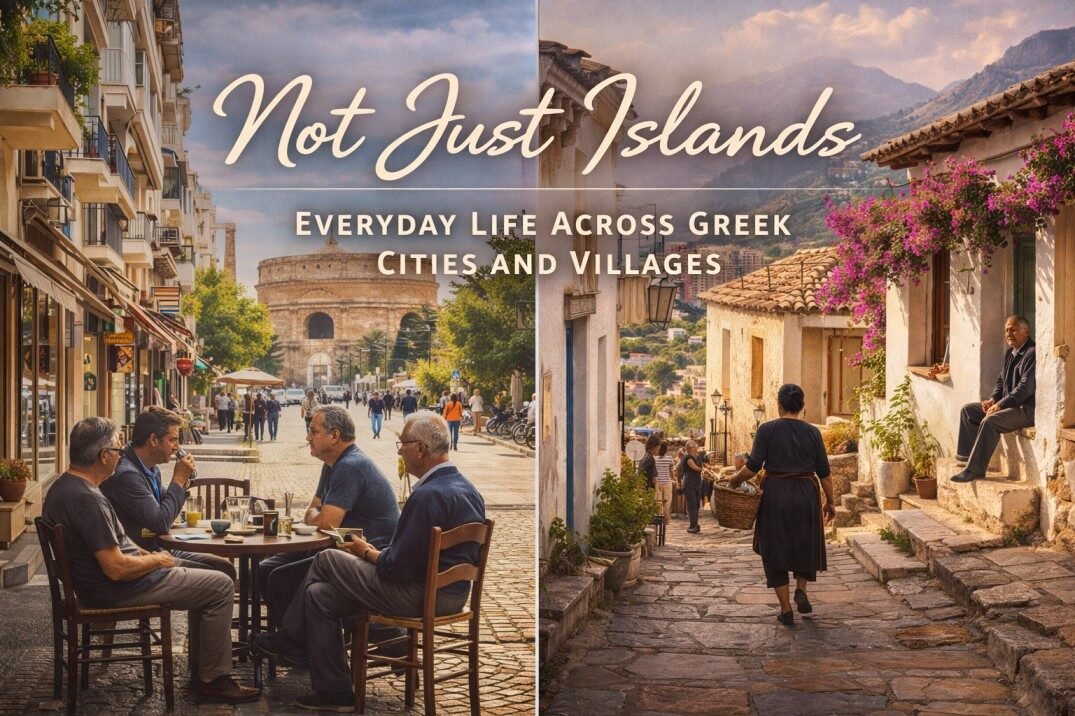
When travelers think of Greece, the mind often jumps to sun-soaked islands like Santorini, Mykonos, or Rhodes. While the islands are undeniably beautiful, they are only part of the story. The real Greece—the one lived by locals every day—is found across cities, towns, and villages, where traditions, routines, and culture shape life beyond tourism.
From bustling streets in Athens to sleepy mountain villages in the Peloponnese, Greece offers a rich, authentic experience that goes unnoticed by many visitors. Understanding this side of Greece provides deeper insight into its culture, economy, and lifestyle.
Urban Life in Greece: Cities Beyond the Tourist Lens
Athens: Ancient Roots, Modern Rhythms
Athens is more than the Acropolis and Plaka. It is a living, breathing city where locals navigate the tension between history and modern life. Coffee culture, markets, and public squares dominate daily routines.
Neighborhoods like Exarchia and Kifisia reveal the modern side of Athens. Cafes buzz with students, professionals, and retirees, while street art and small boutiques showcase contemporary culture. Even in the capital, evenings are slow. Streets fill as people stroll, families gather in tavernas, and cafes spill into sidewalks.
Athens also balances work and social life differently than many Western cities. Shops and offices may close briefly in the afternoon, reflecting a lifestyle that values leisure and connection alongside productivity.
For travelers seeking an in-depth look at Athens life beyond monuments, Lonely Planet Athens Guide offers useful tips and insights (https://www.lonelyplanet.com/greece/athens).
Thessaloniki: Northern Greece’s Cultural Hub
Greece’s second city, Thessaloniki, combines history, food, and a vibrant urban rhythm. Cafes line the waterfront, where locals enjoy coffee, pastries, and conversation at all hours. The city’s university presence adds energy, while markets like Modiano and Kapani showcase daily commerce and culinary tradition.
Unlike tourist-heavy islands, Thessaloniki retains a sense of grounded, urban Greek life. Festivals, concerts, and local gatherings occur year-round, offering visitors authentic engagement.
Village Life: Tradition and Community
Mountain and Coastal Villages
Greek villages, whether perched in the mountains or hugging the coastline, preserve traditions that date back centuries. In villages like Makrinitsa in Pelion or Apiranthos in Naxos, stone-paved streets, local markets, and community squares define daily routines.
Life in villages revolves around social connection. Residents greet each other regularly, share meals, and support one another. Shops and cafes serve as central gathering points where conversations stretch long into the evening.
Unlike islands, which are shaped by tourism, villages often operate according to seasonal and agricultural rhythms. Markets, festivals, and social life are tied to local production and cultural heritage rather than external expectations.
Farming and Local Economy
In many villages, agriculture is still a cornerstone of life. Olive groves, vineyards, and small farms provide both sustenance and income. Daily routines often include farm work, food preparation, and family coordination.
For visitors interested in agritourism or authentic culinary experiences, Visit Greece lists village-based stays and local food experiences across regions (https://www.visitgreece.gr).
The Greek Coffee Culture: Connecting Cities and Villages
Coffee is central to life in both urban and rural Greece. Traditional Greek coffee, frappé, and freddo espresso punctuate the day, from morning through evening.
In cities, cafes serve as professional and social hubs. In villages, the same cafes act as community centers where local news, gossip, and stories are shared. This culture reflects a broader Greek philosophy: life is best experienced through relationships and presence, not merely tasks and deadlines.
Coffee rituals also encourage visitors to slow down, observe, and engage. Participating in this daily habit can transform a tourist experience into an authentic cultural immersion.
Food, Meals, and Daily Rhythms
Lunch and Dinner
Meals are central to Greek life. Lunch is often the main meal, particularly in villages. Families gather at home or in local tavernas, enjoying freshly prepared food sourced from the surrounding region.
Dinner tends to be later, especially in the summer, with socializing as important as the food itself. Multi-course meals, shared dishes, and long conversations define the evening. Even in cities, local neighborhoods retain this approach, blending modern convenience with traditional pace.
Local Markets and Culinary Practices
Markets in cities and villages alike reflect local culture. Fish markets in Thessaloniki, olive stalls in Crete, and village farmers markets in Pelion showcase the daily life of producers and consumers.
For food enthusiasts, exploring local markets offers both sensory delight and insight into Greek daily routines. Resources like Greek Reporter provide guides to regional specialties and seasonal foods (https://greekreporter.com).
Social Life and Community
Public Spaces and Gathering
Whether in cities or villages, Greek life revolves around public interaction. Squares, promenades, and local cafes serve as gathering points. People walk, talk, and share experiences, creating a communal rhythm that structures daily life.
Even in urban areas where modern life is fast-paced, Greeks maintain this culture. Evening walks, known as volta, are common and provide an opportunity for relaxation and connection.
Festivals and Cultural Events
Throughout the year, festivals, religious celebrations, and local fairs structure community life. These events offer visitors a window into authentic traditions, from music and dance to food and storytelling. Participating, or even observing, reveals a layer of Greek life beyond the tourist gaze.
Education and Youth
Schools as Community Hubs
Education is tightly integrated with daily life. Schools, particularly in smaller towns, act as social centers. Events, plays, and local gatherings foster community involvement.
Teenagers often spend afternoons and evenings socializing in cafes or public spaces, blending formal education with informal learning about culture and relationships.
Youth Influence on Culture
In cities, young Greeks balance modern trends with traditional values. Cafes, clubs, and cultural events reflect global influences while preserving local identity. This balance shapes the next generation’s approach to Greek life, blending innovation with heritage.
Transportation and Daily Movement
Urban Mobility
In cities, public transportation like buses, metros, and trams structure daily routines. Many Greeks also walk extensively, reflecting urban planning that favors pedestrian-friendly streets.
Village Access
In villages, movement is slower and more deliberate. Cars, scooters, and bicycles facilitate transport, but walking through town squares remains essential. Visitors often discover hidden corners, local cafes, and scenic views by simply strolling.
For practical travel guidance, Greek Travel Pages offers detailed information about transportation across Greek cities and regions (https://www.gtp.gr).
Regional Differences
Mainland vs Islands
Mainland Greece offers diverse experiences. Mountain villages, agricultural plains, and small towns each have unique routines. Life is structured by climate, agriculture, and history.
Island life, while scenic, is heavily influenced by tourism. Cities and villages on the mainland tend to retain more authentic rhythms, especially outside peak tourist season.
North vs South
Northern Greece tends to have a slower, more deliberate pace. Cities like Thessaloniki and Kavala balance commerce and culture, while northern villages emphasize agriculture and community.
Southern Greece, including the Peloponnese, integrates coastal life with traditional village culture. Mediterranean climate, geography, and history all shape local daily practices.
Observing and Participating in Daily Life
Tips for Travelers
-
Slow down: Avoid rushing from attraction to attraction. Spend mornings in cafes, afternoons exploring neighborhoods, and evenings strolling public spaces.
-
Engage with locals: Learn basic greetings and customs. Attend markets, festivals, or community events.
-
Stay longer in one place: Extended stays allow deeper understanding of daily rhythms.
Learning from Observation
By observing routines, travelers understand more than sights—they understand life. From how people greet each other to meal schedules and social habits, these small details reveal the essence of Greece.
Why Everyday Life Matters
Understanding Greek daily life enhances travel experiences. It provides context for culture, deepens appreciation for traditions, and fosters meaningful interactions.
It also encourages responsible travel. By engaging with local routines instead of forcing tourist behavior, visitors contribute positively to communities and economies.
Conclusion
Greece is far more than its islands. Cities and villages reveal a living, breathing culture defined by daily rhythms, small habits, and authentic interactions. From coffee mornings in Athens to evening promenades in mountain villages, Greece’s true beauty lies in its lived experiences.
Travelers who step beyond the postcard images, engage with locals, and immerse themselves in daily life discover a richer, more rewarding Greece—one that remains unforgettable long after leaving.
Understanding everyday Greece offers not just sights but a glimpse into how life is truly lived, where culture, connection, and rhythm define the pace of existence.