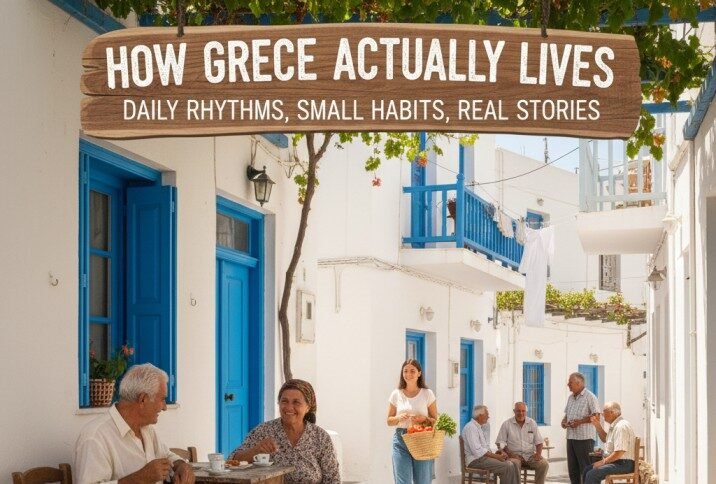
Most travel content about Greece focuses on islands, sunsets, and ancient ruins. That version of Greece is real, but it is incomplete. Everyday life here moves to a different rhythm, shaped by habits that are small, consistent, and deeply human. To understand Greece, you need to look beyond attractions and into how people live between them.
This is not a guide to what to see. It is a look at how Greece actually lives. From morning coffee rituals to late night walks, from family lunches to quiet village routines, this is the Greece locals recognize.
The Rhythm of the Day in Greece
Mornings Start Slow and Stay That Way
In Greece, mornings are rarely rushed. Even in cities like Athens or Thessaloniki, people do not sprint through breakfast with coffee in hand. Instead, mornings ease into motion.
Coffee is central. Greeks usually drink coffee outside the home, sitting at cafes that open early and stay open all day. A single coffee can last an hour or more. People talk, read the news, or simply watch the street. The idea of grabbing coffee and leaving feels foreign here.
This habit sets the tone for the entire day. Life is approached steadily, not aggressively.
Work Hours Adjust to Life, Not the Other Way Around
Workdays in Greece often stretch longer but include natural pauses. Many small businesses close for a few hours in the afternoon, especially outside major cities. This is not laziness. It is adaptation.
The midday heat, family meals, and social obligations matter. Productivity is measured differently. Being present and connected often takes priority over speed.
Even in professional settings, conversations come before tasks. Relationships are part of work, not separate from it.
The Importance of Coffee Culture
Coffee as a Social Anchor
Coffee in Greece is not about caffeine. It is about connection. Friends meet for coffee to catch up. Colleagues meet for coffee before discussing business. Even difficult conversations often begin with coffee.
Traditional options like Greek coffee, freddo espresso, and freddo cappuccino dominate menus. Sitting is expected. Leaving quickly feels unnatural.
This culture explains why cafes are everywhere and always full. They are extensions of the living room.
For deeper insight into Greek social customs, resources like Greek Reporter regularly explore how everyday traditions shape modern life (https://greekreporter.com).
Meals Are Events, Not Interruptions
Lunch Is the Emotional Center of the Day
Lunch in Greece is often the main meal. In homes, it is cooked. In towns, it is shared. Families gather when possible. Even working people try to eat properly.
Meals are rarely rushed. Talking matters as much as eating. Phones stay away more often than not. Food connects generations.
Dinner Happens Late and Together
Dinner usually starts late, often after 9 PM. Especially in summer, streets come alive at night. Children play outside, adults gather in tavernas, and conversations stretch well past midnight.
This schedule reflects climate, history, and values. Life adjusts to comfort and community, not strict timetables.
For traditional Greek food culture explained simply, Visit Greece offers useful background on regional eating habits (https://www.visitgreece.gr).
The Role of Family in Daily Life
Family Is Not a Phase, It Is Permanent
In Greece, family involvement does not fade with age. Adult children stay close to parents. Grandparents are active in daily routines. Decisions often consider family impact first.
Sunday lunches with extended family are common. Support systems are informal but strong. This closeness influences how people approach work, relationships, and priorities.
Neighbors Often Feel Like Family
In villages and older city neighborhoods, neighbors know each other well. They talk daily. They help without asking. Privacy exists, but community comes first.
This sense of belonging explains why many Greeks stay in the same area for decades.
The Famous Greek “Walk”
Evening Walks Are a Daily Ritual
One of the most overlooked habits in Greece is the evening walk. After dinner, people walk. Not for exercise, but for presence.
They stroll along promenades, village squares, or neighborhood streets. They talk, greet friends, and watch life unfold.
This habit reinforces connection. It turns public space into shared space.
Public Squares Still Matter
Unlike many countries where public squares feel decorative, Greek squares are functional. Children play. Elderly sit. Cafes spill outward. Life happens there.
This tradition has survived modernization because it works.
Time Is Flexible, Relationships Are Not
A Different Relationship With Time
In Greece, time is fluid. Being late is common. Plans shift. Schedules adapt. This can frustrate visitors who expect precision.
But flexibility allows space for human needs. Conversations end when they feel complete, not when the clock demands it.
Consistency Comes From People, Not Schedules
What seems chaotic often has an internal logic. People show up for each other. They remember names, stories, and histories.
Trust is built through presence, not punctuality.
Work, Pride, and Resilience
Work Is Personal
Many Greeks work in family businesses or small enterprises. Pride in work is strong, even when income is modest. Craftsmanship, service, and reputation matter.
You are not just buying a product. You are engaging with a person.
Economic Challenges Shaped Modern Greece
The financial crisis deeply affected daily life. Many families adapted by relying more on each other, growing food, and simplifying lifestyles.
This experience strengthened resilience and reinforced community values.
For context on modern Greek society and economic recovery, BBC Europe provides balanced reporting (https://www.bbc.com/news/world/europe).
Small Habits That Define Greek Life
Saying Hello Matters
Greeks greet shopkeepers, neighbors, and strangers regularly. A simple “good morning” opens doors.
Ignoring this social layer feels cold and unnatural.
Hospitality Is Expected, Not Performed
Hospitality is not reserved for guests. It is everyday behavior. Offering water, coffee, or food is automatic.
It is not about impressing. It is about care.
Complaining Is a Social Skill
Greeks complain often, but rarely hopelessly. Complaints are shared, debated, and laughed about. It is a way of processing life together.
Urban Life vs Village Life
Cities Move Faster, But Values Stay
Athens and Thessaloniki are busy, modern cities. But even there, traditional rhythms survive. Cafes stay full. Family ties remain strong.
City life adapts, but does not erase cultural habits.
Villages Preserve Older Rhythms
In villages, life slows further. Everyone knows everyone. News travels fast. Traditions hold firm.
Visitors often feel time stretch here, sometimes uncomfortably at first, then peacefully.
Real Stories From Daily Life
The Cafe Owner Who Knows Everyone
In many towns, there is a cafe owner who knows every customer’s order, family, and story. That cafe becomes a social anchor.
It is not about business growth. It is about continuity.
The Grandmother Who Feeds the Neighborhood
In villages, grandmothers often cook for more people than their household. Food moves freely. No one keeps count.
This generosity is quiet and constant.
The Late Bus That Sparks Conversation
Delays lead to conversations. Strangers talk. Complaints turn into jokes. Time fills itself.
This is Greece adapting in real time.
Why Understanding Daily Life Changes How You Travel
When you understand how Greece lives, you travel differently. You stop rushing. You sit longer. You listen more.
You stop asking what is next and start noticing what is now.
This shift leads to deeper experiences than any checklist.
How Visitors Can Respect and Enjoy These Rhythms
Slow down your schedule.
Sit when you drink coffee.
Be flexible with time.
Talk to people.
Stay in one place longer.
These small adjustments unlock a different Greece.
Final Thoughts
Greece is not just a destination. It is a way of living shaped by rhythm, habit, and connection. Its beauty lies not only in landscapes, but in how people move through their days.
When you stop trying to see everything and start observing how life unfolds, Greece opens itself to you.
Not loudly. Not quickly.
But honestly.