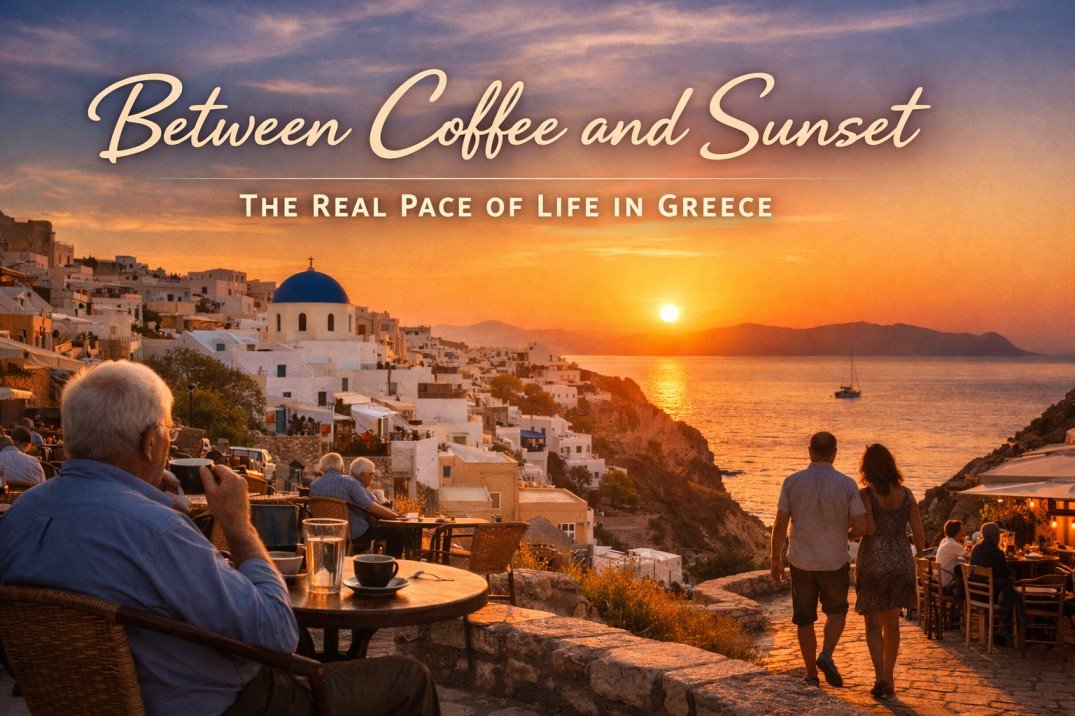
When people think of Greece, images of whitewashed buildings, turquoise waters, and endless sunsets often come to mind. While those are beautiful, they capture only the surface. To understand Greece, you need to experience the rhythm of daily life—the gentle ebb and flow between coffee in the morning and sunsets in the evening.
This is the Greece that locals know, far from the crowded tourist paths and Instagram-perfect moments. It’s a Greece defined by slow mornings, long meals, afternoon breaks, and evenings that stretch into the night. Here’s a look at how life unfolds, why this pace matters, and how visitors can experience it authentically.
The Morning Ritual: Coffee as a Starting Point
Coffee Is More Than a Drink
In Greece, coffee is not just a beverage; it is a ritual. Greeks often start their day with a cup of Greek coffee, freddo espresso, or cappuccino. Unlike the grab-and-go culture seen elsewhere, Greek coffee is meant to be savored while sitting in a cafe or at a kitchen table.
Sitting, observing, and connecting with others is key. Cafes serve as small social hubs where neighbors and friends meet to exchange news, share laughter, or simply watch the street wake up. Even in busy cities like Athens, these early hours have a calm energy that contrasts sharply with the hustle of most European capitals.
For visitors wanting to understand local customs, Visit Greece provides insights into traditional Greek coffee culture and cafe etiquette (https://www.visitgreece.gr).
Breakfast: Light, Social, and Flexible
Breakfast in Greece is often light, consisting of bread, cheese, yogurt, honey, or pastries like bougatsa. Unlike countries where breakfast is hurried, Greek mornings are unhurried. Eating is often secondary to conversation, reading, or planning the day.
This relaxed approach carries forward into work routines, errands, and travel schedules. It is an essential element of the Greek pace of life.
Midday Life: Work, Rest, and Connection
The Rhythm of Work
Greek workdays are structured differently than in many other countries. While most offices and shops open early, many small businesses close for a few hours in the afternoon, especially in smaller towns and islands. This break allows people to have lunch, spend time with family, and avoid the hottest part of the day.
Even in urban settings, Greeks prioritize relationships over strict schedules. Meetings may begin with conversation, catching up, and building trust before moving to business matters.
Lunch as a Social Event
Lunch is often the most important meal of the day. Families gather at home or in small tavernas. Meals are long, social, and focused on shared experience rather than speed. Typical dishes include fresh seafood, grilled meats, salads with local produce, and homemade bread.
Restaurants may close after lunch, reopening later in the evening. This pause highlights the Greek understanding that life is not meant to be constant motion—it is meant to be lived.
The Afternoon Pause: Siesta and Leisure
The Value of Rest
Afternoons in Greece often slow down. Shops close, streets empty, and towns feel quiet. This pause is not laziness but intentional living. It allows people to recharge, reflect, and prepare for the evening.
In villages and smaller islands, you’ll notice locals enjoying time at home, reading, napping, or engaging in hobbies. This period exemplifies the Greek approach to balance and mental well-being.
Cafes Remain Central
Even during the afternoon lull, cafes remain active. Some locals enjoy a second coffee, often accompanied by a sweet treat. These moments are a continuation of social connection, not just a caffeine fix.
Greek Reporter explores how everyday rituals like these shape modern Greek social life (https://greekreporter.com).
Evening Life: Sunset, Socializing, and Community
Streets Come Alive
As the sun begins to set, towns and cities transform. Streets, squares, and promenades fill with people. Children play, friends meet, and families take evening strolls known as volta. This walk is not about exercise but presence—connecting with the neighborhood and community.
Evening walks are a cornerstone of Greek daily life. They slow the pace further while promoting social interaction and mental clarity.
Dining as a Cultural Ritual
Dinner often begins late, around 9 PM, particularly in the summer. Meals are leisurely and may include multiple courses: meze (small dishes), fresh seafood, grilled meats, local vegetables, and, of course, dessert. Wine or ouzo may accompany the meal, further extending the experience.
Unlike fast-paced dining cultures, Greek dinners are meant to be enjoyed, savored, and shared. Friends, family, and even strangers may join conversations spontaneously.
Weekends and Community Life
Sunday Lunch and Extended Family
Weekends in Greece are dedicated to family, friends, and community. Sunday lunch is a central ritual, often bringing together extended family members. Large spreads of roasted meats, fresh vegetables, and homemade desserts are common.
These meals reinforce bonds, celebrate traditions, and anchor life around human connection rather than schedules.
Festivals and Local Events
Throughout the year, local festivals and cultural events offer insight into the Greek way of life. From religious feasts to village celebrations, these events focus on community participation rather than tourism.
Participating or observing these gatherings allows visitors to experience the authentic pace of life and understand cultural priorities.
Greek Villages vs Urban Centers
Village Life: Tradition and Tranquility
In villages, life moves even more slowly. Residents greet each other, shops may close unpredictably, and news travels by word of mouth. Villages preserve older traditions, providing a glimpse into Greece’s historical lifestyle.
Stone-paved streets, local markets, and small cafes form the backbone of village life. Visitors who immerse themselves here quickly understand that time is a tool, not a master.
Urban Life: Modernity with Tradition
In cities like Athens and Thessaloniki, modern routines exist alongside traditional habits. While offices, shops, and public transport bring structure, cafes, evening promenades, and family meals continue to shape daily rhythms.
Even in a fast-paced environment, Greeks maintain a balance between efficiency and connection.
Small Habits That Define Greek Life
Greeting and Hospitality
Saying hello to neighbors, shopkeepers, and friends is standard. Hospitality is natural and expected, not performed for visitors. Offering coffee, food, or help is a way of life.
Leisure and Social Connection
Time is spent in conversation, not just activity. Complaints, humor, and storytelling are shared openly, reinforcing bonds. Public spaces serve as extensions of living rooms, where life unfolds visibly and communally.
Seasonal Awareness
Greeks adapt daily life to climate and seasons. Summer evenings stretch late, while winter mornings are slow. Meals, clothing, and social rhythms change accordingly. This flexibility contributes to the overall pace of life.
Experiencing the Greek Pace as a Visitor
Slow Travel Principles
Travelers can respect and enjoy Greek rhythms by slowing down. Staying longer in one town, sitting for coffee, walking streets slowly, and participating in local life all help.
Longer stays allow visitors to witness daily life as it unfolds, not just curated tourist experiences.
Authentic Encounters
Interacting with locals, shopping in markets, and visiting cafes beyond tourist areas create deeper experiences. Understanding cultural norms, greeting people politely, and showing patience go a long way.
For practical tips on immersive travel in Greece, Lonely Planet Greece provides guides for authentic experiences (https://www.lonelyplanet.com/greece).
The Benefits of Slower Living
Mindfulness and Presence
Living “between coffee and sunset” encourages awareness. It teaches mindfulness, patience, and appreciation for simple joys.
Stronger Social Bonds
Slower rhythms foster real connections with people. Travelers can witness how relationships are prioritized over schedules, a lesson many find inspiring and restorative.
Sustainable Travel
By avoiding rushed itineraries and tourist hotspots, visitors reduce their environmental and cultural footprint. Supporting local businesses, engaging with communities, and respecting traditions make travel more sustainable.
Final Thoughts
Greece is often celebrated for its scenic landscapes and historic landmarks, but its real charm lies in daily life. The pace between coffee and sunset is deliberate, human, and deeply connected to culture.
By observing and participating in these rhythms, travelers discover a Greece beyond the postcards—a Greece that moves slowly, connects deeply, and reminds us that life is best lived fully, not hurriedly.
The next time you plan a trip, consider sitting longer, walking further, and embracing the everyday beauty of Greece. You may leave not just with photos, but with an understanding of how a culture moves, connects, and thrives.