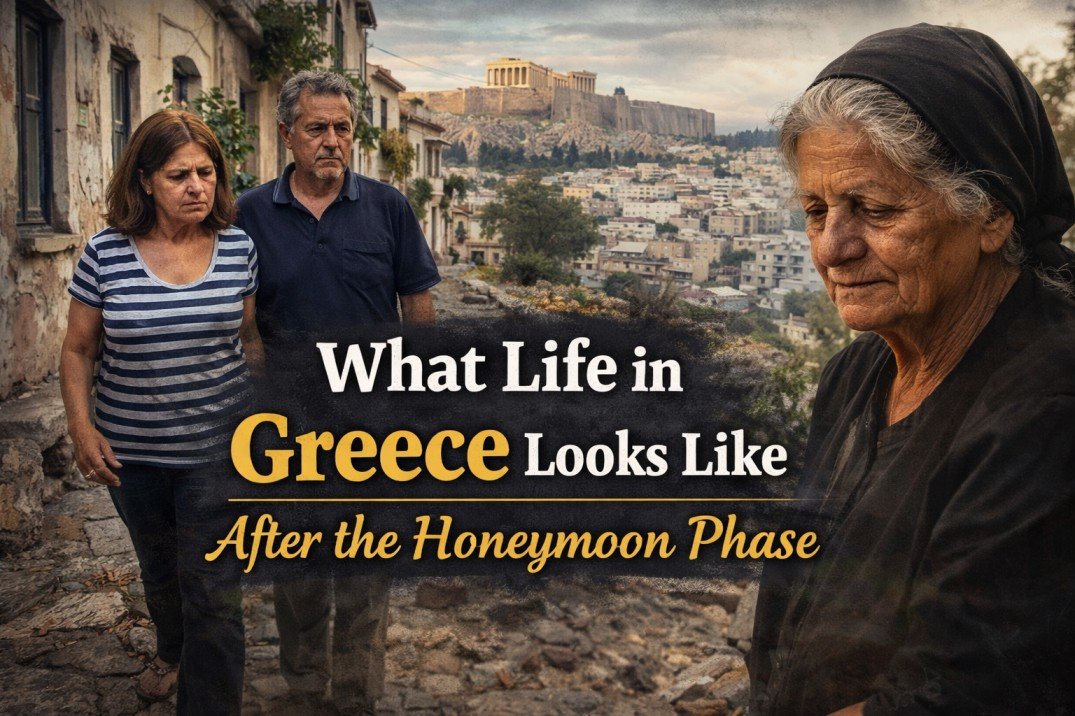
The first weeks in Greece can feel unreal. Blue skies almost every day. Coffee that lasts for hours. Neighbors who greet you like they have known you forever. Whether you arrive as a traveler, digital nomad, student, or long-term resident, Greece has a way of pulling you in fast.
But after the photos are posted and the novelty fades, real life begins. Bills arrive. Bureaucracy appears. Summer crowds disappear. Winter settles in. This is where Greece becomes less romantic and far more interesting.
This guide looks at what daily life in Greece actually feels like after the honeymoon phase. The routines, the frustrations, the comforts, the quiet joys, and the cultural rhythms that shape everyday living long after the postcards stop impressing you.
The First Shift: When Greece Stops Feeling Like a Vacation
Most people arrive with a mental image shaped by island sunsets and ancient ruins. Early days are full of exploration. You walk everywhere. You eat out constantly. You forgive delays and confusion because everything feels temporary.
Then something changes.
You start noticing practical things. Shops closing at odd hours. Paperwork that takes days for a simple stamp. Apartments that look charming but struggle with winter heating. Suddenly, Greece is no longer a backdrop. It is your daily environment.
This shift is not negative. It is grounding.
Living in Greece is less about constant beauty and more about adapting to a slower, people-centered system that values time differently than many Western countries.
Daily Routines Settle In
Mornings Are Unrushed
Greek mornings start quietly. Even in cities like Athens, there is no frantic rush culture. Coffee is not something you grab. It is something you sit with.
Cafés fill early with retirees, freelancers, shop owners, and workers taking a moment before the day unfolds. The same cup of coffee may last an hour. No one is watching the clock.
This habit becomes contagious. You stop hurrying without realizing it.
Afternoons Slow Everything Down
One of the biggest adjustments is the afternoon lull. Between roughly 2 pm and 5 pm, many neighborhoods quiet down. Smaller shops may close. Phone calls go unanswered. Appointments stretch.
This is not laziness. It is cultural pacing. Lunch is the main meal of the day. Rest is respected, especially in summer heat.
At first, this can feel inefficient. Over time, it starts to feel humane.
Evenings Belong to People
After sunset, Greece wakes up again. Families stroll. Friends meet without planning weeks ahead. Children play outside late. Dinner starts later than many newcomers expect.
Life spills into streets and squares. Even a simple weekday feels social.
The Reality of Cost of Living
Daily Expenses Are Manageable, But Context Matters
Living costs in Greece vary widely depending on location. Major tourist hubs and popular islands cost significantly more than smaller towns or inland cities.
Groceries remain affordable if you shop locally. Seasonal produce, bread, cheese, and olive oil are reasonably priced. Eating out can be surprisingly economical outside tourist zones.
Rent, however, has changed dramatically in recent years. Short-term rentals and increased demand have pushed prices up, especially in central Athens and islands like Santorini.
Utilities fluctuate. Electricity costs can be unpredictable. Heating older buildings in winter adds another layer of expense many newcomers do not anticipate.
Life Is Cheaper If You Live Like a Local
The biggest mistake newcomers make is maintaining a tourist lifestyle. Imported groceries, constant taxis, frequent dining in tourist areas all inflate costs quickly.
Once you adapt to local habits, expenses stabilize. Walking more. Cooking seasonally. Using public transport. Shopping at neighborhood markets.
Greece rewards those who blend in.
Bureaucracy Is Part of the Experience
No discussion of life in Greece is complete without mentioning bureaucracy.
Paperwork moves slowly. Offices may give conflicting information. Processes rarely happen fully online. Patience is essential.
Residency permits, tax numbers, healthcare registration, and utility setup can take weeks or months. This frustrates many newcomers who are used to efficiency-driven systems.
The key lesson is this: persistence matters more than speed. Politeness goes further than pressure. And local help is invaluable.
Many expats rely on accountants and legal advisors to navigate the system. Resources from international communities and expat forums often become lifelines.
Healthcare and Daily Services
Healthcare Is Accessible but Fragmented
Public healthcare exists and is affordable, but navigating it requires understanding the system. Appointments can involve long waits. English is spoken unevenly outside major cities.
Private healthcare fills the gaps. Private doctors are common, relatively affordable, and often preferred even by locals.
Pharmacies play a major role in daily health. Pharmacists offer advice, basic treatments, and guidance beyond prescriptions.
Everyday Services Feel Personal
Plumbers, electricians, bakers, butchers, and café owners become familiar faces. Relationships matter. Once someone knows you, service improves dramatically.
This personal connection is one of the most rewarding aspects of life in Greece after the honeymoon phase fades.
Seasons Change Everything
Summer Is Loud and Busy
Summer brings heat, crowds, and energy. Tourist areas overflow. Public services slow further. Locals escape cities when possible.
Living in Greece during summer requires flexibility. Noise increases. Transportation becomes crowded. Prices rise.
Winter Reveals the Real Country
Winter is when Greece feels most authentic. Tourist towns quiet down. Locals reclaim spaces. Conversations deepen.
Cold surprises many newcomers. Buildings are designed for heat, not insulation. Heating costs become a real concern.
But winter also brings community. Cafés feel warmer. Neighborhood life becomes more intimate. You feel part of something rather than passing through it.
Social Life and Relationships
Friendships Take Time but Last Long
Greeks are warm, but close friendships are built slowly. Social circles often form early in life. Once you are accepted, loyalty runs deep.
Invitations may come suddenly. Meals stretch for hours. Conversations are expressive and personal.
Showing genuine interest in language and culture goes a long way. Even basic Greek phrases open doors.
Community Over Convenience
Life in Greece values presence over productivity. Canceling plans last minute is normal. Showing up matters more than being punctual.
This adjustment challenges many newcomers, but it also teaches flexibility and emotional intelligence.
Food Becomes Everyday, Not Entertainment
Greek food stops being a highlight and becomes a foundation.
Meals are simple. Ingredients matter more than presentation. Seasonal eating is natural. Meat is balanced with vegetables. Olive oil is everywhere.
Home cooking becomes central. Eating out remains social, but not indulgent. Food connects people rather than impresses them.
Local bakeries, neighborhood tavernas, and weekly markets shape daily nourishment.
Mental Shifts That Define Long-Term Life
The biggest change after the honeymoon phase is internal.
You stop comparing Greece to where you came from. You stop expecting systems to behave the same way. You begin adjusting expectations rather than resisting reality.
Life becomes less about efficiency and more about quality of interaction. Less about speed and more about presence.
This does not mean life is easier. It means it feels more human.
Who Thrives Long-Term in Greece
Greece suits people who value:
-
Community over privacy
-
Time over productivity
-
Flexibility over rigid planning
-
Relationships over transactions
Those who struggle are often those who cannot let go of control or constant urgency.
Greece does not bend quickly. It invites you to bend instead.
Final Thoughts: After the Honeymoon Comes Belonging
What life in Greece looks like after the honeymoon phase depends on how willing you are to adapt. The beauty does not disappear. It simply becomes quieter.
You notice it in morning light on stone streets. In familiar faces at the café. In conversations that take their time. In seasons that shape behavior rather than schedules.
Greece stops performing and starts living.
And if you stay long enough, you realize the real gift was never the scenery. It was the rhythm.