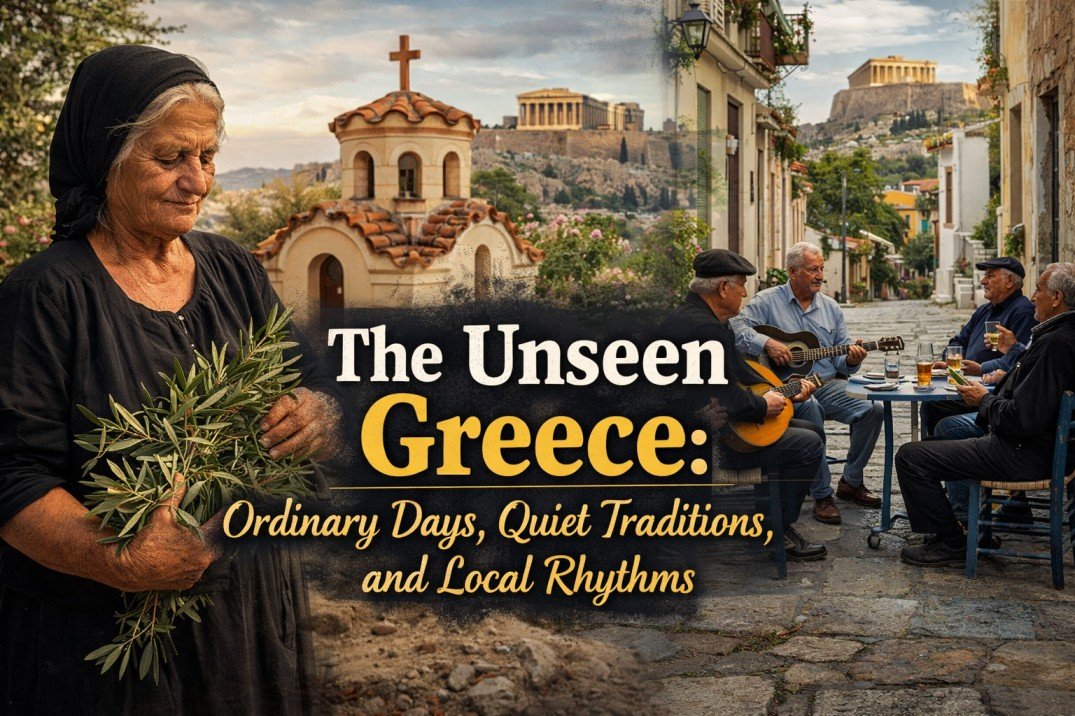
When most people think of Greece, images of sun-soaked islands, turquoise seas, and ancient ruins dominate the imagination. But behind the postcards, there is a Greece that tourists rarely see. This is the Greece of ordinary days, quiet traditions, and the rhythms of local life—a world shaped by family, community, and simple daily practices.
This guide dives into the unseen aspects of life in Greece, exploring routines, local customs, seasonal patterns, and the social and cultural fabric that defines everyday existence. Whether you are planning a long-term stay, considering relocation, or just curious about how locals live, this article provides a complete picture of authentic Greece.
Waking Up in Local Neighborhoods
Morning Rituals Set the Tone
In cities like Thessaloniki or villages scattered across the Peloponnese, mornings begin with a gentle pace. Unlike the rush common in major metropolitan areas around the world, Greeks often start their day with calm and intentional actions.
Coffee is central to this ritual. Locals favor small espresso-style drinks or the famous freddo cappuccino during warmer months. Cafés fill with neighbors exchanging greetings and news. Unlike the takeaway culture elsewhere, coffee is savored, and conversations can stretch for an hour or more.
For newcomers, this slow start can feel foreign, but it also allows the day to begin with a sense of human connection rather than mechanical efficiency.
School and Work Begin Gradually
Children make their way to school, often walking with friends or siblings. Traffic is lighter during these hours compared to cities abroad. Many workplaces open around 9 or 10 am, with business hours stretching later into the day, especially in urban centers.
The rhythm prioritizes balance over speed. Work supports life, not the reverse. This attitude is deeply rooted in Greek culture, emphasizing quality of interactions and personal connections.
The Role of Meals in Daily Life
Breakfast Is Simple but Meaningful
Breakfast in Greece is usually light—bread with olive oil, cheese, yogurt, or pastries like bougatsa in northern regions. While modest, the meal is enjoyed without haste, often paired with morning coffee.
Family interaction during breakfast is common in smaller towns, while in cities, cafés serve as the informal living rooms where friends and neighbors meet.
Lunch: The Heart of the Day
Lunch is traditionally the most important meal, often shared with family or coworkers. Seasonal vegetables, legumes, fish, and occasional meat dominate the plates. Olive oil, fresh herbs, and bread accompany almost every meal.
Public spaces, such as local tavernas, are crowded during lunch hours, not with tourists but with locals enjoying a communal pause. This midday break shapes the rhythm of life, allowing energy to recharge for the remainder of the day.
Dinner: A Late, Social Event
Dinner in Greece is generally eaten later than in northern Europe or the US, often around 9 pm. It is not just a meal; it is a social ritual. Families and friends gather, and conversation can last for hours.
Even weekdays retain this evening vitality. In coastal towns, dining outdoors is common, taking advantage of mild evenings. The pace slows, encouraging connection rather than efficiency.
Neighborhood Life and Local Markets
The Importance of Local Shops
Small shops are cornerstones of Greek neighborhoods. Bakeries, butchers, and fruit stands offer more than goods—they provide human connection. Shopkeepers often know their customers by name, and interactions are personal.
Walking to purchase daily essentials is common, fostering community engagement. Imported goods exist but are secondary to local, seasonal produce, which ensures freshness and affordability.
Weekly Outdoor Markets
Outdoor markets, called laiki agora, are cultural staples. They occur weekly in nearly every town, where residents buy vegetables, cheese, fish, and household items directly from producers.
Markets are social events as much as shopping trips. Locals exchange stories, offer advice on cooking, and maintain relationships that strengthen neighborhood bonds. This practice preserves quiet traditions and slows the pace of life.
Work, Productivity, and Pace of Life
Work Culture Is Flexible
Greek work culture emphasizes balance. While people are productive, time is treated differently than in high-pressure economies. Lunch breaks are respected, and informal social interactions at work are common.
Small businesses dominate the economy, and customer relationships are long-term. In offices or shops, efficiency is secondary to trust and quality of service.
Afternoon Lull
Between roughly 2 pm and 5 pm, life in many regions slows. Businesses may close temporarily, streets quiet down, and locals rest or socialize. Tourists often interpret this as inefficiency, but it is a deliberate pause aligned with cultural and climatic realities.
This rhythm encourages mindfulness and prevents burnout, showing a cultural prioritization of life over work.
Social Life and Community Bonds
Friendships Are Deep and Slow-Building
Greek friendships are built over time. Trust and loyalty are highly valued. Newcomers may need patience to integrate, but once accepted, relationships are enduring and supportive.
Social life revolves around public spaces: squares, parks, and cafés. Children play in streets, elderly residents gather in benches, and families stroll together in the evenings.
Community Involvement
Neighborhoods function like extended families. People help one another with errands, childcare, or home repairs. Local celebrations, religious festivals, and seasonal events further reinforce these bonds.
Participation in community life is natural, not obligatory. Observing or joining traditions allows newcomers to feel part of local culture.
Seasonal Changes and Their Effects on Daily Life
Summer: Vibrancy and Energy
Summer is the most intense season. Tourist areas swell, heat increases, and the pace outdoors accelerates. Residents often adjust by resting during midday and embracing late-night socializing.
Festivals, outdoor music, and beach culture dominate, but daily responsibilities continue quietly in neighborhoods away from the tourist centers.
Winter: Quiet and Reflection
Winter reveals a different Greece. Tourist hubs empty, and the authentic rhythms of local life become visible. Streets are quieter. Cafés feel warmer and more intimate. Community engagement is slower, more deliberate.
Heating older buildings is challenging, and residents often gather in shared spaces to conserve energy. This season emphasizes introspection, small traditions, and family connection.
Healthcare, Services, and Practicalities
Healthcare
Greece provides public healthcare, but navigating it requires patience. Private healthcare is widely used, accessible, and relatively affordable. Pharmacies also play a central role, offering guidance on minor health concerns.
Expats often rely on local recommendations to identify reliable doctors and specialists. Language can be a barrier outside urban centers, making local contacts invaluable.
Daily Services
Plumbers, electricians, and other service providers operate with personal relationships. Being known in the neighborhood often improves service speed and quality. Trust and politeness go further than formal procedures.
Education and Family Life
Schools and Children
Education is valued, though schooling schedules differ from what newcomers might expect. Children walk or cycle to school in smaller towns. Social skills are emphasized alongside academics.
Family Bonds
Family life is central. Multi-generational households are common in villages. Grandparents actively care for children, and extended families gather regularly. Celebrations are intimate, emphasizing shared time over formality.
Language and Communication
Greek Language in Daily Life
While English is common in tourist zones, most daily interactions occur in Greek. Learning even basic phrases accelerates integration and deepens relationships.
Expressive Communication
Greek conversation is expressive, animated, and emotional. Gestures and tone convey meaning beyond words. This expressiveness is part of cultural identity and social connection.
Local Traditions and Quiet Rituals
Religious and Cultural Observances
Greek Orthodox traditions influence daily life. Church attendance, festival preparations, and local rituals punctuate the calendar. Even in secular contexts, these events shape community rhythms.
Food, Music, and Celebration
Traditional music, seasonal dishes, and small local festivals preserve heritage. Cooking at home, sharing meals, and attending celebrations maintain the cultural fabric quietly but consistently.
Lessons from Unseen Greece
Living among locals teaches patience, flexibility, and attentiveness. Time slows. Relationships matter more than efficiency. Daily routines, rituals, and unspoken customs guide life as much as formal schedules.
Newcomers may initially feel frustrated by bureaucracy, delayed services, or unexpected patterns. Over time, adapting to these rhythms fosters a deeper appreciation for Greek culture, community, and quality of life.
Conclusion: Discovering Greece Beyond the Tourist Lens
The unseen Greece is not glamorous. It is not always convenient. It is not designed for snapshots. But it is authentic, human, and deeply rewarding.
Experiencing ordinary days, quiet traditions, and local rhythms allows outsiders to see a side of Greece few tourists witness. Understanding daily life here goes beyond landmarks—it is about connection, presence, and participation in a culture that values people and relationships over constant speed.
Those who embrace this rhythm find that Greece’s true beauty lies not just in its landscapes, but in the small, enduring patterns of everyday life.