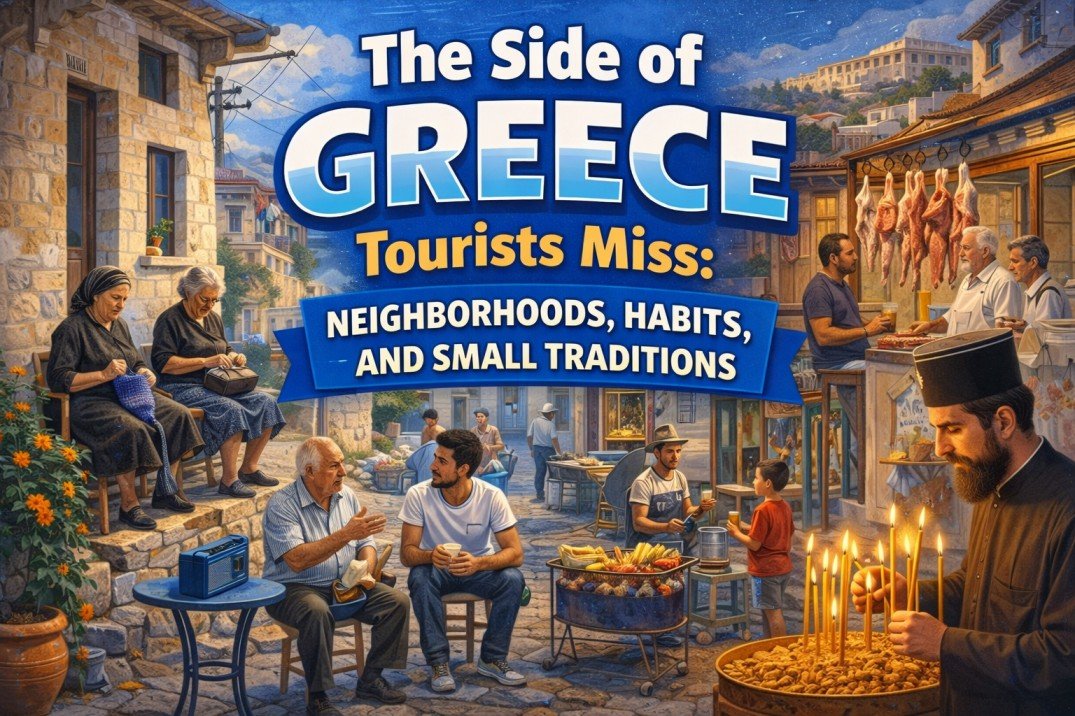
Greece is a country many know through its iconic images — the cliffs of Santorini, the beaches of Mykonos, or the ancient ruins of Athens. But these snapshots capture only a small part of what Greece truly is. Beyond the postcards lies a world of vibrant neighborhoods, daily routines, local habits, and small traditions that shape everyday life.
This guide explores the Greece tourists rarely see. From hidden streets and community cafés to family traditions and neighborhood rituals, it paints a picture of daily life and culture that goes deeper than holiday snapshots. Whether you’re planning a long-term stay, an extended trip, or just want a more authentic understanding of Greek life, this article offers insights into the real Greece.
Exploring Greek Neighborhoods
The soul of Greece is often found in its neighborhoods. Cities, towns, and villages each have unique rhythms, architectural styles, and community structures.
City Neighborhoods
Urban life in cities like Athens and Thessaloniki is a mix of history and modernity. Each district has its own personality:
-
Plaka, Athens: Cobblestone streets, traditional cafés, and small shops. Even though it’s popular with tourists, locals maintain routines here — morning walks, early coffee breaks, and evening strolls.
-
Exarchia, Athens: Known for student life and artistic culture. Bookstores, street art, and cafés dominate daily activity.
-
Ladadika, Thessaloniki: A historic neighborhood famous for tavernas, music, and community gatherings.
Local life revolves around small shops, family-run businesses, and social hubs rather than tourist-focused services. Walking through neighborhoods early in the morning or late at night gives a glimpse into everyday routines that postcards can’t show.
Village Life
Villages in Greece often operate on slower, community-oriented rhythms. Life is centered around:
-
Neighborhood squares: Gathering points where locals socialize, play games, or hold informal meetings.
-
Local markets: Seasonal produce, fresh bread, and handmade goods are purchased daily.
-
Churches and festivals: Weekly services and small celebrations anchor community life.
Visiting villages offers an intimate understanding of traditions, including cuisine, crafts, and interpersonal relationships.
Daily Habits of Greeks
Tourists often overlook the subtleties of daily habits that define Greek life. From food to work schedules, these routines reveal a cultural emphasis on community and quality of life.
Morning Rituals
Mornings in Greece are slow and social. Common habits include:
-
Drinking Greek coffee at local cafés or at home.
-
Stopping by bakeries for fresh bread and pastries.
-
Brief conversations with neighbors during morning errands.
Many locals take time to enjoy the morning, rather than rushing through it. Even city life allows for small pauses, whether at a street-side café or in a public park.
Work and Productivity
Work patterns vary by location:
-
Cities operate on standard office hours (usually 9:00 AM–5:00 PM), but flexibility is common.
-
Smaller towns and villages may observe midday breaks, particularly during warmer months.
-
Seasonal and tourism-driven work heavily influences employment in coastal and island communities.
Remote work is growing, especially in Athens, Thessaloniki, and islands with strong internet infrastructure, such as Crete and Rhodes. Coworking spaces are emerging, offering spaces for digital nomads to integrate with local life.
Food Culture Beyond Tourism
Greek cuisine is central to daily life. While tourists enjoy famous dishes, locals engage in meals that are seasonal, practical, and social.
Breakfast and Morning Snacks
Most Greeks have a light breakfast:
-
Greek coffee with fresh bread or pastries.
-
Yogurt with honey and fruit, especially during summer.
Bakeries are hubs of social interaction, not just food supply points.
Lunch and Dinner
Lunch remains the main meal of the day in many regions. Traditional dishes vary by season and locality:
-
Fresh seafood along coastal towns.
-
Roasted vegetables and greens in the countryside.
-
Meat stews and pies in villages during colder months.
Evening meals are typically later than in many countries (around 8:30–9:00 PM) and are often longer, shared experiences. Taverns, local eateries, and home kitchens prioritize community and conversation.
Festivals and Small Traditions
Local festivals and traditions are among the most overlooked aspects of Greek life.
Religious and Cultural Celebrations
-
Greek Easter: Central to family and community life, involving gatherings, traditional meals, and ritual practices.
-
Saints’ Days: Villages celebrate their patron saints with small-scale festivals, music, and communal meals.
-
Harvest and Seasonal Festivals: Olive harvests, wine-making events, and local fairs highlight the agricultural calendar and community cooperation.
These events reinforce social bonds, offer entertainment, and maintain cultural continuity.
Everyday Rituals
Small, everyday traditions are common and tell a story of Greek culture:
-
Afternoon walks (or volta) through neighborhoods, especially in coastal areas.
-
Coffee or wine breaks with friends in the late afternoon.
-
Evening promenades through squares, markets, and seaside paths.
Even outside formal festivals, these habits maintain cultural cohesion and community life.
Social Life and Community Connections
Greek social life extends beyond family into neighborhoods and friend networks.
-
Squares and cafés are informal gathering points for social interaction.
-
Clubs, sports teams, and hobby groups allow residents to connect outside family life.
-
Neighborhood events, like small concerts or local markets, provide communal experiences.
Tourists often miss these subtle social interactions that define local life and build long-term relationships.
Costs of Everyday Life
Living in Greece as a local is different from what tourists see. Understanding real costs helps anyone planning a long stay:
-
Housing: Cities have higher rents, but villages offer more affordable options. Islands see seasonal spikes.
-
Food: Local markets, family-run tavernas, and bakeries provide cost-effective options.
-
Transport: Public transport is affordable in cities; small towns often rely on cars or scooters.
-
Utilities: Seasonal heating and cooling affect electricity bills.
Official resources, like the Hellenic Statistical Authority, provide current data on housing, groceries, and utilities for accurate planning.
Neighborhood Life in Detail
The beauty of Greek neighborhoods lies in their rhythms and accessibility:
-
Streets are pedestrian-friendly, encouraging walking and casual interaction.
-
Shops are small and locally owned, fostering personal relationships.
-
Public spaces serve as gathering points for all ages, from children to the elderly.
This local engagement contrasts sharply with tourist zones, which prioritize attractions over community life.
Urban vs Rural Experience
Urban Areas
-
Offer dynamic work opportunities, modern amenities, and cultural events.
-
Evening life is vibrant with restaurants, bars, and performances.
-
Neighborhoods maintain social cohesion even amidst city bustle.
Rural Areas
-
Slower pace, strong family and community networks.
-
Emphasis on traditional cuisine, agriculture, and local crafts.
-
Festivals and seasonal celebrations are more personal and integrated into daily life.
Understanding these differences is key for anyone seeking an authentic Greek experience.
Practical Tips for Experiencing the Local Side of Greece
-
Learn basic Greek phrases to engage with locals more meaningfully.
-
Shop at local markets instead of tourist stores.
-
Follow neighborhood routines, like morning coffees and evening promenades.
-
Participate in small festivals and cultural events.
-
Explore streets away from main tourist areas to observe daily life authentically.
Official sources like the Greek Ministry of Tourism and local municipal websites offer guidance on cultural events, public services, and community programs.
Conclusion: Beyond the Postcards
Tourists often see Greece as a set of attractions, but life here extends far beyond beaches and monuments. Neighborhoods, daily habits, and small traditions create a rich tapestry of experiences that postcards cannot capture.
Living like a local means appreciating slow mornings with coffee, leisurely meals, communal gatherings, and seasonal festivals. It involves engaging with neighborhoods, understanding routines, and building relationships over time.
Greece is not just a destination; it is a way of life — layered, vibrant, and rooted in both history and contemporary community. By looking past the tourist lens, you can experience the authentic rhythms of Greek life and discover a side of the country that remains hidden from most visitors.