Greece has always been a favorite destination for European travelers, but something has shifted in recent years. Long-haul travel to Greece is no longer a niche segment. Visitors from the United States and Asia are arriving in record numbers, staying longer, spending more, and reshaping the country’s tourism landscape.
From direct flight expansions to changing traveler preferences, Greece is benefiting from a global travel realignment. This article explores why the US and Asian markets are driving growth, what destinations are benefiting the most, and how Greece is positioning itself as a long-haul powerhouse.
The Rise of Long-Haul Travel to Greece
For decades, Greece’s tourism model relied heavily on short-haul European travel. Countries like Germany, the UK, France, and Italy dominated arrivals, often driven by seasonal beach tourism and budget airlines.
Long-haul travelers operate differently. They:
-
Plan trips months in advance
-
Stay longer, often 10 to 21 days
-
Spend more per trip
-
Seek deeper cultural and experiential travel
As global air connectivity improves and travel confidence rebounds, Greece has become increasingly accessible and appealing to travelers from the US, East Asia, Southeast Asia, and parts of South Asia.
According to data from the Greek National Tourism Organisation, non-European arrivals now represent one of the fastest-growing visitor segments, with the US consistently ranking among the top long-haul source markets.
External reference: https://www.visitgreece.gr
External reference: https://www.unwto.org/tourism-data
Why the United States Is Leading Greece’s Long-Haul Growth

Direct Flights Are Changing Everything
One of the biggest drivers of US tourism growth is direct air connectivity. Major airlines now operate seasonal and year-round nonstop routes from cities such as:
-
New York
-
Chicago
-
Boston
-
Atlanta
-
Washington D.C.
These direct flights reduce travel fatigue and eliminate complicated European layovers, making Greece a realistic vacation option for American travelers who previously chose Italy, France, or Spain.
Airline expansion has also made island-hopping easier through Athens and regional hubs like Thessaloniki.
External reference: https://www.aia.gr
External reference: https://www.flightconnections.com
American Travel Preferences Align with Greece’s Strengths
US travelers are drawn to Greece for reasons that align perfectly with the country’s offerings:
-
Ancient history and mythology
-
World-famous cuisine
-
Romantic island scenery
-
Luxury resorts and boutique hotels
-
Safe, English-friendly travel environment
Unlike quick European city breaks, Americans typically plan longer itineraries that combine Athens, islands, and mainland destinations. This benefits regions beyond Santorini and Mykonos, spreading tourism revenue more evenly.
High Spending Power and Premium Experiences
American tourists consistently rank among the highest spenders per trip. They are more likely to book:
-
Luxury hotels and villas
-
Private tours
-
Yacht charters
-
Multi-destination itineraries
This has encouraged Greece to expand high-end offerings, particularly in destinations like:
-
Paros
-
Naxos
-
Crete
-
Peloponnese
-
Halkidiki
The rise of experiential travel has further boosted demand for wine tours, cooking classes, archaeological excursions, and slow-travel itineraries.
Asia’s Growing Influence on Greek Tourism
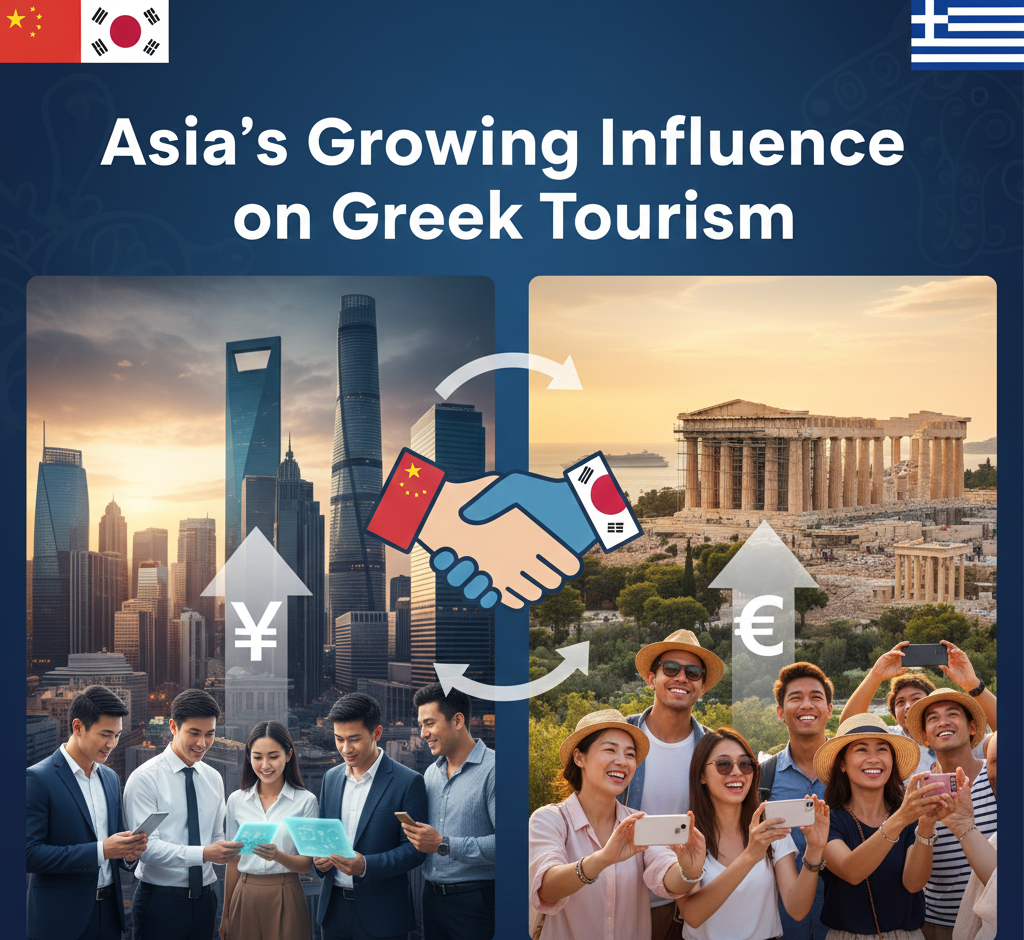
While US arrivals often dominate headlines, Asia represents the most significant long-term growth opportunity for Greece.
Key Asian Markets Driving Growth
Several Asian countries are emerging as strong outbound travel markets to Greece:
-
China
-
Japan
-
South Korea
-
India
-
Singapore
-
Thailand
These travelers are increasingly interested in European cultural destinations, with Greece benefiting from its global historical recognition and iconic imagery.
Greece’s Cultural Appeal to Asian Travelers
For many Asian travelers, Greece represents:
-
The birthplace of Western civilization
-
A destination rich in philosophy, architecture, and mythology
-
A once-in-a-lifetime long-haul journey
Destinations like the Acropolis, Delphi, Olympia, and Meteora resonate strongly with culturally motivated travelers, especially those combining Greece with Italy or France on multi-country itineraries.
External reference: https://whc.unesco.org
Group Travel and Multi-Country Itineraries
Asian travelers often visit Greece as part of a broader European tour, particularly first-time visitors. Athens is typically the main entry point, with Santorini serving as the signature island experience.
However, repeat visitors from Asia are beginning to explore lesser-known destinations, driven by social media exposure and influencer marketing.
This trend supports sustainable tourism growth and reduces pressure on overcrowded hotspots.
The Role of Social Media and Digital Influence
Instagram, YouTube, and Travel Aspirations
Greece’s visual appeal performs exceptionally well on social platforms popular in both the US and Asia. Whitewashed villages, turquoise waters, cliffside sunsets, and ancient ruins create highly shareable content.
Platforms driving inspiration include:
-
Instagram
-
YouTube
-
TikTok
-
WeChat
-
Xiaohongshu
Asian and American influencers have played a major role in positioning Greece as a dream destination rather than just a beach holiday.
Destination Branding and Storytelling
Greek tourism campaigns have shifted toward storytelling rather than generic promotion. Messaging now focuses on:
-
Authentic experiences
-
Local culture
-
Sustainable travel
-
Seasonal travel beyond summer
This approach resonates strongly with long-haul travelers seeking meaningful experiences rather than checklist tourism.
External reference: https://marketinggreece.com
Beyond Santorini and Mykonos: New Destinations Gaining Attention
Long-haul travelers tend to explore more widely, which is reshaping Greece’s tourism map.
Rising Mainland Destinations
Regions gaining traction include:
-
Peloponnese for history and nature
-
Epirus for outdoor adventure
-
Central Macedonia for food and culture
-
Thessaloniki as a city break alternative
These destinations appeal to travelers looking for depth, authenticity, and value.
Lesser-Known Greek Islands Attracting Long-Haul Visitors
Islands benefiting from long-haul interest include:
-
Milos
-
Koufonisia
-
Alonissos
-
Syros
-
Amorgos
These islands offer a quieter, more immersive experience compared to over-touristed hotspots, aligning with evolving traveler preferences.
Seasonality Shifts Driven by Long-Haul Travel
European tourism to Greece is heavily concentrated in summer. Long-haul travelers are changing this pattern.
Shoulder Season Growth
US and Asian visitors are more likely to travel during:
-
April to June
-
September to November
This extends the tourism season, stabilizes employment, and improves infrastructure utilization.
Milder weather also enhances cultural sightseeing, making shoulder seasons ideal for long-haul travelers who prioritize experiences over beach crowds.
Economic Impact of Long-Haul Tourism
Long-haul travelers deliver higher economic value across multiple sectors:
-
Hospitality
-
Transportation
-
Food and beverage
-
Cultural attractions
-
Retail and crafts
Their longer stays increase regional spending and support small businesses outside traditional tourist hubs.
According to the World Tourism Organization, long-haul travelers typically spend 30–50 percent more per trip than short-haul visitors.
External reference: https://www.unwto.org
Infrastructure and Policy Supporting Growth
Airport Expansion and Connectivity
Greece has invested heavily in airport upgrades and regional connectivity. Improved infrastructure at Athens International Airport and regional hubs supports increasing long-haul demand.
Visa Access and Travel Facilitation
Simplified Schengen visa processes for Asian markets and expanded US travel agreements have also contributed to growth. Improved digital information access further reduces travel barriers.
Challenges and Sustainability Considerations
While growth is positive, Greece faces challenges:
-
Overtourism in popular islands
-
Environmental pressure
-
Infrastructure strain during peak months
Long-haul travelers can be part of the solution when encouraged toward:
-
Off-season travel
-
Alternative destinations
-
Sustainable accommodations
Balanced growth remains essential to preserving Greece’s cultural and natural heritage.
The Future of Long-Haul Travel to Greece
The outlook for long-haul travel to Greece remains strong. Continued airline expansion, targeted marketing, and evolving traveler preferences position Greece as one of Europe’s most competitive long-haul destinations.
US travelers are likely to continue leading in volume and spending, while Asian markets represent the next wave of exponential growth. Together, they are reshaping how Greece is experienced, promoted, and sustained.
For Greece, long-haul tourism is no longer supplementary. It is central to the future of the country’s travel economy.