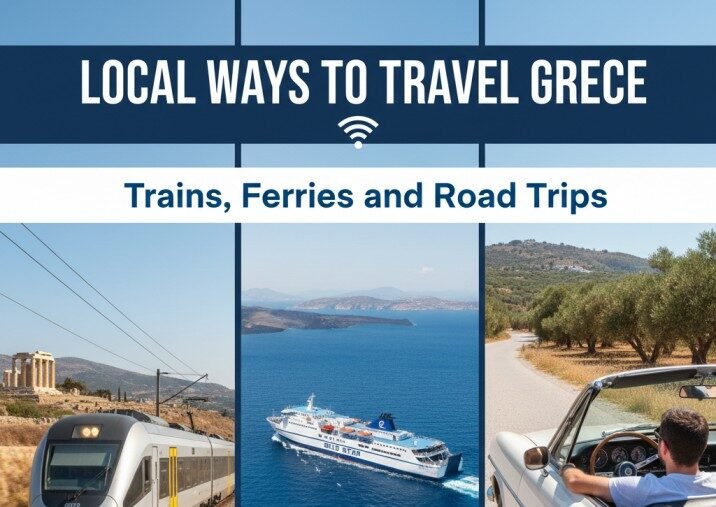
Most people experience Greece through short flights, rushed island hopping, and tightly packed itineraries. Locals travel very differently. They move slowly, use public transport, plan around seasons, and treat the journey itself as part of life, not something to rush through.
If you want to understand Greece beyond tourist bubbles, how you travel matters just as much as where you go. This guide breaks down the most local ways to travel Greece by train, ferry, and road, explaining when each option makes sense, what to expect, and how to avoid common mistakes.
Why Traveling Like a Local Changes Everything
Local travel in Greece is shaped by geography, rhythm, and habit.
Greece is not built for speed. Mountains cut through the mainland, islands rely on weather, and daily life follows a relaxed pace. Locals accept delays, adjust plans, and value comfort over efficiency.
Traveling locally helps you:
-
Avoid overcrowded routes and peak stress
-
Save money outside tourist corridors
-
See everyday Greece, not just highlights
-
Experience landscapes and communities in between destinations
Instead of rushing from point A to point B, you start noticing the country itself.
Traveling Greece by Train: When It Works and When It Doesn’t
Train travel in Greece is limited compared to other European countries, but where it works, it works well.
The Greek Rail Network Explained
Greece’s railway system mainly connects:
-
Athens
-
Thessaloniki
-
Central mainland cities
Trains are modern on major routes, especially the Athens–Thessaloniki line, which is the backbone of the network.
According to official Greek railway operators, this route has seen major upgrades in recent years, making it reliable and comfortable for long-distance travel.
Best Routes to Take by Train
Athens to Thessaloniki
This is the most useful train route in Greece.
Why locals use it:
-
Comfortable seating
-
Scenic countryside views
-
No airport stress
-
Direct city-center arrival
For travelers planning to explore northern Greece, this route is far more relaxed than flying.
Athens to Central Greece
Trains also connect Athens with towns like:
-
Livadia
-
Lamia
These routes are useful for slower, budget-friendly mainland travel.
When Trains Are Not Ideal
Train travel is not practical for:
-
Most Peloponnese destinations
-
Western Greece
-
Mountain villages
-
Island access
Coverage is limited, and buses often reach more places.
Local Tips for Train Travel
-
Book tickets early during holidays
-
Expect occasional delays
-
Bring snacks and water
-
Use trains for long distances, not short hops
Trains are about comfort, not speed.
Traveling Greece by Bus: The Most Local Option
Buses are the backbone of Greek transportation.
Understanding the KTEL Bus System
KTEL buses operate regionally, not nationally. Each region has its own company, schedules, and ticketing system.
This can feel confusing at first, but locals rely on buses for almost everything.
KTEL buses connect:
-
Cities to villages
-
Airports to towns
-
Archaeological sites
-
Remote beaches
Why Buses Are So Popular in Greece
-
They reach places trains never will
-
They are affordable
-
They run frequently
-
They are surprisingly comfortable
On many routes, buses are faster than driving.
Best Use Cases for Buses
Buses are ideal for:
-
Peloponnese travel
-
Mainland regions like Epirus and Thessaly
-
Island interiors
-
Budget travel
Official regional transport websites publish schedules and updates, especially during seasonal changes.
What to Expect Onboard
-
Assigned seating on long routes
-
Luggage stored underneath
-
Short breaks on longer journeys
-
Locals carrying groceries, not backpacks
It feels like daily life, not tourism.
Traveling Greece by Ferry: The Heart of Island Life
Ferries are not just transport in Greece. They are culture.
Why Ferries Matter So Much
With thousands of islands, ferries connect Greece in ways roads never could. Locals use ferries to:
-
Visit family
-
Transport goods
-
Commute between islands
-
Return home for holidays
Traveling by ferry helps you understand island life and its dependence on weather and seasons.
Types of Ferries in Greece
Conventional Ferries
Slower but more affordable. These are used by locals year-round and allow you to:
-
Walk around decks
-
Enjoy sea views
-
Travel comfortably
High-Speed Ferries
Faster but more expensive. Popular in summer and used mainly on busy tourist routes.
Locals often prefer slower ferries unless time is critical.
Best Ferry Routes for Travelers
Some ferry journeys are destinations in themselves.
Popular scenic routes include:
-
Piraeus to Crete
-
Cyclades island routes
-
Ionian island connections
Official ferry platforms and port authorities publish schedules, which change seasonally.
Seasonal Reality of Ferry Travel
This is where many travelers struggle.
In winter:
-
Routes are reduced
-
Weather causes delays
-
Small islands may have limited access
Locals plan around this. Travelers should too.
Ferry Travel Tips From Locals
-
Choose morning departures when seas are calmer
-
Avoid tight connections
-
Bring snacks and layers
-
Accept delays as normal
Ferries reward patience.
Road Trips in Greece: Freedom With Responsibility
Driving is one of the best ways to see mainland Greece, but it comes with realities many tourists overlook.
Why Road Trips Work So Well in Greece
Road trips allow access to:
-
Mountain villages
-
Remote beaches
-
Archaeological sites
-
Regions with limited public transport
Locals rely on cars outside cities, especially in rural areas.
Best Regions for Road Trips
Peloponnese
The Peloponnese is ideal for road travel.
You can explore:
-
Nafplio
-
Mani Peninsula
-
Ancient Olympia
-
Mountain villages
Distances are short, but variety is huge.
Epirus and Zagori
Northern Greece offers dramatic landscapes and quiet roads.
Expect:
-
Stone villages
-
Deep gorges
-
Cooler temperatures
Public transport here is limited, so a car makes a big difference.
Crete
Crete is perfect for long road trips, but it requires time.
Driving allows you to:
-
Reach hidden beaches
-
Visit inland villages
-
Avoid resort zones
What Driving in Greece Is Really Like
Driving culture varies.
Expect:
-
Confident local drivers
-
Narrow village roads
-
Limited signage in rural areas
-
Mountain roads with sharp turns
It is not dangerous, but it requires attention.
Renting a Car vs Using Your Own
For travelers, renting is easiest.
Local rental agencies often offer:
-
Better rates
-
Flexible terms
-
Seasonal discounts
International chains work well in airports but cost more.
Combining Transport Like Locals Do
Greeks rarely use just one transport method.
A typical local-style journey might look like:
-
Train from Athens to Thessaloniki
-
Bus to a smaller town
-
Car rental for village exploration
Or:
-
Ferry to an island
-
Scooter or car rental locally
-
Bus for short island routes
Flexibility is key.
Travel Costs: What Locals Spend vs Tourists
Local travel is cheaper because it avoids convenience premiums.
Money-saving tips:
-
Use buses instead of tours
-
Travel outside weekends and holidays
-
Book ferries early in summer
-
Avoid last-minute connections
Official transport providers and government tourism portals regularly publish fare updates and seasonal notices.
Seasonal Differences in Transport
Summer
-
More ferry routes
-
Higher prices
-
Crowded ports and stations
Spring and Autumn
-
Best balance of access and comfort
-
Fewer crowds
-
Stable schedules
Winter
-
Reduced island transport
-
Strong mainland connectivity
-
Lower costs
Locals adjust their movement based on season, not preference.
Common Mistakes Travelers Make
Avoid these issues:
-
Planning tight ferry connections
-
Assuming trains go everywhere
-
Ignoring seasonal schedule changes
-
Overloading itineraries
Greece rewards travelers who leave room for adjustment.
Why Local Travel Matters More Than Speed
Traveling Greece locally changes how you see the country.
You notice:
-
How regions differ
-
How communities connect
-
How geography shapes daily life
You stop measuring trips by distance and start measuring them by experience.
Final Thoughts: Travel Greece the Way Greeks Do
Trains, ferries, buses, and road trips are not just transport options in Greece. They are part of the culture. Each one reveals a different side of the country.
If you travel slowly, plan with seasons in mind, and accept flexibility, Greece becomes easier, cheaper, and far more rewarding.
The real Greece is not hidden. It simply moves at its own pace. When you travel like a local, you finally move with it.