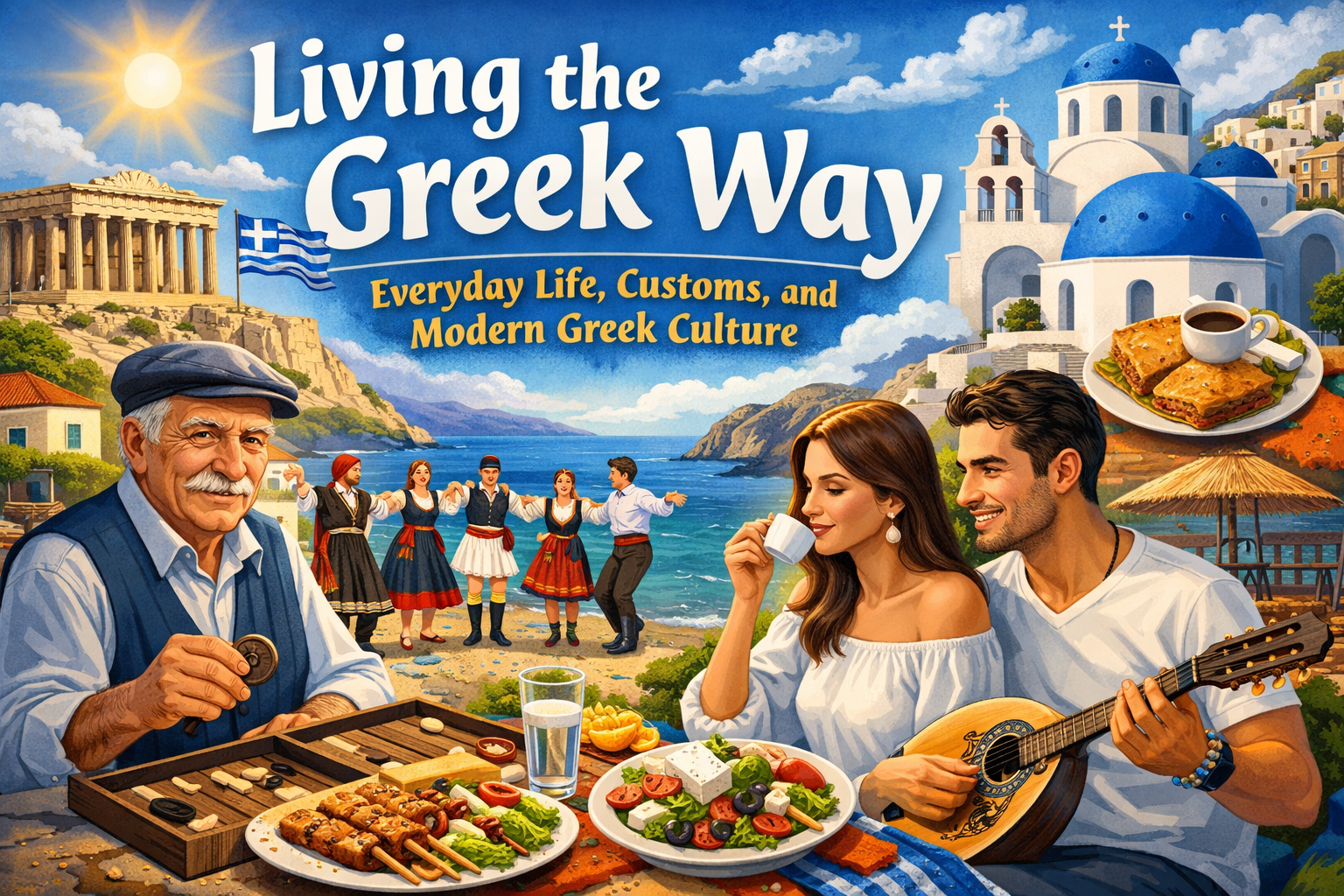
Living the Greek way is about more than geography or history. It is a mindset shaped by community, balance, tradition, and a deep appreciation for simple pleasures. While Greece is famous for ancient ruins, sunlit islands, and Mediterranean food, the real story unfolds in everyday life. From morning coffee rituals to late-night dinners, from family bonds to evolving modern values, Greek lifestyle offers a unique blend of old and new.
This guide explores how Greeks live today, how customs still shape daily routines, and how modern Greek culture continues to evolve without losing its roots.
What Does “Living the Greek Way” Really Mean?
The Greek way of life centers on people, not pressure. Relationships come before schedules, conversations matter, and meals are rarely rushed. While life in Greece has modernized significantly, especially in cities, core values remain deeply traditional.
At the heart of Greek lifestyle are three pillars:
-
Strong social and family connections
-
Respect for tradition and culture
-
A balanced approach to work and enjoyment
This combination is what makes daily life in Greece feel slower, warmer, and more human compared to many Western societies.
Everyday Life in Greece: A Daily Rhythm
Greek daily life varies between cities, islands, and villages, but certain habits remain consistent across the country.
Mornings in Greece
Mornings usually start slowly. Breakfast is light and simple. Many Greeks grab a coffee and a small pastry on the way to work or sit briefly at a café before starting the day.
Popular morning choices include:
-
Greek coffee
-
Freddo espresso
-
Freddo cappuccino
-
Bougatsa or spanakopita
Coffee is rarely taken to go. Sitting down, even briefly, is part of the ritual.
Work and Daily Responsibilities
Work schedules depend on location and profession. In cities like Athens and Thessaloniki, working hours resemble other European capitals. In smaller towns, businesses may close in the afternoon and reopen later.
This break allows time for lunch, rest, or family responsibilities. While not universal anymore, this rhythm still influences daily life, especially outside major cities.
The Importance of Food in Greek Culture
Food is the backbone of Greek lifestyle. It connects families, neighbors, and friends.
Greek Food as a Social Experience
Meals are rarely eaten alone when possible. Lunch and dinner are social moments where conversation matters as much as the food itself.
Home cooking remains strong, especially among older generations. Even younger Greeks value traditional meals, often prepared by parents or grandparents.
Everyday Greek Dishes
Greek cuisine focuses on seasonal ingredients and simple preparation. Common home-cooked meals include:
-
Lentil soup
-
Fasolada (bean soup)
-
Gemista (stuffed vegetables)
-
Grilled fish
-
Briam (baked vegetables)
-
Greek salad with olive oil and feta
Olive oil is a staple, not a luxury. Bread is almost always present.
For deeper insight into authentic Greek cuisine and its cultural roots, resources from the Greek National Tourism Organization provide valuable background.
Coffee Culture and Social Interaction
Coffee in Greece is not about speed. It is about presence.
Cafés as Social Spaces
Greek cafés are meeting points for friends, coworkers, and families. A single coffee can last hours, accompanied by conversation, debate, and laughter.
This café culture encourages social connection and reflects the Greek belief that time spent with others is never wasted.
Conversation and Expression
Greeks are expressive communicators. Hand gestures, emotion, and directness are normal. Silence can feel awkward, while lively discussion is welcomed.
Disagreements are part of conversation and rarely personal. Passion is seen as honesty, not conflict.
Family Life and Community Bonds
Family plays a central role in Greek society.
Close Family Relationships
Greek families stay connected across generations. Adult children often live close to parents, and grandparents are actively involved in daily life.
Sunday family lunches are common and often last the entire afternoon. These gatherings reinforce bonds and keep traditions alive.
Neighborhood Life
In many neighborhoods, especially outside big cities, people know each other well. Shop owners recognize customers. Greetings happen naturally.
This sense of familiarity creates strong community ties and makes daily life feel personal rather than anonymous.
Greek Customs and Traditions Still Alive Today
Despite modernization, traditions remain a strong part of Greek life.
Religious Influence in Daily Life
The Greek Orthodox Church continues to influence customs, holidays, and values. Religious celebrations shape the yearly calendar, even for non-practicing Greeks.
Name days are often more important than birthdays, and it is common to receive visits, messages, or phone calls on that day.
For official information on cultural heritage and traditions, the Hellenic Ministry of Culture offers detailed insights.
Festivals and Local Celebrations
Local festivals, known as panigyria, take place throughout the year. These events include music, dancing, food, and wine, often organized by villages or neighborhoods.
Everyone is welcome, and participation is encouraged. These gatherings reflect the communal spirit at the heart of Greek culture.
Modern Greek Culture: Tradition Meets Change
Greek culture today is a mix of tradition and modern influence.
Technology and Daily Life
Younger Greeks are digitally connected, active on social media, and influenced by global trends. At the same time, traditional values remain important.
Family meals, holidays, and customs continue alongside modern lifestyles.
Fashion and Personal Style
Greeks care about appearance but favor simplicity and practicality. People dress casually but neatly. Beachwear stays at the beach, and city style is more polished.
This balance reflects the broader Greek approach to life: relaxed but respectful.
Life in Greek Cities vs Villages
Lifestyle changes significantly depending on location.
City Life in Greece
Athens and Thessaloniki offer a fast-paced version of Greek life. Cafés are busy, nightlife is active, and cultural events are frequent.
Even in cities, social life remains central. People meet late, dine late, and prioritize time with friends.
Village and Island Life
In villages and islands, life is slower and more seasonal. Summer brings activity, especially in tourist areas. Winter is quiet and community-focused.
Residents adapt their routines to nature and seasons, maintaining a closer connection to their environment.
Work-Life Balance in Greece
Work is important, but life outside work matters deeply.
Greeks may work long hours, especially in tourism or family businesses, but they also value breaks, holidays, and personal time.
Enjoyment is not viewed as laziness. Rest, food, and socializing are considered essential parts of a meaningful life.
Hospitality and Social Etiquette
Greek hospitality is famous for a reason.
Guests are welcomed warmly and often offered food or drinks immediately. Sharing is natural, and hosts tend to insist on generosity.
When dining out, it is common for one person to insist on paying. Splitting bills is becoming more common but still less traditional.
Language and Communication Style
Greek is a complex language, but locals appreciate effort.
Learning basic phrases goes a long way and often results in warmer interactions. Even limited Greek can open doors socially.
English is widely spoken, especially among younger people and in tourist areas, but local language shows respect and interest.
Why the Greek Way of Life Attracts So Many People
Many visitors fall in love with Greece not just for its beauty, but for how life feels.
-
Days feel fuller, not faster
-
Social connection is natural
-
Food brings people together
-
Time feels flexible, not controlled
This lifestyle appeals to travelers, retirees, digital nomads, and expats alike.
Challenges of Living the Greek Way
Life in Greece is not without challenges.
Bureaucracy can be slow. Economic pressures affect many families. Patience is often required when dealing with official processes.
However, many people find that the quality of daily life outweighs these difficulties.
How Greek Lifestyle Influences Visitors and Expats
Visitors often leave Greece with a different perspective on life. Slowing down, prioritizing people, and enjoying simple moments become lasting lessons.
Expats who adapt to local rhythms tend to integrate more successfully and enjoy a deeper connection to Greek culture.
Final Thoughts: Embracing the Greek Way of Living
Living the Greek way is not about perfection. It is about balance, connection, and authenticity.
Greek lifestyle teaches that success is not measured only by productivity, but by relationships, shared meals, and moments of joy.
Whether you experience it for a week or a lifetime, Greek culture leaves a lasting impression. It reminds us that life is richer when lived together, slowly, and with heart.