Greece is more than a destination of islands and ancient ruins. It is a living culture shaped by family bonds, food rituals, history, and a deep connection to everyday social life. To truly understand Greece, you need to look beyond postcards and experience how people live, eat, celebrate, and connect with each other.
This guide explores the Greek way of life in depth, from daily routines and social habits to food culture, family values, and long-standing traditions that still shape modern Greece today.
Understanding the Greek Lifestyle
The Greek lifestyle is built around balance. Work matters, but life is not rushed. Relationships come first. Meals are shared, conversations are long, and social connection is central to everyday living.
Greeks value quality of life over speed. This mindset influences everything from business hours to how people spend their evenings. You will notice this especially if you come from a fast-paced culture.
Daily Life in Greece
A Slower Pace of Living
In many parts of Greece, especially outside major cities, life moves slowly. Shops may close in the afternoon. Appointments run late. Long coffee breaks are normal.
This is not inefficiency. It is intentional. Greeks believe life should be lived, not rushed.
Morning Routines
The day usually starts early, especially for workers and shop owners. Breakfast is often light. A coffee and a pastry, koulouri, or toast is common. Many people grab coffee from local cafes rather than making it at home.
Greek coffee culture is strong, and cafes act as social hubs rather than quick stopovers.
Afternoons and Evenings
Lunch is traditionally the main meal of the day. In smaller towns, people still go home to eat with family. In cities, this is changing, but long lunches are still common.
Evenings are social. Dinner is late, often after 9 PM. People meet friends, walk around neighborhoods, and sit in cafes or tavernas for hours.
Greek Family Values
The Importance of Family
Family is the foundation of Greek society. It is common for multiple generations to live close to each other or even in the same home. Grandparents play an active role in raising children.
Family loyalty is strong. Decisions about work, marriage, and even moving abroad are often made with family in mind.
Sunday Family Gatherings
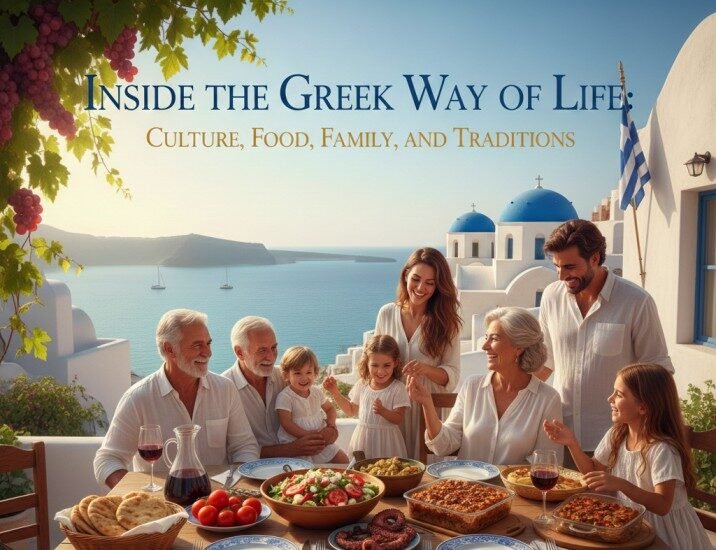
Sunday is family day in Greece. Large meals, usually cooked at home, bring relatives together. These gatherings can last all afternoon and are filled with food, conversation, and laughter.
This tradition remains strong, even among younger generations.
Respect for Elders
Older family members are highly respected. Their advice is valued, and they often hold authority within the household. This respect extends into society, where age is associated with wisdom.
Greek Food Culture
Food as a Social Experience
In Greece, food is not just about eating. It is about sharing. Meals are meant to be enjoyed slowly, with conversation and company.
Dishes are often shared in the center of the table. Eating alone is uncommon, especially in the evening.
Traditional Greek Cuisine
Greek cuisine is based on simple ingredients prepared with care. Olive oil, vegetables, herbs, bread, and cheese are staples.
Popular traditional foods include:
-
Moussaka
-
Souvlaki
-
Greek salad
-
Dolmades
-
Grilled fish and seafood
Each region has its own specialties influenced by geography and history.
For deeper insight into traditional Greek food and regional dishes, resources like the official Visit Greece tourism site and culinary guides from Britannica provide useful background.
Coffee Culture in Greece
Coffee is central to daily life. Cafes are places to relax, meet friends, or even work. It is normal to sit for hours over one coffee.
Popular coffee styles include Greek coffee, freddo espresso, and freddo cappuccino.
Rushing a coffee is considered strange. Taking time is part of the culture.
Greek Traditions and Customs
Religious Influence
The Greek Orthodox Church plays a major role in Greek traditions. Many holidays, celebrations, and customs are tied to religious events.
Church attendance is common, especially on major holidays such as Easter and Christmas.
Greek Easter
Easter is the most important religious celebration in Greece. It is marked by fasting, church services, and large family meals.
Traditional Easter foods include roasted lamb, red-dyed eggs, and sweet bread called tsoureki.
Name Days
In Greece, name days are often more important than birthdays. Many Greeks are named after saints, and they celebrate on the saint’s feast day.
Friends and family visit without invitation, bringing wishes and small gifts.
Social Etiquette in Greece
Hospitality and Philoxenia
Hospitality, known as philoxenia, is deeply rooted in Greek culture. Guests are treated with warmth and generosity.
It is common to be offered food, drinks, or sweets, even by people you have just met.
Greetings and Communication
Greeks are expressive communicators. Hand gestures, eye contact, and emotional expression are normal.
A handshake is common in formal settings, while friends often greet with kisses on both cheeks.
Directness and Honesty
Greeks tend to be direct in conversation. This is not rudeness but openness. Expressing opinions openly is part of everyday communication.
Work Culture in Greece
Work-Life Balance
While Greece has a strong work ethic, personal life is prioritized. Family obligations and social commitments are respected.
Work hours can be long, especially in tourism and hospitality, but time off is valued.
Business Etiquette
Personal relationships matter in business. Trust is built over time, often through face-to-face meetings rather than emails.
Punctuality is flexible, especially outside corporate environments.
Festivals and Local Celebrations
Panigyria: Village Festivals
Local festivals, known as panigyria, are common throughout Greece. They celebrate saints, harvests, or local history.
These events include traditional music, dancing, and food, and are open to everyone.
Music and Dance
Traditional Greek music and dance remain part of modern life. You will see them at weddings, festivals, and family gatherings.
Dances like syrtaki and kalamatianos are still widely practiced.
Living Like a Local in Greece
Neighborhood Life
Greek neighborhoods are tight-knit. People know their neighbors, shop locally, and socialize regularly.
Small cafes, bakeries, and markets form the heart of daily life.
Seasonal Living
Life in Greece follows the seasons. Summer is social and busy, especially in coastal areas. Winter is quieter and more family focused.
Food choices, daily routines, and even social habits change with the seasons.
Modern Greece vs Traditional Values
Greece today balances modern influences with deep-rooted traditions. Younger generations travel, study abroad, and use technology, but family and cultural values remain strong.
Urban areas like Athens and Thessaloniki feel modern and international, while villages preserve traditional lifestyles.
This contrast is part of what makes Greek life unique.
Why the Greek Way of Life Stands Out
The Greek lifestyle offers a reminder that life is about connection. Meals are shared. Time is valued. Relationships matter.
Whether you are visiting Greece, planning to move, or simply curious about its culture, understanding daily life adds depth to your experience.
For further reading on Greek history, culture, and modern society, trusted sources like the Hellenic Ministry of Culture and international cultural publications offer valuable insights.
Final Thoughts
The Greek way of life is not defined by luxury or speed. It is defined by people, traditions, and a strong sense of community. From long meals and family gatherings to village festivals and everyday hospitality, Greece offers a lifestyle centered on living well.
Experiencing Greece means slowing down, opening up, and embracing a culture that values human connection above all else.