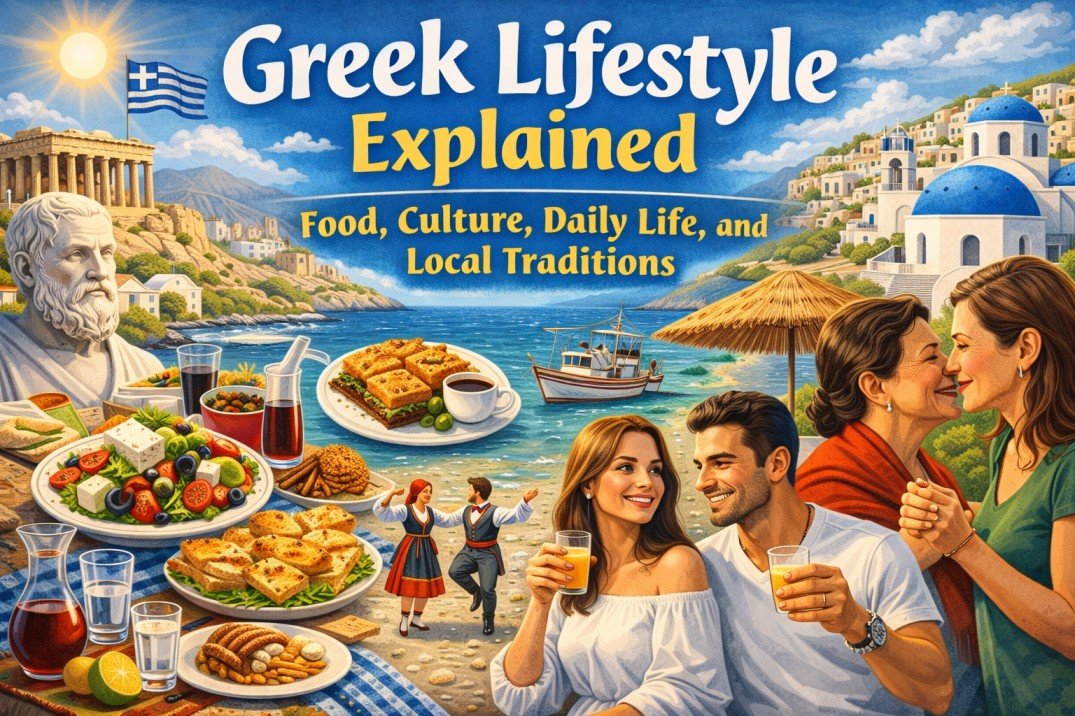
Greece is often imagined as whitewashed islands, blue seas, and ancient ruins. But the real magic of Greece lives in its everyday rhythm. The way people eat, talk, celebrate, work, and relax tells a much deeper story than any postcard view. Greek lifestyle is not rushed, not overly complicated, and deeply connected to food, family, and tradition.
Whether you are planning a trip, thinking about moving to Greece, or simply curious about how locals live, this guide breaks down Greek lifestyle in a clear, honest, and practical way.
Understanding the Greek Way of Life
Greek lifestyle is shaped by history, geography, and community. Life here revolves around people, not schedules. Conversations matter. Meals are social events. Time is flexible.
Greeks value philoxenia, which translates to love for strangers. This cultural principle explains why visitors often feel welcomed, invited for coffee, or helped without hesitation. Relationships come first, and daily life is built around shared moments rather than strict routines.
Greek Food Culture: More Than Just a Meal
Food in Greece is not just about taste. It is about connection.
Everyday Greek Meals
Greek cuisine is rooted in simplicity and quality ingredients. Olive oil, vegetables, grains, herbs, and seafood dominate daily meals.
A typical Greek day of eating often looks like this:
-
Breakfast is light, often coffee with bread, yogurt, or a pastry
-
Lunch is the main meal, usually eaten slowly and socially
-
Dinner is lighter and happens late in the evening
Meals are rarely rushed. Even on workdays, lunch breaks can stretch longer than in many other countries.
Traditional Greek Dishes Locals Eat Regularly
While tourists often focus on souvlaki and gyros, locals eat a wider variety of home-cooked dishes:
-
Fasolada (bean soup)
-
Gemista (stuffed vegetables)
-
Moussaka
-
Lentil soup
-
Fresh grilled fish
-
Greek salads with real feta and olive oil
Seasonal eating is common, especially outside major cities. Many families still cook based on what is fresh and available locally.
You can explore traditional Greek recipes and food history through trusted sources like the Greek National Tourism Organization .
Coffee Culture and Social Life in Greece
Coffee plays a huge role in Greek daily life. But it is not about caffeine. It is about conversation.
The Greek Coffee Habit
Greeks meet for coffee at any time of day. A coffee meeting can last one hour or three. Popular choices include:
-
Greek coffee
-
Freddo espresso
-
Freddo cappuccino
-
Frappé
Cafés act as social hubs where people talk, debate, relax, and watch life pass by. No one expects you to rush.
Family and Community in Greek Culture
Family is the foundation of Greek society.
Strong Family Bonds
Greek families are close-knit. Many adults stay connected to their parents well into adulthood. Sunday family lunches are common, often lasting the entire afternoon.
Grandparents play a big role in raising children, and family gatherings are frequent, loud, and full of food.
Neighbors and Local Communities
In smaller towns and villages, everyone knows each other. Local shop owners greet customers by name. Conversations happen naturally in bakeries, cafés, and markets.
This strong sense of community helps explain why Greece feels warm and personal, even to outsiders.
Daily Life in Greece: What a Typical Day Looks Like
Daily life in Greece varies between cities, islands, and villages, but some patterns remain consistent.
Work-Life Balance
Greeks value time outside of work. While workdays can be long, personal life still matters.
In many areas, especially outside Athens, businesses close in the afternoon for a break. This allows people to rest, eat, or spend time with family before reopening later.
Slow Living Philosophy
The Greek approach to life aligns closely with slow living. Stress is not celebrated. Enjoyment is not seen as laziness. Life is meant to be lived, not rushed.
This mindset is one reason many expats feel more relaxed after settling in Greece.
Greek Traditions and Cultural Customs
Greek traditions remain strong, even in modern society.
Religious Influence
The Greek Orthodox Church plays an important role in cultural life. Religious holidays, name days, and festivals are widely observed.
Name days are often celebrated more than birthdays, and it is common to receive visits or calls on your name day.
You can learn more about Orthodox traditions from official cultural sources such as the Hellenic Ministry of Culture .
Festivals and Celebrations
Throughout the year, villages and towns host local festivals known as panigyria. These events include music, dancing, food, and wine, often lasting late into the night.
Participation is open, and visitors are always welcome.
Greek Lifestyle on the Islands vs Mainland
Lifestyle changes depending on location.
Island Life
Island living is slower, more seasonal, and deeply connected to tourism. Summers are busy and energetic. Winters are quiet and community-focused.
Locals adapt their routines based on the season, working long hours in summer and slowing down during winter months.
City Life in Athens and Thessaloniki
Urban life is faster but still social. Cafés are full. Nightlife starts late. Public spaces are active well into the evening.
Even in large cities, Greeks find time for socializing and relaxation.
Clothing, Appearance, and Style in Greece
Greeks care about appearance, but not in an excessive way.
Casual clothing is common, but people usually dress neatly, especially in cities. Beachwear stays at the beach, and locals tend to dress up more than tourists when going out.
Style is simple, practical, and influenced by Mediterranean climate.
Language and Communication Style
Greek is the primary language, and learning a few basic phrases goes a long way.
Communication Style
Greeks are expressive. Conversations include hand gestures, emotional expression, and directness. This is not rudeness. It is cultural openness.
People speak loudly but warmly. Disagreements are normal and rarely personal.
Greek Hospitality and Social Etiquette
Hospitality is a core part of Greek lifestyle.
If you visit a Greek home, you will almost always be offered food or drinks. Refusing repeatedly can feel impolite, though gentle refusal is accepted.
Guests are treated generously, and hosts often insist on paying the bill when dining together.
Modern Greek Lifestyle and Changing Traditions
Greece is modernizing, but traditions remain strong.
Young Greeks use technology, social media, and global trends, yet still value family meals, traditions, and local customs.
This blend of old and new makes Greek lifestyle unique. You can enjoy modern comforts while staying deeply connected to history and culture.
Why Greek Lifestyle Feels So Appealing to Visitors
Many travelers fall in love with Greece not just for its beauty, but for its way of life.
-
Life feels more human
-
Social connections matter
-
Food brings people together
-
Time is respected, not controlled
This lifestyle explains why so many visitors return again and again, and why many choose to make Greece their home.
Final Thoughts: Living the Greek Way
Greek lifestyle is not perfect, but it is authentic. It values people over productivity, moments over schedules, and connection over convenience.
Whether you experience it as a traveler, an expat, or a curious reader, understanding Greek lifestyle offers something valuable. It reminds us that life is richer when shared, slower, and rooted in culture.
If you want to explore Greece beyond landmarks and beaches, start by observing how locals live. Sit at a café. Share a meal. Talk to people. That is where Greece truly begins.