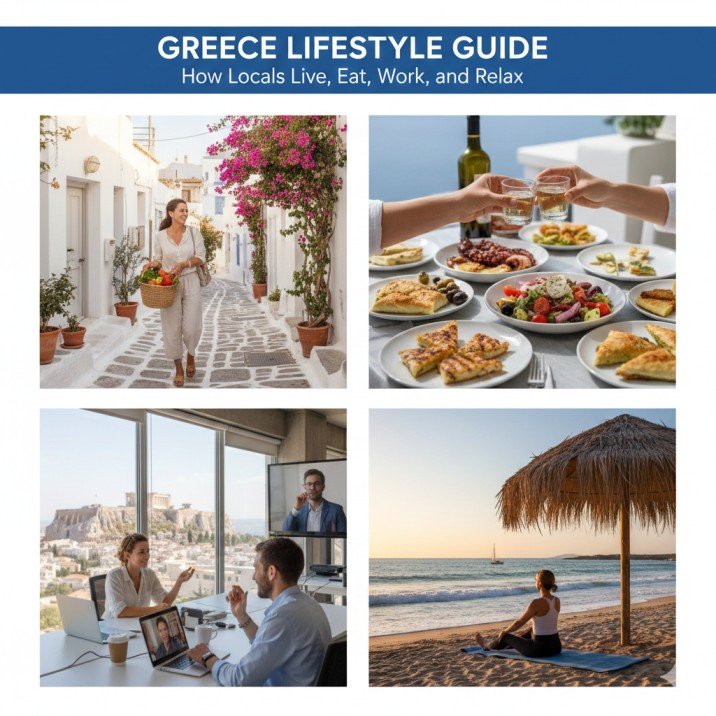
Greece is often described as a destination, but for those who spend time here, it feels more like a way of life. Beyond ancient ruins and island sunsets, Greece offers a daily rhythm that values connection, balance, and enjoyment. Locals approach life differently, with an emphasis on food, family, conversation, and taking time to breathe.
This guide explores the Greek lifestyle from the inside. It looks at how locals actually live, eat, work, and relax, offering a realistic picture of everyday life in Greece today.
What Defines the Greek Lifestyle?
Greek lifestyle is shaped by history, geography, and strong social values. Life revolves around people rather than schedules. Conversations are unhurried, meals are shared, and social bonds are prioritized.
At its core, the Greek way of life is built on:
-
Community and family
-
Respect for tradition
-
Enjoyment of simple pleasures
-
A flexible relationship with time
While modern Greece has adapted to global trends, these values continue to guide daily life across the country.
Daily Life in Greece: A Local Rhythm
Daily routines in Greece may feel unfamiliar to visitors at first, especially those used to fast-paced environments. However, once understood, this rhythm becomes one of the most appealing aspects of Greek life.
Mornings in Greece
Greek mornings tend to start calmly. Breakfast is usually light and practical. Many locals grab a coffee and a pastry from a nearby bakery or café rather than preparing a large meal at home.
Popular morning habits include:
-
Drinking Greek coffee or freddo espresso
-
Standing or sitting briefly at a café
-
Chatting with familiar faces
Coffee is a social habit, not just a functional one. Even a short stop often includes conversation.
Midday and Afternoon Flow
Lunch is traditionally the main meal of the day. In many areas, especially outside large cities, businesses may close for a few hours in the afternoon. This break allows time to eat, rest, or spend time with family.
Although this practice is becoming less common in major urban centers, the influence of this slower midday pace is still felt throughout Greece.
How Greeks Eat: Food as a Way of Life
Food is one of the strongest expressions of Greek lifestyle. It is deeply tied to culture, family, and identity.
Greek Food Culture at Home
Home cooking remains important in Greece. Many traditional dishes are passed down through generations and prepared regularly, not just on special occasions.
Common home-cooked meals include:
-
Lentil soup
-
Fasolada (bean soup)
-
Gemista (stuffed vegetables)
-
Briam (oven-baked vegetables)
-
Grilled fish or chicken
-
Fresh salads with olive oil and feta
Meals are often prepared with seasonal ingredients and generous use of olive oil.
Eating Together Matters
Meals are rarely rushed. Eating together is a way to connect, talk, and relax. Phones are less present at the table, especially in family settings.
Dinner typically happens late, often after 9 pm, especially in summer. Restaurants fill up late, and long dinners are common.
For an authentic overview of Greek cuisine and its cultural roots, the Greek National Tourism Organization provides detailed insights into traditional food practices and regional dishes.
Coffee Culture and Social Life
Coffee plays a central role in Greek daily life, but not in the way many visitors expect.
Cafés as Living Rooms
Greek cafés are social spaces rather than quick stops. People meet friends, discuss politics, watch sports, or simply observe life passing by.
A single coffee can last hours, and no one pressures you to leave. This relaxed café culture reflects a broader Greek attitude toward time and presence.
Communication Style
Greeks are expressive communicators. Conversations are animated, emotional, and often loud. This is not aggression. It is enthusiasm and openness.
Directness is common, and honesty is valued over politeness. This communication style can feel intense at first but usually comes from warmth rather than confrontation.
Family Life and Social Bonds
Family is at the center of Greek society.
Strong Family Connections
Greek families tend to stay close across generations. Adult children often live near parents, and grandparents play a major role in daily family life.
Sunday family lunches are a long-standing tradition. These gatherings often involve large meals, extended conversations, and shared responsibilities.
Community and Neighbors
In many neighborhoods, people know each other well. Local shop owners greet customers by name. Daily interactions create a strong sense of belonging.
This community-focused lifestyle contributes to a feeling of safety and familiarity, especially in smaller towns and villages.
Work Culture in Greece
Work in Greece reflects both modern European standards and traditional attitudes.
Working Hours and Expectations
Work schedules vary by industry. Office jobs follow structured hours, while tourism, hospitality, and family businesses often require long and flexible schedules.
Despite economic challenges, Greeks value personal time. Breaks, holidays, and social commitments remain important.
Attitude Toward Work-Life Balance
While Greeks work hard, life outside work matters deeply. Success is not measured only by productivity but also by quality of life.
Taking time to enjoy a meal, attend a celebration, or meet friends is considered normal, not indulgent.
Relaxation and Leisure in Greece
Relaxation is an essential part of Greek lifestyle.
How Greeks Relax Daily
Relaxation often includes simple activities such as:
-
Sitting at a café
-
Walking through the neighborhood
-
Visiting the beach or park
-
Sharing meals with friends
There is less emphasis on structured hobbies and more on spontaneous social time.
Nature and Outdoor Living
Greece’s climate encourages outdoor living. Balconies, sidewalks, and public squares are actively used for socializing.
Even in cities, people find ways to connect with nature through parks, coastal walks, or weekend trips.
Traditions and Customs Still Practiced Today
Despite modernization, traditions remain a strong part of daily life.
Religious Influence
The Greek Orthodox Church continues to shape cultural life. Religious holidays, fasting periods, and name days are widely observed.
Name days often receive more attention than birthdays, with visits, calls, and small celebrations.
For official cultural context, the Hellenic Ministry of Culture offers valuable information on Greek heritage and traditions.
Local Festivals and Celebrations
Throughout the year, towns and villages host local festivals known as panigyria. These events feature live music, traditional dancing, food, and wine.
Participation is open, and visitors are usually welcomed warmly.
Lifestyle Differences Across Greece
Lifestyle varies depending on location.
City Life in Athens and Thessaloniki
Urban life is more fast-paced but still social. Cafés are busy, nightlife is active, and cultural events are frequent.
Even in large cities, Greeks prioritize meeting friends and spending time together.
Island and Village Life
Island and village life is slower and more seasonal. Summer brings activity and tourism, while winter focuses on community and routine.
People adapt their lifestyle to nature and seasons, creating a strong connection to their environment.
Modern Greek Lifestyle: Change Without Losing Identity
Modern Greece blends tradition with contemporary life.
Young Greeks use technology, follow global trends, and travel widely. At the same time, they maintain strong ties to family, culture, and tradition.
Fashion is practical but thoughtful. Social media is popular, yet face-to-face interaction remains central.
This balance between modernity and tradition defines Greek lifestyle today.
Hospitality and Social Etiquette
Greek hospitality is deeply rooted in culture.
Guests are welcomed warmly and often offered food or drinks immediately. Refusing too strongly can feel impolite, though gentle refusal is accepted.
When dining out, it is common for one person to insist on paying. Sharing bills is becoming more common but is still less traditional.
Language and Everyday Interaction
Greek is the primary language, and even basic phrases are appreciated.
English is widely spoken, especially among younger people and in tourist areas. However, learning simple Greek expressions often leads to warmer interactions and deeper connections.
Effort is valued more than perfection.
Why Greek Lifestyle Appeals to Visitors and Expats
Many people fall in love with Greece not just for its beauty, but for how life feels.
-
Time feels more flexible
-
Social connection is natural
-
Food brings people together
-
Daily life feels meaningful
This lifestyle attracts travelers, retirees, digital nomads, and expats looking for balance.
Challenges of the Greek Way of Life
Life in Greece is not without difficulties.
Bureaucracy can be slow. Economic pressures affect many households. Patience is often required when dealing with official systems.
However, many residents feel that strong social bonds and quality of life compensate for these challenges.
Embracing the Greek Lifestyle
Adapting to Greek lifestyle requires openness and patience. Those who accept the rhythm, respect traditions, and value relationships tend to integrate more easily.
Living the Greek way is not about copying habits but understanding priorities. People come first. Time is shared. Life is lived collectively.
Final Thoughts: What Greece Teaches About Living Well
Greek lifestyle offers a reminder that life does not need to be rushed to be successful. Meaning comes from connection, not constant motion.
By valuing food, family, conversation, and rest, Greeks maintain a lifestyle that feels grounded and human.
Whether you visit for a short stay or a long chapter of life, understanding how locals live, eat, work, and relax will deepen your connection to Greece and perhaps change how you see everyday life.