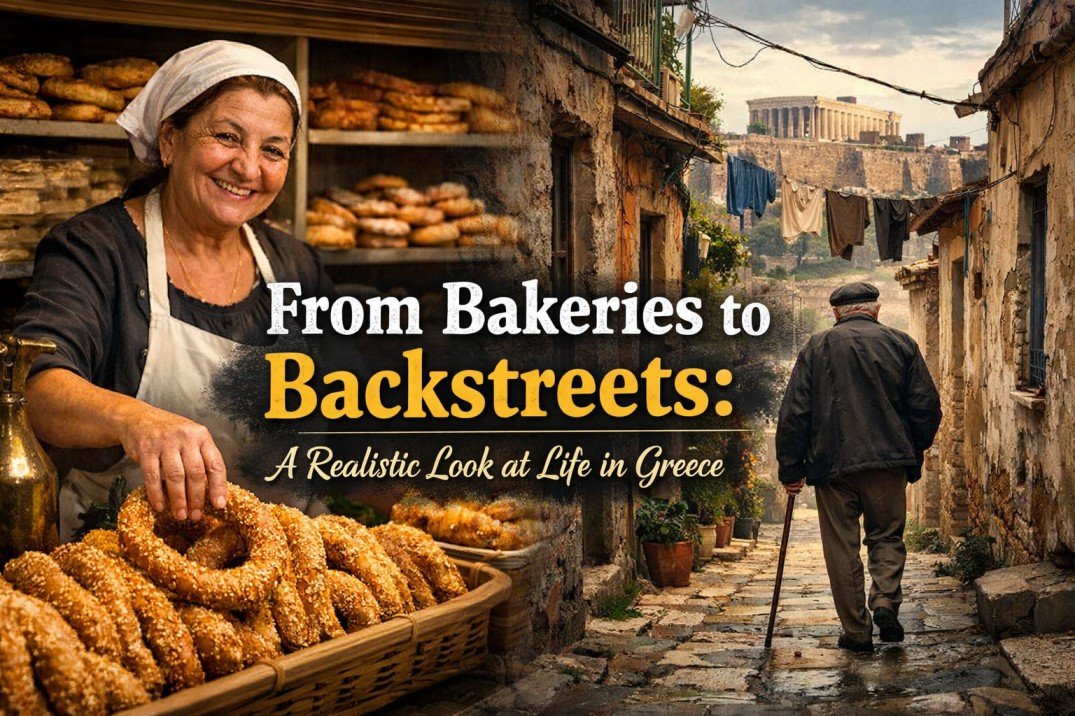
When people imagine Greece, they often picture sunlit islands, pristine beaches, and ancient ruins. The reality of living there, however, is more nuanced and grounded. Daily life in Greece revolves around neighborhoods, small shops, local traditions, and human rhythms that tourists rarely see.
This guide provides a detailed, realistic look at everyday life in Greece—from early mornings at bakeries to late nights on quiet backstreets. It covers food, work, social habits, family life, seasonal changes, and the subtle aspects that shape Greek living.
Morning Life: The Bakery Culture
Bread, Pastries, and the Start of the Day
In Greece, mornings often begin at the local bakery. Fresh bread, koulouri (sesame bread rings), or bougatsa (cream or cheese pastry) are staples for breakfast. Locals line up briefly to buy their daily supply, chatting with shop owners and neighbors.
This daily ritual highlights two important elements of Greek life: quality food and community interaction. Bakeries are more than shops—they are social hubs. Even in larger cities like Athens, bakeries retain this neighborhood feel.
Coffee Rituals
Coffee accompanies bakery visits. Greeks favor small, strong espressos or iced versions in summer. Unlike quick coffee runs elsewhere, this is an experience meant to be savored. Conversations often extend the moment, reflecting a culture that prioritizes social connection over speed.
Navigating the Streets and Neighborhoods
Walking as a Way of Life
Walking is central to Greek urban and village life. Streets and alleys, sometimes narrow and cobblestone, connect homes, shops, and markets. Walking fosters casual encounters, spontaneous conversations, and community bonds.
Backstreets, often overlooked by tourists, reveal authentic life. Children play outside, neighbors greet each other, and elderly residents sit on benches watching the day unfold.
Neighborhood Shops and Services
Grocery stores, butcher shops, and fruit stands dominate everyday shopping. Relationships with shopkeepers are personal; names are remembered, and loyalty matters. These interactions reflect a broader cultural pattern: community over convenience.
Even practical errands, like visiting the pharmacist or post office, are opportunities for social connection. Personalized service is standard, and being polite pays off more than rushing or insisting on efficiency.
Meals and Eating Habits
Breakfast: Light but Meaningful
Greek breakfast is modest—yogurt with honey, fresh bread, or pastries. While small, it is enjoyed intentionally rather than hurriedly.
Local cafés see a mix of early risers and retirees sipping coffee, reading newspapers, and catching up with friends. This shared time emphasizes human connection, setting the tone for the day.
Lunch: The Main Meal
Lunch is typically the largest and most significant meal. Traditional dishes include legumes, fresh vegetables, olive oil, and seasonal fish. Meat is eaten occasionally, often in social contexts rather than daily staples.
Restaurants and tavernas cater mostly to locals during lunch, offering affordable, high-quality meals. Public spaces become lively, filled with conversation and communal energy.
Dinner: Social and Late
Dinner usually occurs around 9 pm. Families and friends gather at home or at neighborhood tavernas. Meals are long, social experiences that encourage conversation and relaxation.
Even weekdays maintain this evening rhythm, with streets and squares alive with locals enjoying the end of the day.
Work, Business, and Daily Responsibilities
Flexible Work Hours
Greek work culture is generally less rigid than in other countries. Many small businesses operate flexible hours. Lunch breaks are taken seriously, and personal interactions at work are valued.
This approach emphasizes quality over quantity. Productivity is important, but not at the expense of relationships or personal well-being.
Afternoon Slowdown
From approximately 2 pm to 5 pm, life in many areas slows significantly. Shops close temporarily, streets empty, and residents rest or socialize.
This afternoon pause is a cultural adaptation to climate, tradition, and lifestyle. While newcomers may view it as inefficient, it allows time for rest, reflection, and socializing.
Markets, Shopping, and Local Economy
Laiki Agora: The Weekly Market
Weekly outdoor markets, or laiki agora, are a cornerstone of Greek life. Locals purchase fruits, vegetables, fish, and household goods directly from producers.
Markets serve as social spaces where community ties are strengthened. Conversations, advice, and shared meals often accompany shopping. Seasonal produce dominates, keeping costs reasonable and diets healthy.
Local Shops vs. Supermarkets
While supermarkets exist, many locals prefer small shops for fresh bread, dairy, and meat. This preference preserves relationships and ensures product quality. Adopting this local approach helps reduce daily living costs compared to tourist-oriented stores.
Social Life and Community
Relationships Take Time
Friendships and neighborhood connections develop gradually. Greeks value loyalty and trust, so it may take time for newcomers to integrate fully.
Public spaces—squares, parks, cafés—are hubs for interaction. Children play outdoors. Elderly residents observe and engage. Community is visible, constant, and deeply embedded.
Family at the Core
Family connections are central. Multi-generational households are common, especially in villages. Grandparents often care for children, and extended families gather frequently.
This family-centered culture affects daily routines, celebrations, and even work habits.
Cultural Rhythms and Seasonal Changes
Summer: Energy and Social Life
Summer is vibrant. Coastal towns and cities fill with tourists, and locals adjust by resting during the day and socializing at night. Festivals, music, and outdoor dining dominate evenings.
Despite the tourist influx, local neighborhoods maintain routines: shopping, coffee, family meals, and casual walks continue uninterrupted.
Winter: Quiet and Intimate
Winter offers an authentic view of Greece. Tourist areas empty, revealing the true rhythms of life. Streets are quieter. Cafés feel cozier. Community engagement is slower but more meaningful.
Heating older buildings is challenging, and shared social spaces help preserve warmth and connection. The winter season emphasizes introspection, small rituals, and family closeness.
Healthcare and Practical Life
Public and Private Healthcare
Public healthcare is available, but navigating the system requires patience. Private healthcare is widely used, affordable, and accessible in most cities. Pharmacies serve as an important first point of care.
Expat and newcomer communities often rely on local recommendations to identify trustworthy doctors, specialists, and services.
Daily Services and Personal Connections
Plumbers, electricians, and other service providers rely heavily on personal relationships. Being known in a neighborhood often accelerates service and improves outcomes.
Trust and politeness are essential, demonstrating the broader principle that social capital often outweighs formal processes.
Education and Childcare
Schools are central to neighborhood life. Children walk or cycle to school in smaller towns, while urban areas rely on public or private transportation. Education emphasizes both academics and social skills.
Childcare often involves extended families, reinforcing multi-generational bonds. Community involvement in children’s lives creates support networks that newcomers can learn from and participate in.
Language and Communication
Greek is the primary language, and while English is common in tourist areas, most daily interactions occur in Greek. Learning even basic phrases facilitates integration and demonstrates respect.
Communication is expressive, with gestures and intonation playing a critical role. Conversations are animated and emotionally rich, reflecting cultural openness and engagement.
Traditions and Subtle Cultural Practices
Religious and cultural traditions, particularly Greek Orthodox celebrations, influence daily life. Church attendance, festivals, and small rituals punctuate the calendar, especially in villages.
Food, music, and seasonal activities preserve heritage and reinforce community bonds. Home cooking, local music, and neighborhood festivals are quietly central to everyday life, even beyond tourist seasons.
Lessons From Living in Greece
Life in Greece teaches adaptability, patience, and attentiveness. Time is experienced differently, with relationships prioritized over efficiency.
Newcomers may initially feel frustrated by bureaucracy, service delays, or different social norms. Adapting to these rhythms fosters appreciation for local culture, social cohesion, and the slower, more human pace of life.
Conclusion: Life Beyond the Tourist Lens
From bakeries to backstreets, Greece is a country defined by daily life rather than landmarks. Ordinary routines, neighborhood interactions, seasonal patterns, and quiet traditions reveal a side of Greece that most visitors never experience.
Embracing these rhythms allows outsiders to see the country authentically, where community, family, and connection shape every day. Greece’s true beauty lies not only in its landscapes but in the textures of its everyday life.