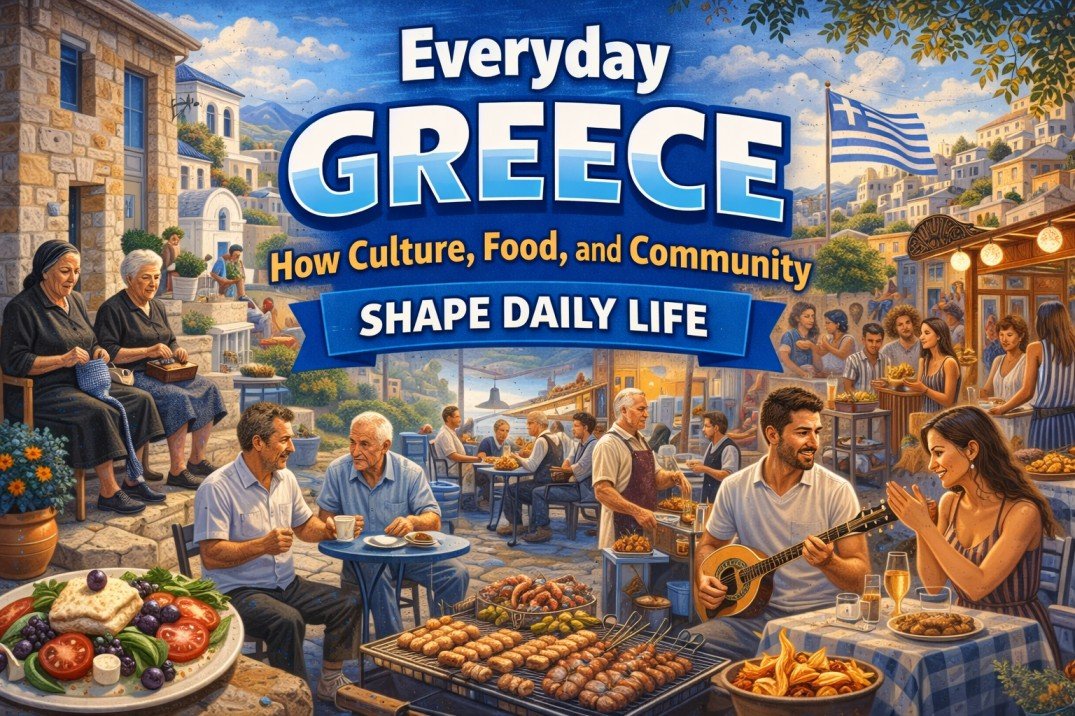
When most people think of Greece, their minds go to sunlit islands, ancient ruins, and stunning Mediterranean beaches. While these are undeniably part of its charm, they represent only a fraction of what life in Greece is really like. For locals, daily life is shaped by culture, food, and community — a rhythm that blends tradition with modernity, work with leisure, and social connection with personal space.
This guide takes you beyond the tourist lens to explore how everyday Greeks live. From morning routines and meals to work habits and neighborhood interactions, it provides a comprehensive view of life in cities, towns, and villages across Greece.
Morning Life in Greece: Rituals and Social Habits
Morning in Greece begins slowly. Unlike the rush typical in many countries, Greeks take time to ease into the day, often prioritizing social interactions and quality over speed.
Coffee Culture
Coffee is central to morning routines, whether it’s a small cup of Greek coffee, a frothy frappé, or espresso. Cafés open early in urban centers like Athens and Thessaloniki, providing spaces for locals to gather:
-
Conversations with neighbors and friends over coffee are common.
-
Morning cafés serve pastries or fresh bread, reinforcing a culture of slow, social starts to the day.
-
Even in smaller towns, the local café functions as a community hub.
Learning about Greek coffee culture offers insight into the social fabric and routines of everyday life.
Markets and Shopping
Morning is also a time for shopping. Local markets provide fresh produce, bread, cheeses, and seasonal items.
-
Street markets are bustling with locals buying daily necessities.
-
Shopkeepers and customers often know each other personally, creating a sense of community.
-
Neighborhood bakeries and grocers offer items that support the daily diet and lifestyle.
Tourists often miss the importance of these local exchanges, which are central to life in Greece.
Work Patterns and Daily Productivity
Greece blends structured work with flexibility. Schedules vary depending on location, industry, and season.
Urban Work Life
In major cities:
-
Offices typically operate 9:00 AM–5:00 PM, though flexibility is common.
-
Modern industries, startups, and international companies offer structured environments, often with coworking spaces and remote options.
-
Lunch breaks may be extended in certain offices, reflecting cultural norms.
Rural and Island Work
In villages and smaller towns:
-
Businesses may close during mid-afternoon for rest, particularly in warmer months.
-
Tourism and agriculture influence work rhythms, especially on islands.
-
Seasonal employment can affect routines, with work peaks during summer.
Understanding these patterns is crucial for expats, digital nomads, or long-term travelers aiming to integrate into local life.
Meals: The Heartbeat of Greek Culture
Food is central to Greek identity. Meals are more than nourishment — they are social and cultural events.
Breakfast and Morning Snacks
Greeks usually have light breakfasts:
-
Greek coffee paired with fresh bread or pastries.
-
Yogurt with honey and fruit is popular in the summer.
-
Bakeries and cafés serve as social meeting points.
Lunch: The Main Meal
Lunch remains the main meal of the day in many households, particularly outside urban centers:
-
Seasonal dishes using vegetables, seafood, or local meats.
-
Meze, a collection of small plates for sharing, encourages communal dining.
-
Meals are often leisurely, lasting one to two hours.
Dinner and Evening Dining
Evening meals typically start around 8:30–9:00 PM and emphasize community and relaxation:
-
Family, friends, and neighbors gather for meals.
-
Restaurants and tavernas offer fresh, locally sourced dishes.
-
Dining extends into late evening in cities and lively neighborhoods.
Food rituals reflect broader values of community, tradition, and appreciation for local ingredients.
Neighborhoods and Community Interaction
The social structure of Greece is deeply tied to neighborhoods and community engagement.
City Neighborhoods
-
In Athens, districts like Plaka or Kifisia showcase strong neighborhood identities.
-
Cafés, squares, and markets act as communal gathering points.
-
Residents form networks that support both personal and professional life.
Village Life
-
Villages are slower-paced but tightly knit.
-
Squares, local churches, and markets are central to social life.
-
Festivals, saint days, and harvest events bring the community together.
Tourists often miss these everyday interactions that define authentic Greek life.
Festivals, Holidays, and Local Traditions
Greek life is punctuated by festivals and celebrations, which reinforce cultural identity and social cohesion.
Religious and Seasonal Festivals
-
Greek Easter: Central to community life, featuring family gatherings, traditional cooking, and local rituals.
-
Saints’ Days: Villages celebrate patron saints with small festivals, music, and communal meals.
-
Harvest Celebrations: Olive and grape harvests, local fairs, and seasonal festivals preserve agricultural traditions.
Everyday Rituals
Even beyond major festivals, small daily traditions sustain social cohesion:
-
Afternoon walks, or volta, along streets and seaside promenades.
-
Social coffee breaks in the late afternoon.
-
Evening gatherings in squares, cafés, and community spaces.
These habits illustrate how Greeks maintain strong social networks and cultural continuity.
Leisure and Recreation
Greece balances work and leisure through community activities and accessible public spaces:
-
Parks, squares, and beaches serve as everyday leisure spaces.
-
Sports clubs, cultural groups, and hobby associations support personal interests.
-
Outdoor cafés and tavernas encourage unstructured social interaction.
Leisure integrates seamlessly into daily life, reflecting cultural emphasis on balance and quality of experience.
Costs and Living Realities
Daily life in Greece has practical financial considerations. Understanding living costs is key for residents or long-term visitors.
Housing
-
Urban areas have higher rents, particularly in central neighborhoods.
-
Villages and smaller towns are more affordable.
-
Islands have seasonal fluctuations, with peak prices in summer.
Food
-
Markets and local tavernas are cost-effective options.
-
Monthly grocery expenses for one person typically range between €200–€350.
Transportation
-
Public transport in cities is affordable and reliable.
-
Villages and islands often require personal transport, like scooters or cars.
Utilities and Healthcare
-
Seasonal heating and cooling affect electricity bills.
-
Public healthcare is accessible; private clinics offer faster services.
Resources like the Hellenic Statistical Authority and Greek Ministry of Tourism provide updated cost-of-living information.
Urban vs Rural Experience
Urban Life
-
Access to modern amenities, cultural events, and diverse social networks.
-
Neighborhoods maintain identity and cohesion even amidst city bustle.
-
Evening life is vibrant, with restaurants, bars, and entertainment.
Rural Life
-
Slower pace and strong community bonds.
-
Emphasis on local cuisine, crafts, and agriculture.
-
Festivals and seasonal events maintain tradition and social cohesion.
Both experiences highlight different aspects of Greek life, offering insight into its diverse cultural fabric.
Tips for Living Like a Local
-
Learn basic Greek phrases to engage meaningfully with residents.
-
Shop at local markets rather than tourist stores.
-
Follow neighborhood routines: morning coffee, afternoon walks, evening gatherings.
-
Participate in festivals and community events to experience culture firsthand.
-
Explore streets and neighborhoods off the main tourist paths.
Official sources like the Greek Ministry of Tourism and local municipality websites provide guidance on cultural events, public services, and community engagement opportunities.
Conclusion: The Heart of Everyday Greece
Greece is much more than beaches, ruins, and tourist attractions. Daily life is shaped by culture, food, and community — a balance of work, family, and social connection that defines the Greek way of living.
Experiencing Greece authentically requires observing local routines, participating in neighborhood life, and valuing traditions that go beyond postcards. Morning coffees, leisurely meals, communal gatherings, and festivals reflect a society that prizes connection, tradition, and quality of life.
By engaging with everyday life, visitors and long-term residents gain a deeper understanding of Greece, discovering the rhythms, relationships, and habits that make this country truly remarkable.