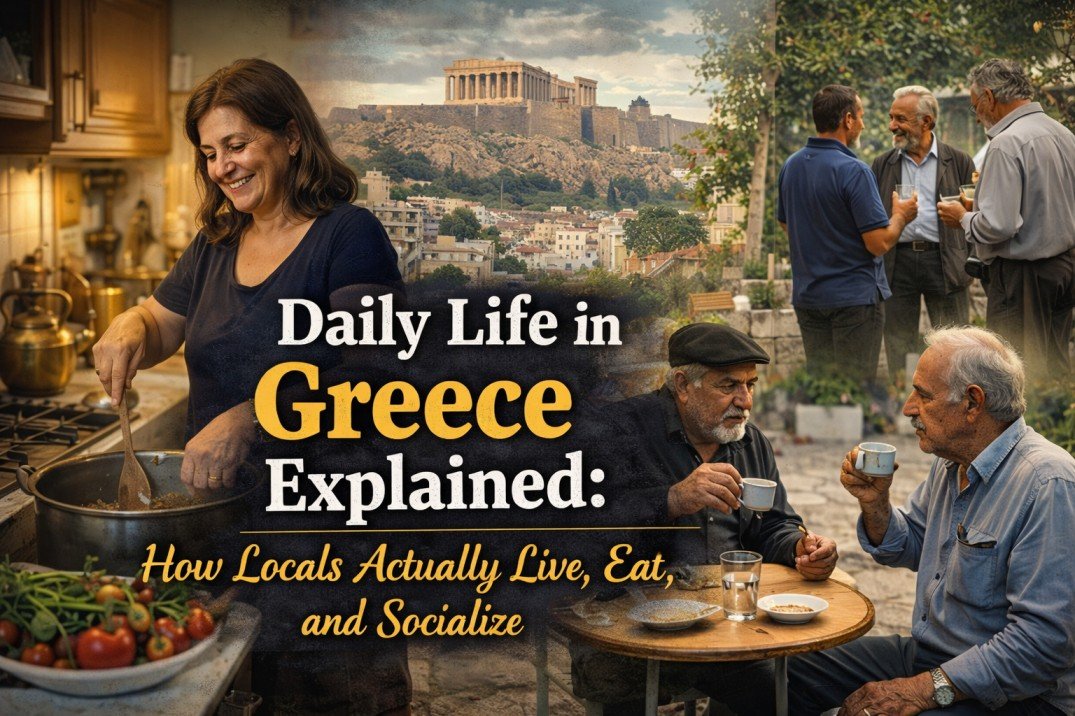
Daily life in Greece is often misunderstood. Visitors see whitewashed houses, dramatic coastlines, and endless summer light. What they rarely see is how ordinary days unfold once the sightseeing stops.
This article goes beyond travel snapshots to explain how locals actually live, eat, work, rest, and socialize in Greece. It is written for curious travelers, long-stay visitors, and anyone considering life beyond short holidays. What follows is not romanticized, but it is deeply human.
How a Typical Greek Day Begins
Mornings Start Slowly and Intentionally
In most parts of Greece, mornings are calm. Even in large cities like Athens, the day does not begin with urgency. People wake up, open shutters, and ease into the day.
Coffee is central, but not rushed. Greeks do not drink coffee to wake up. They drink it to connect. A single coffee may last an hour, often enjoyed standing at a café counter or sitting outdoors with conversation.
This morning ritual sets the tone for the day. Time is not something to beat. It is something to move with.
Work Starts Later Than You Might Expect
Many businesses open around 9 or 10 am. Offices, shops, and services follow flexible schedules, especially outside major commercial zones. Productivity exists, but it does not dominate identity.
For locals, work supports life, not the other way around.
The Rhythm of Work and Daily Responsibilities
A Balanced Relationship With Work
Greek work culture varies by sector, but overall, there is less obsession with constant availability. Lunch breaks are taken seriously. Family obligations are respected. Staying late is not a badge of honor.
Small businesses dominate local economies. Shop owners know their customers by name. Service feels personal rather than transactional.
This system may feel inefficient to newcomers, but it builds trust and long-term relationships.
The Afternoon Pause
One of the most noticeable features of daily life in Greece is the afternoon slowdown. Between early afternoon and late afternoon, many neighborhoods quiet down.
This is not laziness. It is adaptation to climate, tradition, and lifestyle. Summer heat makes rest practical. Family meals take priority. Energy is conserved for the evening.
Over time, even skeptics begin to appreciate this pause.
How Greeks Actually Eat Every Day
Meals Are Simple, Seasonal, and Social
Greek cuisine is famous worldwide, but everyday eating is far simpler than restaurant menus suggest. Meals are built around seasonal vegetables, legumes, bread, cheese, and olive oil.
Meat is eaten, but not excessively. Fish appears more often in coastal areas. Home cooking is common and practical.
Food is not rushed. Even quick meals are eaten with attention.
Lunch Is the Main Meal
Lunch is the most important meal of the day. Families gather when possible. Workers take real breaks. Restaurants offer affordable lunch options aimed at locals rather than tourists.
This midday meal fuels the rest of the day and explains the slower afternoons.
Dinner Happens Late
Dinner rarely happens before 9 pm, especially in summer. Social life revolves around evening meals. Friends meet at tavernas. Families eat together. Conversations stretch late into the night.
Eating is not just nourishment. It is connection.
Grocery Shopping and Local Markets
Neighborhood Markets Shape Daily Life
Weekly outdoor markets are a cornerstone of Greek neighborhoods. Locals shop for fruits, vegetables, fish, cheese, and household goods directly from producers.
These markets reflect seasonality and regional identity. Prices are fair. Relationships matter.
Supermarkets exist, but many Greeks still prefer local shops for bread, meat, and produce.
Eating Local Saves Money and Builds Community
Living like a local significantly reduces food costs. Imported products and specialty items are more expensive. Seasonal eating keeps expenses reasonable.
This approach also strengthens community ties. Your baker, butcher, and grocer become part of your daily life.
Social Life: How Greeks Connect With Each Other
Socializing Is Unstructured and Natural
Greek social life is spontaneous. Plans are often made last minute. Long conversations are common. Phones are secondary to presence.
Friendships form slowly but deeply. Once trust is built, relationships are long-lasting and loyal.
Showing interest in language and customs goes a long way. Even basic Greek phrases are appreciated.
Public Spaces Matter
Squares, cafés, sidewalks, and parks are social spaces. People meet outside rather than inside homes. Children play freely. Elderly residents observe daily life from benches and balconies.
Community is visible and shared.
Family and Community Values
Family Is Central
Family connections remain strong across generations. Adult children often live near parents. Grandparents play active roles in childcare.
Family gatherings are frequent and informal. Support networks are strong, even if private space is limited.
This closeness can feel overwhelming to outsiders, but it offers security and belonging.
Community Over Individualism
Greek culture prioritizes collective well-being over strict individualism. People help each other. Neighbors notice absences. Social responsibility is informal but real.
This sense of belonging becomes more noticeable the longer you stay.
Costs and Practical Realities of Daily Life
Cost of Living Varies by Location
Living costs in Greece depend heavily on location. Tourist islands and central urban neighborhoods are more expensive. Smaller cities and inland towns offer more affordable lifestyles.
Rent has increased in recent years, particularly in popular areas. Utilities fluctuate, especially electricity and heating.
Daily expenses like food and transportation remain manageable for those who live locally.
Transportation Is Functional, Not Fancy
Public transportation connects most urban areas effectively. Buses and metro systems are widely used. Cars are common but not always necessary.
Walking is part of daily life, especially in older neighborhoods.
Healthcare and Everyday Services
Healthcare Is Accessible With Local Knowledge
Public healthcare exists, but navigating it requires patience. Private healthcare is widely used and relatively affordable.
Pharmacies play a major role in daily health. Pharmacists offer advice and over-the-counter solutions for common issues.
Knowing where to go matters more than the system itself.
Services Feel Personal
Service providers rely on relationships. Once you are known, things move faster. Trust replaces formal processes.
This personal approach defines many aspects of daily life.
Seasonal Differences in Everyday Living
Summer Is Intense and Social
Summer brings heat, energy, and crowds. Life moves outdoors. Nights are long. Tourist areas become busy and loud.
Locals adjust by slowing down during the day and socializing at night.
Winter Is Quiet and Authentic
Winter reveals a different Greece. Tourist towns empty. Local life becomes visible. Conversations deepen. Community tightens.
Cold weather surprises many newcomers. Buildings are not designed for insulation. Heating becomes a real concern.
Despite this, many long-term residents prefer winter for its authenticity.
Language and Daily Communication
Greek Is Everywhere
While English is spoken in tourist areas, daily life happens in Greek. Learning the language transforms your experience.
Even limited vocabulary builds respect and opens doors.
Mistakes are forgiven. Effort is appreciated.
Communication Is Expressive
Greeks communicate with emotion, gesture, and tone. Conversations are animated. Silence is rare.
This expressiveness may feel intense at first, but it reflects openness rather than conflict.
What Daily Life in Greece Teaches You
Living in Greece reshapes priorities. Time becomes flexible. Relationships gain importance. Perfection gives way to presence.
Life is not easier, but it feels more grounded. You learn to wait, to listen, and to adapt.
The country does not change for you. You change within it.
Final Thoughts: Understanding Greece Through Everyday Life
Daily life in Greece cannot be understood through landmarks alone. It lives in morning coffee rituals, late dinners, market conversations, and shared time.
To truly understand Greece, you must live within its rhythms rather than observe from outside.
Once you do, the country stops being a destination and becomes a way of life.