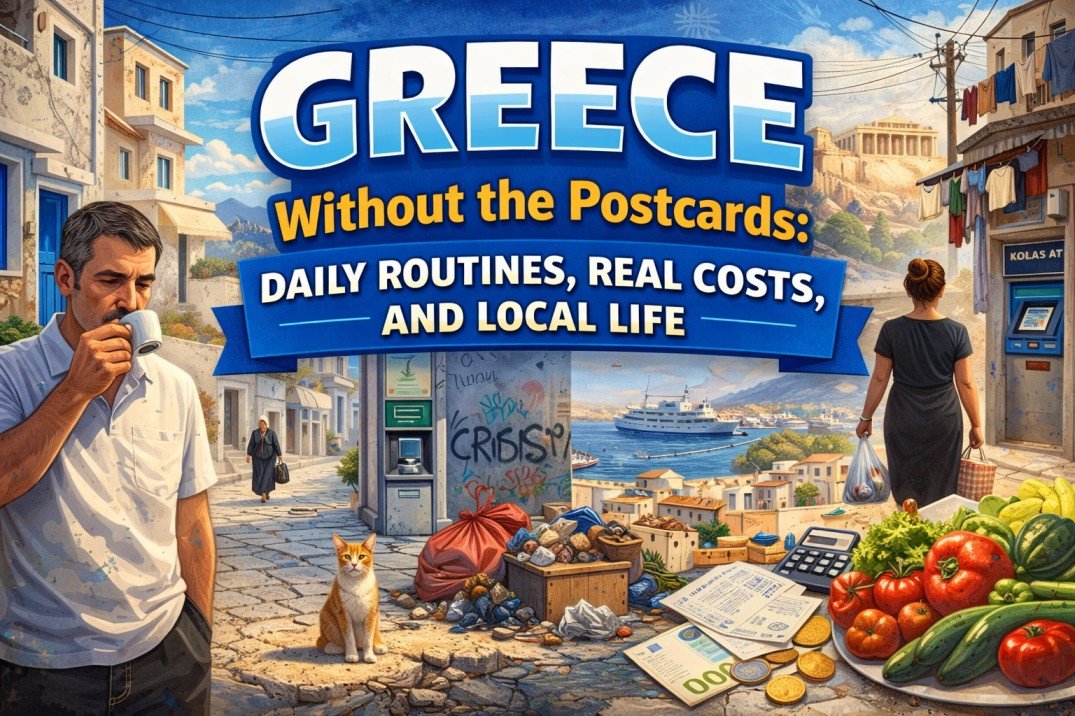
Greece is famous around the world for sun‑drenched islands, ancient ruins, and postcard views of whitewashed homes perched above blue seas. Those images are real and worth experiencing. But they don’t show the full picture. To understand Greece as a place to live, work, and explore in a real way, you need to look past the brochures and Instagram posts. You need to see the daily routines, know the actual costs, and appreciate what local life feels like beyond peak season tourism.
This guide takes you beyond the postcards. It looks at how locals structure their days, what typical expenses look like year‑round, and the rhythms that make life in Greece both beautiful and challenging. Whether you’re thinking of moving here long‑term, planning an extended stay, or just curious about everyday Greek life, this article gives a grounded, honest perspective.
What Daily Life in Greece Looks Like
Most travelers see Greece in bursts: a week in summer, a quick island hop, or a short tour of major sites. Local life is entirely different from those snapshots.
People here live in neighborhoods. They wake up early, start work, take breaks during the warmest hours, and gather with friends or family in the evenings. Life isn’t rushed, and relationships matter a lot. You will notice routines that reflect history, climate, and culture.
Morning: A Slow and Social Start
In most Greek cities and towns, mornings begin with coffee. It isn’t a grab‑and‑go culture. Instead, locals sit at café tables, often for the first coffee of the day. The Greek coffee culture is less about caffeine and more about social rhythm. A single espresso might take 30 minutes or longer because conversation matters.
Markets open early. Street vendors sell fruit, vegetables, bread, and pastries. This is where you see real interactions — shopkeepers know their regular customers, and neighbors chat as they pick up essentials.
Businesses open around 9:00 AM to 10:00 AM, though many offices allow flexible arrivals. In coastal and island areas, some mornings are quiet until the wind picks up a little heat.
Midday: Work, Breaks, and Lunch
Work routines vary by region and sector. In cities like Athens and Thessaloniki, offices operate like in much of Europe with a fairly continuous day. In smaller towns, shops might close between 2:00 PM and 5:00 PM for lunch and rest.
Lunch is still the main meal for many Greeks, especially in more traditional areas. A typical lunch is generous and social — often multiple courses shared among friends or family.
For the best quick local lunch, check out community favorites like the local tavernas in central Athens neighborhoods or seaside fish tavernas with fresh catch of the day.
Afternoon: Quiet Streets, Productive Work
In hotter months, afternoons are quieter because of the heat. People retreat indoors or to shaded cafés. But productivity does not vanish. Remote workers and entrepreneurs often use this time for focused tasks, online meetings, and planning.
Tourist hubs like Mykonos, Santorini, and Crete stay active well into the afternoon in summer, but everyday life in cities is more structured and calm.
Evening: Social Life and Family Time
Greek evenings are social. After work, people fill cafés, bars, and squares. Dinner is later than in many countries — usually around 8:30 PM or 9:00 PM — and often longer than a quick meal. Meals are meant to be shared slowly.
Traditions like meze (small plates) are perfect for conversation and connection. Many local dishes are unpretentious and seasonal, such as roasted vegetables in autumn, fresh greens in spring, and grilled fish year‑round.
The Costs of Everyday Life
One of the biggest surprises for many newcomers is the difference between Greece’s tourist prices and everyday living costs. Postcard prices — especially for dining and accommodation in peak summer — can be high. But local life often costs less than people expect.
Housing Costs
Rent varies widely depending on location.
-
Athens and Thessaloniki: Expect higher rents closer to city centers, especially in popular neighborhoods like Plaka or Kolonaki in Athens. Yet reasonable apartments can still be found if you look in less touristy areas or slightly outside central districts.
-
Smaller towns and villages: Generally lower rents, fairly stable year‑round.
-
Islands: Prices go up significantly in high season. If you plan long stays, negotiating seasonal or annual leases can reduce costs.
Data from the Greek rental market shows that average rents in major cities are significantly below many Western European capitals, especially for long‑term leases.
Food and Grocery Costs
Eating locally makes a big difference in your budget. Greek cuisine relies on fresh, seasonal produce — olives, vegetables, fruits, and seafood — so markets are abundant and affordable.
-
A weekly shopping bill at local markets or supermarkets is usually lower than in many EU countries.
-
Dining out at tavernas frequented by locals is budget‑friendly compared to tourist‑oriented restaurants.
-
Street food and local bakery items are great low‑cost options.
For current food price comparisons and cost‑of‑living data, resources like Numbeo and official Greece cost indexes provide helpful ongoing updates.
Transportation
Public transport in major cities is reliable and low‑cost. Buses, trams, and metro lines in Athens make commuting affordable. Intercity buses and trains connect main urban areas reliably.
On islands and rural areas, transport can be less frequent, and you might rely more on scooters or rental cars, especially in peak seasons. Planning in advance helps reduce price surges.
Healthcare and Services
Greece has a mix of public and private healthcare. Local pharmacies are well‑stocked and prices for common medicines are competitive. Private clinics offer faster appointments for those who prefer shorter waits.
Utilities can be a large seasonal cost, especially electricity in summer due to air‑conditioning use. Many long‑term residents chose energy‑efficient housing or negotiate rates to reduce seasonal spikes.
Work and Productivity in Everyday Greece
Work culture in Greece blends structure with flexibility. People generally value work‑life balance. In traditional offices, the day is structured like much of continental Europe, but in small businesses and creative industries, schedules can be more flexible.
International companies and startups in Athens and Thessaloniki offer opportunities in tech, marketing, and services. Remote work is increasingly common. Local coworking spaces offer community, good internet, and flexible work areas.
If you plan to work while living here, make sure you understand visa and tax regulations. The Greek government website provides current residency and work permit details that are essential before long stays.
Schooling and Family Life
Greece places solid emphasis on family. Extended family networks are still common. Schools follow national curricula, and international schools are available in bigger urban centers for expatriate families.
Family life often revolves around meals and celebrations. Evenings and weekends see families gathering in parks, squares, and seaside promenades. Greek culture encourages strong social bonds across ages.
Festivals, Holidays, and Local Traditions
Daily life in Greece also includes celebrations that don’t make postcards.
Religious and Seasonal Celebrations
Events like Greek Easter show the country’s cultural depth. Preparations begin weeks in advance. Families gather for meals, and traditions like barbecuing lamb on Easter Sunday bring communities together.
Local saints’ days, harvest festivals, and village celebrations happen year‑round. Small towns host processions, concerts, and seasonal fairs where locals reconnect.
National Holidays
Greek Independence Day on March 25 includes parades, public speeches, and school celebrations across the country. These events bring neighborhoods together and showcase civic pride.
Neighborhood Rhythms: City vs Small Town
Daily routines differ depending on where you live.
Big City Life
In Athens and Thessaloniki, life is urban and purposeful. Cafés are full in the mornings. Offices and shops operate steadily. Evening life is lively. People are busy but still find time for social connections.
Cities offer diversity in food, entertainment, transport, and job opportunities. They also provide easier access to international travel through major airports.
Smaller Towns and Rural Areas
Here, life slows intentionally. Neighbors know one another. Shops are local. Markets are social spaces. The pace may feel slower at first, but many appreciate the depth of community interaction.
Myths and Realities
Some misconceptions about life in Greece include:
-
“Everything closes in summer.” Reality: Some businesses do close as owners take holidays in August, but many services continue year‑round.
-
“You can never get work done because of the laid‑back culture.” Reality: Locals balance work and life efficiently. Productivity exists alongside flexibility.
-
“It’s too hot to live here.” Reality: Most places have seasonal shifts, and residents adjust schedules to the climate.
Understanding these realities helps newcomers integrate more smoothly.
How to Adjust and Thrive
Here are tips for adapting to everyday life in Greece:
-
Learn basic Greek for daily interactions. Greeks appreciate the effort.
-
Shop at local markets to reduce costs and meet neighbors.
-
Balance summer social life with productive routines.
-
Build friendships with both locals and expats.
-
Respect holidays and traditions as part of community life.
Engaging with life beyond tourism makes your experience richer and more authentic.
Where to Find Reliable Information
For updated statistics and official guidelines on living, working, and residency, consult:
-
Greek Government Portal – information on visas and services
-
Visit Greece (Official Tourism Website) – cultural and travel insights
-
Hellenic Statistical Authority – economic data and cost indexes
These resources provide context for planning finances, legal requirements, and community participation.
Conclusion: Life Inside the Frame
Greece without the postcards is not less beautiful. It’s deeper. It’s a life of early coffees, long dinners, strong social bonds, seasonal rhythms, and real community. Costs and routines may surprise you compared to short visits, but they also reveal a culture that values connection and quality of life.
Living here means embracing the everyday — understanding work schedules, navigating markets, joining festivals, and forming friendships. That is where the true Greece lives, beyond the images.