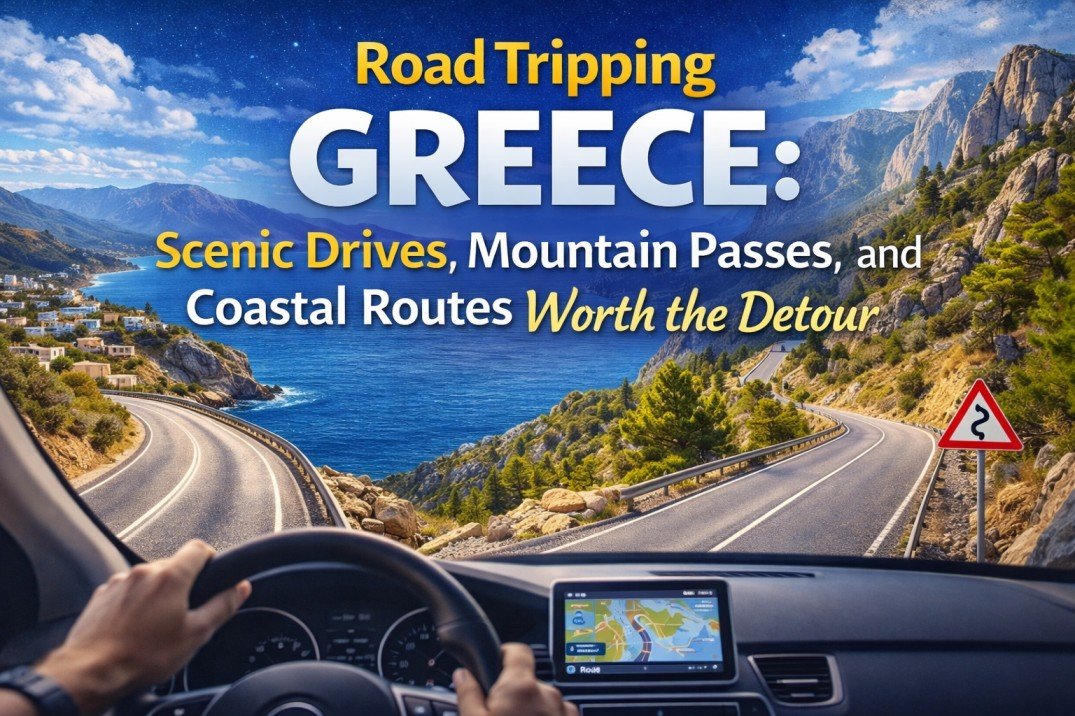
Greece is often sold as a ferry-and-islands country. That story misses half the magic. The mainland is made for road trips. Short distances hide big changes in landscape. One hour you are driving through olive groves, the next you are climbing a mountain pass or hugging a cliff above the sea. Roads connect places that tours rarely touch, and the freedom to stop anywhere turns travel days into highlights.
This guide is built for travelers who want to drive Greece properly. Not rushing. Not ticking boxes. Just good roads, real scenery, and places that reward curiosity.
Why Road Tripping Greece Works So Well
Greece has one of the best road trip ratios in Europe. By that, I mean how much variety you get for every kilometer driven.
You will find:
-
Compact distances between mountains, coastlines, and historic towns
-
Well-maintained national roads mixed with scenic secondary routes
-
Villages that still revolve around a single plateia and a café
-
Landscapes that change fast enough to keep every drive interesting
Unlike countries built around highways, Greece still rewards the slower road. Many of the most memorable views are not visible from main routes at all.
Planning a Greece Road Trip the Smart Way
When to Go
Late spring and early autumn are ideal. April to early June and September to October give you:
-
Comfortable driving temperatures
-
Clear mountain roads
-
Fewer tour buses
-
Easier parking in towns and villages
July and August are still possible, but coastal routes get busy and inland heat can be intense.
Renting a Car in Greece
Renting is straightforward, especially from major cities like Athens and Thessaloniki. Choose a car with decent power if you plan to drive mountain roads. A small SUV or mid-size sedan is often more comfortable than the cheapest option.
Manual transmission is common. Automatic cars cost more and should be booked early.
Navigation and Driving Style
Google Maps works well, but always cross-check routes in mountainous areas. Some “shortcuts” are technically roads but not roads you want.
Greek driving culture is confident, sometimes creative, but predictable once you adjust. On rural roads, expect slower vehicles and livestock. In cities, patience helps more than speed.
The Peloponnese Loop: History, Coast, and Mountains in One Drive
The Peloponnese is one of the strongest road trip regions in Greece. It packs ancient sites, quiet beaches, and dramatic terrain into a compact loop.
Corinth to Nafplio
Leaving Athens, cross the Corinth Canal and head south. The road opens quickly, and traffic thins.
Nafplio is a perfect first stop. Neoclassical buildings, a walkable old town, and a seafront promenade make it ideal for a slow arrival into the Peloponnese.
Mountain Roads Through Arcadia
From Nafplio, drive inland toward Arcadia. This is where the Peloponnese changes character. Forests replace beaches. Stone villages sit high above winding roads.
Arcadia is quiet, cool even in summer, and largely ignored by mass tourism. Stop for lunch in a village taverna where menus change daily and meat comes from nearby farms.
Mani Peninsula Coastal Drive
The Mani feels raw and elemental. Tower houses rise from rocky hills, and the sea feels wilder here.
Driving from Areopoli down the coast is slow but unforgettable. This is not a place to rush. Pull over often. Swim when the mood hits. Stay overnight in a small guesthouse and let the silence do its work.
Central Greece: Mountains, Monasteries, and Alpine Roads
Central Greece is home to some of the most dramatic drives in the country.
Delphi to Arachova
The road to Delphi is scenic in itself, climbing through olive groves with wide views of the valley below. After exploring the site, continue uphill to Arachova.
Arachova blends alpine architecture with modern cafés. In winter it is a ski town. In summer it is a cool escape from the heat.
Meteora’s Other Roads
Most visitors reach Meteora by bus or train and see only the main viewpoints. Driving gives you access to quieter roads that loop behind the rock pillars.
Early morning and late afternoon are best. Light changes fast here, and the silence between monasteries is part of the experience.
Epirus: Greece’s Most Underrated Road Trip Region
If you want dramatic landscapes and almost no crowds, Epirus delivers.
Ioannina and Lake Pamvotis
Ioannina is a lively university town with a relaxed pace. The lakefront is perfect for a slow walk after a long drive.
Use Ioannina as a base to explore the surrounding mountains.
Zagori Villages and Stone Bridges
Zagori is made for road trips. Dozens of villages are connected by narrow roads and old stone bridges.
The drive to Vikos Gorge offers some of the deepest canyon views in Europe. Roads here are winding but well maintained. Drive slowly and enjoy the sense of isolation.
The Road to the Ionian Coast
From the mountains, descend toward the coast near Parga and Sivota. Few drives in Greece transition so dramatically from alpine to tropical in such a short time.
Northern Greece: Big Distances, Big Rewards
Northern Greece requires more driving, but the payoff is scale.
Olympus and the Pieria Coast
Driving around Mount Olympus feels mythic even if you are not hiking. The mountain dominates the skyline, and coastal roads nearby offer long, quiet beaches with views straight up to the peaks.
Prespa Lakes Border Drive
Near the borders with Albania and North Macedonia, the Prespa Lakes region feels completely different from the rest of Greece. Quiet villages, traditional life, and bird-filled wetlands define the landscape.
This is slow travel territory. Stay overnight. Eat locally. Let the pace reset you.
Island Road Trips That Actually Work
Not all Greek islands are ideal for road trips, but some are excellent.
Crete: A Road Trip Island
Crete is large enough to feel like a country. Coastal highways are easy, but the real magic is inland.
Drive through the White Mountains, cross plateaus like Lasithi, and follow south coast roads where cliffs drop straight into the sea. Crete rewards time and flexibility more than any other island.
Pelion Peninsula
The Pelion combines mountain villages and beaches in a compact area. Roads are narrow and slow, but scenery is constant.
Villages like Tsagarada feel almost alpine, while nearby beaches look Caribbean on calm days.
Scenic Coastal Roads Worth Slowing Down For
Some roads deserve their own category.
-
Athens to Sounion at sunset, ending at the Temple of Poseidon
-
Lefkada’s west coast cliffs and beaches
-
The drive from Nafpaktos to Galaxidi along the Gulf of Corinth
These routes are not about getting somewhere. They are the experience.
Practical Tips for a Better Greece Road Trip
Fuel and Stops
Fuel stations are common, but not everywhere. In rural regions, fill up when you can. Small cafés along highways often serve better coffee than city chains.
Parking Realities
In villages, park where locals park. If you see cars lined neatly along a road, it is usually fine. Avoid blocking narrow streets even if others do it.
Food Planning
One of the joys of road tripping Greece is unplanned meals. Aim to eat where menus are short and locals are present. Lunch between 2 and 4 pm is normal. Dinner rarely starts before 8:30 pm outside tourist zones.
How Road Trips Change the Way You See Greece
Driving through Greece changes your relationship with the country. You stop chasing highlights and start noticing details. A roadside chapel. A mountain spring. A village where time bends a little.
Public transport shows you destinations. A car shows you everything in between. And in Greece, what sits between famous places is often the best part.
If you want to understand the country beyond postcards, road tripping is not optional. It is essential.
External Resources Worth Checking
For official route ideas, regional details, and seasonal updates, it helps to cross-check with national and regional tourism sources like the Greek National Tourism Organization and regional travel offices. They often highlight festivals, road conditions, and lesser-known routes that add depth to a self-drive itinerary.