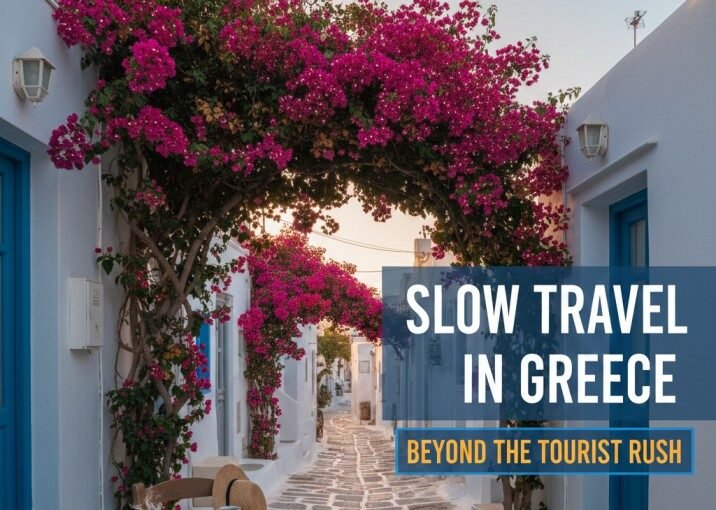
Greece is often sold as a checklist destination. Santorini sunsets, Mykonos nightlife, Acropolis selfies, then move on. But that version of Greece barely scratches the surface. Slow travel in Greece offers something richer. It is about staying longer, moving less, and connecting deeper with places and people.
This guide is for travelers who want more than highlights. It is for those who want quiet villages, real conversations, seasonal food, and experiences that do not feel rushed or staged. Greece is one of the best countries in Europe for slow travel, thanks to its strong local culture, walkable towns, affordable long stays, and relaxed pace of life.
Below you will find a complete slow travel guide to Greece, including destinations, transport, food, accommodation, seasons, and practical planning tips.
What Slow Travel Really Means in Greece
Slow travel is not about doing nothing. It is about doing fewer things with more intention. In Greece, this approach fits naturally into daily life.
Locals already live slowly. Shops close in the afternoon. Meals last for hours. Conversations matter more than schedules. When you align your travel style with this rhythm, Greece opens up in ways most visitors never experience.
Slow travel in Greece focuses on:
-
Staying in one place for several days or weeks
-
Exploring on foot or by local transport
-
Eating where locals eat, not where tour buses stop
-
Learning basic Greek phrases
-
Traveling outside peak summer months
Instead of island hopping every two days, you might spend two weeks on one island. Instead of chasing landmarks, you get to know a neighborhood café owner by name.
Why Greece Is Perfect for Slow Travel
Few countries in Europe support slow travel as naturally as Greece.
Strong Local Identity
Each region has its own food, traditions, dialects, and festivals. Staying longer lets you notice these differences.
Affordable Long Stays
Outside July and August, Greece offers excellent value for long-term rentals, especially on lesser-known islands and mainland towns.
Walkable Towns and Villages
Many Greek destinations are compact. You do not need a car every day, which encourages a slower pace.
Seasonal, Local Food Culture
Greek cuisine is deeply seasonal. Slow travel lets you eat what is actually grown or caught nearby.
Welcoming Communities
Greeks value relationships. If you return to the same bakery every morning, you are no longer just a tourist.
Best Destinations in Greece for Slow Travel
Not every place in Greece is ideal for slow travel, especially during peak season. The destinations below reward patience and longer stays.
Crete: A World of Its Own
Crete is perfect for slow travelers because it feels like a country within a country.
Stay in towns like:
-
Chania Old Town (outside peak summer)
-
Rethymno
-
Paleochora
-
Vamos village
Spend your days walking local trails, visiting small beaches, and eating home-cooked food in family tavernas. Crete’s interior villages offer a deeper cultural experience than the resort coastlines.
Learn more about Crete’s regional culture through resources like the official Greek tourism site
Naxos: Authentic Island Life
Naxos balances beautiful beaches with real island life. Unlike more famous Cycladic islands, Naxos still has farming villages, local markets, and affordable long stays.
Slow travel highlights in Naxos:
-
Staying inland in villages like Halki or Filoti
-
Walking ancient footpaths between villages
-
Eating locally produced cheese, potatoes, and citrus
It is an island where daily life continues even after tourists leave.
Peloponnese: Mainland Greece at Its Best
The Peloponnese is often overlooked, which makes it perfect for slow exploration.
Base yourself in:
-
Nafplio
-
Kardamyli
-
Monemvasia (for longer stays, not day trips)
You can explore ancient ruins, mountain villages, and quiet beaches without crowds. The region is well-connected by road and offers excellent guesthouses for longer visits.
Ikaria: The Island of Slow Living
Ikaria is famous for longevity and relaxed living. It is not polished or luxury-focused, which is exactly the point.
Life here revolves around:
-
Local festivals called panigyria
-
Afternoon rest
-
Simple food and strong community ties
If you want to fully disconnect from fast travel habits, Ikaria is one of the best places in Europe to do it.
Traveling Slowly Between Places in Greece
How you move matters as much as where you go.
Use Ferries as Part of the Experience
Instead of flying between islands, take ferries. They are slower but scenic and social. Sitting on deck with coffee while approaching a harbor is part of Greek travel culture.
You can check ferry routes and schedules on platforms like Ferryhopper or the official Greek ferry networks
Trains and Buses on the Mainland
Mainland Greece has reliable intercity buses and improving rail connections.
Buses connect even small towns and offer a chance to see everyday life. Trains between Athens and Thessaloniki are comfortable and affordable.
Walk Whenever Possible
Greek towns are meant for walking. Wandering without a plan often leads to the best discoveries, from neighborhood bakeries to hidden chapels.
Eating Like a Slow Traveler in Greece
Food is central to slow travel in Greece.
Follow the Seasons
In spring, eat wild greens, artichokes, and fresh cheese.
In summer, enjoy tomatoes, watermelon, and grilled fish.
In autumn, look for mushrooms, grapes, and slow-cooked meats.
In winter, soups, legumes, and baked dishes dominate menus.
If a menu looks the same year-round, it is likely designed for tourists.
Choose Tavernas Over Restaurants
Family-run tavernas serve food cooked earlier in the day, often based on what was available at the market.
Ask for:
-
“What did you cook today?”
-
“What do you recommend?”
These questions often lead to the best meals.
Shop Local Markets
Visiting weekly markets helps you understand regional food culture. It also supports local producers and makes self-catering more enjoyable during longer stays.
For deeper insight into Greek food traditions, sources like the Hellenic Ministry of Culture provide helpful background
Staying Longer: Accommodation Tips for Slow Travel
Slow travel works best when your accommodation feels like home.
Rent Monthly Instead of Nightly
Look for:
-
Small guesthouses
-
Local rental agencies
-
Long-stay deals outside peak season
Many hosts offer discounts for stays of two weeks or more, especially from October to May.
Avoid Overdeveloped Resorts
Resort areas are designed for short stays and entertainment, not daily life. Village houses and town apartments offer better value and cultural immersion.
Live Like a Local
Choose places with:
-
A local café nearby
-
A bakery within walking distance
-
A neighborhood grocery store
These small details shape your daily rhythm.
Best Time of Year for Slow Travel in Greece
Timing is everything.
Spring: March to May
Spring is ideal for slow travel. The weather is mild, landscapes are green, and locals are relaxed before summer crowds arrive.
Autumn: September to November
Autumn offers warm seas, fewer tourists, and harvest season. It is one of the best times to experience real Greek life.
Winter: December to February
Winter is underrated. While islands quiet down, cities and mainland towns feel authentic and lived-in. Prices drop, and cultural life continues.
Avoid July and August if slow travel is your goal. These months are busy, hot, and expensive.
Connecting With Local Life
Slow travel is ultimately about connection.
Learn Basic Greek
Simple phrases go a long way. Even basic greetings show respect and effort.
Attend Local Events
Look for:
-
Village festivals
-
Religious celebrations
-
Local markets
These events are rarely advertised to tourists but are central to Greek community life.
Be a Regular
Visit the same café, bakery, or beach regularly. Familiarity builds trust, and conversations happen naturally.
Common Mistakes to Avoid
Slow travel requires unlearning some habits.
-
Trying to see too much
-
Constantly moving accommodations
-
Overplanning every day
-
Judging places too quickly
Give each destination time to reveal itself.
Final Thoughts: Seeing Greece Beyond the Rush
Slow travel in Greece is not about missing out. It is about seeing more by doing less. When you stop chasing highlights, Greece shows you its everyday beauty. Morning coffee rituals, evening walks, shared plates, and quiet conversations become the real memories.
If you allow yourself to slow down, Greece rewards you with depth, warmth, and authenticity that no itinerary can capture.
For travelers who want more than photos, slow travel is not just a style. In Greece, it is the most natural way to travel.