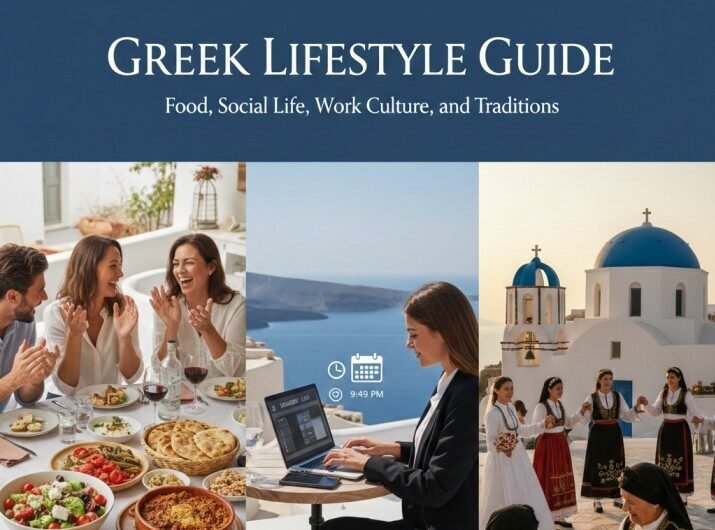
The Greek lifestyle is built on simple but powerful values: strong relationships, shared meals, respect for tradition, and a deep appreciation for everyday life. While Greece is often seen through the lens of ancient ruins and island holidays, the real character of the country is found in how people live day to day.
This guide takes a close look at modern Greek lifestyle, covering food habits, social life, work culture, and traditions that continue to shape how Greeks think, connect, and live today.
Understanding the Greek Way of Life
Life in Greece is not centered around constant productivity. Instead, it focuses on balance. Work is important, but not at the expense of family, friendships, or personal well-being. Time is flexible, conversations are long, and social connection is part of daily routine.
This mindset can feel refreshing or challenging, depending on where you come from, but it defines Greek life more than anything else.
Greek Food Culture: More Than Just Cuisine
Food as a Social Ritual
In Greece, food is rarely eaten alone or in a hurry. Meals are social events, even on ordinary weekdays. Sharing food strengthens relationships and creates a sense of togetherness.
Dishes are usually placed in the center of the table, encouraging everyone to eat communally. Conversation is just as important as the meal itself.
Everyday Eating Habits
Breakfast is typically light. Many Greeks start the day with coffee and a small snack, often bought from a local bakery or cafe. Lunch has traditionally been the main meal, though busy city life has shifted this for many people.
Dinner is eaten late, usually after 9 PM, and is often enjoyed with family or friends.
Traditional Greek Foods
Greek cuisine is based on fresh, local ingredients. Olive oil, vegetables, legumes, bread, and cheese are staples in most homes.
Popular dishes include:
-
Moussaka
-
Souvlaki and gyros
-
Greek salad
-
Stuffed vegetables
-
Grilled fish and seafood
Each region has its own specialties shaped by geography and history.
Authoritative culinary resources such as Britannica’s food sections and cultural guides from Visit Greece offer deeper insight into regional Greek cuisine.
Coffee Culture in Greece
Coffee plays a central role in Greek social life. Cafes are places to meet, talk, read, or simply watch the world go by. Sitting for hours with one coffee is completely normal.
Popular choices include Greek coffee, freddo espresso, and freddo cappuccino. Coffee is not rushed, and refills are rarely expected.
Social Life in Greece
Relationships Come First
Social connections are at the heart of Greek lifestyle. Family and friends are prioritized, often above work or personal schedules. Plans are flexible, and spontaneous meetups are common.
Greeks tend to maintain long-term friendships built on trust and emotional openness.
Cafes and Public Spaces
Public spaces play an important role in social life. Cafes, squares, and promenades are where people meet and socialize.
In the evening, neighborhoods come alive with people walking, talking, and spending time outdoors, especially in warmer months.
Communication Style
Greeks are expressive communicators. Conversations are lively and often involve hand gestures and strong emotions. This openness reflects honesty rather than aggression.
Debate is common, and expressing opinions openly is culturally accepted.
Family Life and Values
Family as the Foundation
Family remains the backbone of Greek society. Many people live close to relatives, and it is common for adult children to stay with their parents longer than in other countries.
Family support plays a major role in childcare, housing, and financial stability.
Role of Grandparents
Grandparents are deeply involved in family life. They often help raise children and are respected figures whose advice carries weight.
This strong intergenerational bond helps preserve traditions and cultural values.
Family Gatherings
Sunday family lunches are a long-standing tradition. These gatherings bring extended families together for home-cooked meals and long conversations.
Even as lifestyles change, these gatherings remain an important part of Greek life.
Work Culture in Greece
Attitudes Toward Work
Greek work culture values effort and resilience, especially in sectors like tourism, hospitality, and retail. Long hours are common during peak seasons.
At the same time, personal life is respected. Family obligations and social commitments are generally understood and accepted.
Work-Life Balance
While work can be demanding, Greeks strive to maintain balance. Taking time off, socializing after work, and enjoying holidays are considered important for well-being.
August, in particular, is traditionally a slow month, with many businesses closing for summer holidays.
Business and Professional Relationships
Personal relationships matter in Greek business culture. Trust is built through face-to-face interaction rather than formal communication.
Meetings often start with casual conversation, and partnerships develop gradually over time.
Modern Changes in Work Life
Remote work, digital startups, and freelance careers are becoming more common, especially among younger Greeks. This shift is slowly changing traditional work patterns while keeping core values intact.
Traditions That Shape Daily Life
Religious Influence
The Greek Orthodox Church continues to influence traditions and celebrations. Many public holidays and customs are tied to religious events.
Churches also serve as community centers, especially in smaller towns and villages.
Greek Easter
Easter is the most important holiday in Greece. It is marked by fasting, church services, and large family meals.
Traditional foods include roasted lamb, red-dyed eggs, and sweet bread called tsoureki.
Name Days
Name days are widely celebrated and often considered more important than birthdays. People named after saints celebrate on that saint’s feast day.
Friends and family may visit without invitation, bringing wishes and small gifts.
Hospitality and Social Etiquette
Philoxenia: The Culture of Hospitality
Hospitality, known as philoxenia, is a core Greek value. Guests are treated generously, often offered food, drinks, or sweets.
This tradition applies not only to visitors but also to neighbors and acquaintances.
Visiting Homes and Social Norms
When visiting a Greek home, bringing a small gift such as sweets or wine is appreciated. Accepting offered food is polite, even if you only take a small portion.
Warmth and friendliness matter more than formal etiquette.
Greetings and Respect
Greetings are important in Greek culture. Saying hello and goodbye, even in brief interactions, shows respect.
Physical greetings like handshakes or cheek kisses are common among friends.
Life in Cities vs Rural Areas
Urban Lifestyle in Greece
Cities like Athens and Thessaloniki offer a modern lifestyle with international influences. Public transport, cultural events, and diverse dining options are widely available.
Despite the fast pace, traditional habits such as late dinners and social cafes remain part of daily life.
Village and Island Life
In villages and smaller islands, life moves at a slower pace. People know each other, and daily routines revolve around local shops, cafes, and community gatherings.
Traditions are stronger, and social bonds are more visible in everyday interactions.
Festivals and Community Celebrations
Local Festivals
Throughout the year, towns and villages host festivals celebrating saints, local history, or seasonal events. These festivals often include live music, dancing, and shared meals.
They are open to everyone and reflect Greece’s strong sense of community.
Music and Dance
Traditional music and dance are still part of modern Greek life. You will see them at weddings, festivals, and family celebrations.
They help preserve cultural identity and connect generations.
Modern Challenges and Realities
Economic Pressures
Economic challenges have shaped modern Greek life. Many families rely on close social networks and shared resources to manage costs.
Community support remains strong, helping people navigate difficult times together.
Younger Generations and Change
Younger Greeks are globally connected, tech-savvy, and often multilingual. Many study or work abroad, bringing new ideas back home.
Despite this, family ties and cultural traditions remain important parts of their identity.
Why the Greek Lifestyle Stands Out
The Greek lifestyle is not about perfection or luxury. It is about connection, balance, and enjoying everyday moments. Meals are shared, conversations are meaningful, and time is treated as something to experience, not control.
This way of life encourages presence, patience, and strong human bonds.
For broader cultural insight, resources from the Hellenic Ministry of Culture and international sociocultural studies provide reliable perspectives on Greek society.
Final Thoughts
The Greek lifestyle is shaped by food, social connection, work balance, and traditions passed down through generations. It blends modern realities with deep-rooted values that prioritize people over schedules.
Whether you are visiting Greece, planning to live there, or simply curious about how Greeks really live, understanding these aspects offers a deeper appreciation of the country beyond its famous landmarks.
Living the Greek way means slowing down, sharing more, and finding joy in everyday life.