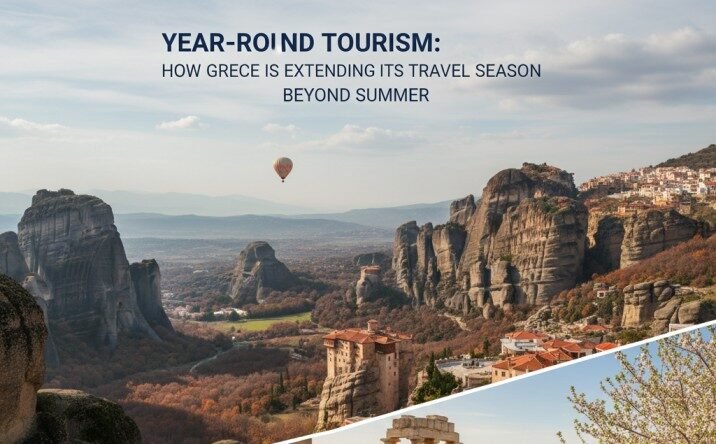
Greece used to be synonymous with hot-weather, short-stay tourism: sunbathing on Cycladic cliffs, late-night tavernas and crowded ferries in July and August. That story is changing. Today, tourism in Greece is moving toward balance — longer seasons, more diverse products, and destinations that welcome visitors twelve months a year. This shift matters for businesses, local communities, and travelers who want richer, less frantic experiences.
Below you’ll find a full, search-optimized guide that explains what’s driving the move to year-round tourism, which places are leading the charge, the policies and investments behind it, and practical ideas for destinations and operators to capitalize on the trend.
Why year-round tourism matters now
Seasonal peaks create predictable problems: overcrowded hotspots, underused hotels off-season, and unstable local jobs. Extending the season smooths that volatility. It spreads demand across months, increases average length of stay, and raises per-visitor spend — metrics governments and businesses pay attention to when they plan investments.
Recent national and industry data shows growth outside the summer months. Greece’s official tourism statistics report steady increases in arrivals and nights spent during off-peak months in recent years, indicating the extension of travel demand beyond the traditional summer window. statistics.gr
A national push for diversified tourism product — including mountain, cultural and wellness offerings — is another reason the calendar is lengthening. Policymakers and travel businesses are treating shoulder and winter seasons as strategic growth opportunities rather than a necessary downtime. GTP Headlines+1
What’s driving the shift (demand side)
Longer trips and different traveler profiles
Long-haul markets, senior travelers, and repeat visitors often favor longer stays and deeper itineraries. They’re less interested in single-purpose beach holidays and more drawn to mix-and-match travel: culture, food, hiking, wellness, and small-group experiences. That preference naturally supports travel outside July–August.
Remote work and flexible calendars
Hybrid work arrangements let visitors time their trips for quieter months. Digital nomads and remote professionals who value low season pricing and local authenticity are choosing Greek cities and larger islands for extended stays.
Event and festival calendars year-round
Cities like Athens intentionally program events throughout the year — art exhibitions, food festivals, and winter holiday markets — to keep demand steady. Athens’ official events calendar shows seasonal programming spanning autumn, winter and spring, which helps attract off-peak visitors. thisisathens.org
Social media and visual inspiration
Seasonal photos once reinforced the idea that Greece equals summer. Now, influencers and travel media show winter light on the Parthenon, snow in the mountains, vineyards in harvest season and quiet island streets. That visual shift removes the mental barrier many travelers had about visiting “out of season.”
What’s happening on the supply side
Expanded air connectivity and regional links
Airlines and airports are gradually improving connectivity outside peak months, with more shoulder-season routes and year-round services to major hubs. Improved access makes non-summer travel logistically easier for both short-haul and long-haul markets. Investments in airport facilities and regional routing are part of a broader infrastructure push. statistics.gr+1
Product diversification: beyond beaches
Greek destinations are building products that work in cooler months:
-
Cultural and museum trails (Athens, Thessaloniki, Peloponnese)
-
Gastronomy and wine-region experiences (Crete, Nemea, Naoussa)
-
Mountain and winter sports (Parnassos, Pelion, Zagori)
-
Wellness and spa retreats (Crete, Peloponnese resorts)
-
Cruise and marina services that extend the nautical season through better port services
Government strategy documents and recent tourism plans explicitly support mountain and culture tourism as year-round anchors. GTP Headlines
Hotels and tour operators adapting
Many hotels that historically closed outside summer are now opening for shoulder months — sometimes at reduced capacity but with targeted product offers (wellness packages, food festivals, workshop weekends). Local tour operators are packaging experiences designed around autumn olive harvests, winter archaeology seasons, and early-spring hiking.
Regions and case studies: where year-round works best
Athens — the city that never really closed
Athens has reinvented itself as a four-season city break. Museums, theatre seasons, conferences and a lively food scene keep the city attractive through winter. Cultural festivals and holiday programming give visitors reasons to plan off-peak trips. The city’s event calendar is a clear part of the strategy to attract year-round tourists. thisisathens.org
Crete — mild winters and food tourism
Crete’s size and varied geography give it many tourism levers: coastal towns for moderate winter escapes, mountainous villages for hiking and village life, and agricultural experiences like olive and wine tourism during harvest seasons. Guides and tours now promote winter Crete for hiking, cultural tours and gastronomy rather than sunbathing. GetYourGuide
Peloponnese — history, wineries and outdoor activities
Peloponnese offers archaeology, rural retreats, vineyards and coastal drives. It’s well positioned for historical tourism outside the high season, and smaller towns benefit from sustainable tourism strategies that encourage longer stays.
Mountain destinations — ski and nature combinations
Recent national strategy moves to develop mountain tourism aim to create year-round mountain hubs with winter sports and summer hiking, elevating areas that were previously single-season anchors. These plans are explicitly targeting a spread of visitors across months and improving local services to support that. GTP Headlines
Lesser-known islands — authenticity over crowds
Islands that were once overshadowed by Santorini and Mykonos are positioning themselves as year-round alternatives: slower pace, local gastronomy, hiking routes and small festivals. Ferry services and local hotels are coordinating schedules to keep essential services running outside peak months. Ferry and island guides highlight options for winter island travel and how to plan around reduced ferry frequencies.
Events, MICE and business travel as season extenders
Business conferences, incentive travel, and congresses fill hotel demand during shoulder months. Cities that actively court MICE travel can stabilize occupancy in historically quiet months. Conference calendars, cultural programming and improved convention facilities make this a realistic target for many Greek urban centers.
Marketing and positioning: how destinations are selling year-round Greece
Storytelling that highlights seasonality benefits
Effective campaigns frame off-season visits as an advantage: fewer crowds, lower prices, local authenticity and seasonal cuisine (olive oil, truffle, wine harvests). Campaigns that promote “experiences not just sights” perform better in convincing travelers to move outside traditional dates.
Targeted market segmentation
Successful operators target specific markets for shoulder travel:
-
Northern Europeans and Brits for shoulder escapes
-
Long-haul markets (US, Asia) for multi-week, mixed itineraries
-
Wellness and slow-travel markets for winter retreats
Digital content and conversion
High-quality seasonal itineraries, clear logistics advice (ferry schedules, winter opening times), and honest weather expectations convert browsers into bookers. Content that includes sample 5–10 day itineraries for each season helps search rankings and user intent matches.
Sustainability and local impact
Year-round tourism can reduce the environmental and social shocks of overtourism — if it’s managed right. The goal should be higher value, lower density: spread visitors across places and months, improve waste and water infrastructure, and train local workforces for more stable employment.
Policy documents and industry research increasingly emphasize value over volume, urging local stakeholders to develop products that benefit communities year-round rather than maximize short bursts of arrivals. insete.gr+1
Practical considerations for travelers (what to expect)
Weather and what to pack
Expect variability. Athens and southern islands can be mild in winter, while mountain regions have snow. Bring layers, a rain jacket and comfortable walking shoes. For island visits in winter, plan for reduced ferry frequency and always check schedules in advance.
Transport and logistics
Regional airports and ferry lines reduce services in winter. That’s improving, but travelers should book key legs in advance and allow buffer time between connections. Many inter-island ferries operate on reduced timetables, so plan accordingly. Ferry and local travel planners list seasonal schedules and recommended routes.
Openings and closures
Some tourist businesses still close for deep winter — high-end resorts often stay open year-round, but smaller guesthouses or beach bars may not. Look for hotels that explicitly advertise year-round service or seasonal packages. City museums, archaeological sites and cultural venues generally maintain stable winter hours.
Activities that shine out of season
-
Museum-heavy itineraries with shorter lines
-
Culinary tours and cooking classes (harvest season)
-
Hiking and nature trails when temperatures are comfortable
-
Spa and wellness breaks with local spas and thermal springs
-
Skiing and snow activities in mountain areas
What destinations and operators should do next
Productize the shoulder months
Create weekend breaks, retreat packages, and local-experience itineraries tailored to shoulder season preferences. Bundled offers that combine city stays with short rural escapes encourage longer stays.
Coordinate calendars
Local tourism boards, event producers and hotels should coordinate calendars to avoid gaps and build momentum. A steady flow of small events works better than one huge event that just shifts the peak.
Invest in reliable infrastructure
Year-round success depends on reliable transport, internet, and health services. Public investment in airports and interregional roads, along with private investment in stable hospitality services, is essential. National strategies already target those investments. GTP Headlines+1
Train and retain workforce
Offer training and seasonal contracts that transition into part-time year-round roles. Local talent is the backbone of authentic experiences.
Challenges to watch
-
Weather unpredictability can deter some beach-oriented travelers.
-
Reduced ferry frequency still complicates island logistics in winter.
-
Managing community expectations: residents should share the benefits of extended tourism without being overwhelmed.
-
Environmental capacity in smaller destinations needs careful planning.
Quick tips for marketers and publishers (SEO and content)
-
Target long-tail queries: “what to do in Greece in November,” “Athens weekend in winter,” “Crete olive harvest tour.”
-
Publish seasonal itineraries and clear logistics posts (ferry schedules, opening hours).
-
Use schema for events and structured data for itineraries to increase snippet chances.
-
Create local-voice content: interviews with restaurateurs, guides and hoteliers about why they operate year-round.
-
Encourage user reviews for shoulder-season stays — social proof matters more when travelers try something new.
The outlook: balanced growth, higher value
The move to year-round tourism in Greece is already underway. Increased arrivals in non-peak months, government strategies that promote mountain and culture tourism, and industry shifts toward product diversification all point to a future where Greek destinations are visited for reasons beyond sun and sand. This is better for local economies, better for travelers seeking authentic experiences, and better for long-term sustainability. Recent industry reporting and statistics confirm these trends and the policy focus behind them.