
Public transportation in Greece is one of the most convenient, affordable, and scenic ways to explore the country. Whether you’re navigating ancient cities, crossing the mainland, or hopping between islands, understanding Greece’s transport system helps you travel smoothly without needing tours or rental cars. From ferries gliding across the Aegean to efficient metro lines in Athens and reliable intercity buses, Greece offers travelers a user-friendly network that makes independent travel easy.
This comprehensive guide breaks down exactly how to use public transport in Greece. You’ll learn how ferries work, how to navigate KTEL buses, how to use the metro system like a local, how to buy tickets, the best apps to download, money-saving tips, common mistakes to avoid, and how to move confidently between Greece’s islands, cities, and popular regions.
Whether you’re planning a week in Athens, backpacking the mainland, or island hopping through Cyclades, this is the only guide you’ll need.
Why Use Public Transportation in Greece?

Greece is one of Europe’s most visitor-friendly destinations, and its public transportation system is ideal for travelers who want to avoid rental cars or group tours. From the moment you land in Athens or Thessaloniki, you can comfortably reach nearly any part of the country using transport options built for locals as much as tourists.
Benefits of Public Transport in Greece
-
Affordable: Buses and ferries offer excellent value.
-
Reliable: Major routes run frequently, especially in summer.
-
Scenic: Island ferries and coastal bus routes provide stunning views.
-
Eco-Friendly: Better for the environment compared to renting cars.
-
Stress-Free: No need to navigate narrow roads or steep island streets.
To plan your routes, the official Greece tourism portal is a useful resource: https://www.visitgreece.gr
Understanding Greece’s Public Transport System
Greece’s transportation network has three major components every traveler should understand:
-
The Athens Metro – clean, fast, reliable.
-
KTEL Intercity Buses – the backbone of mainland travel.
-
Ferries – essential for Greek island transportation.
There are also taxis, trams, suburban railways, domestic flights, and ride-sharing apps, but this guide focuses on the three major systems you’ll use most.
How to Use the Athens Metro
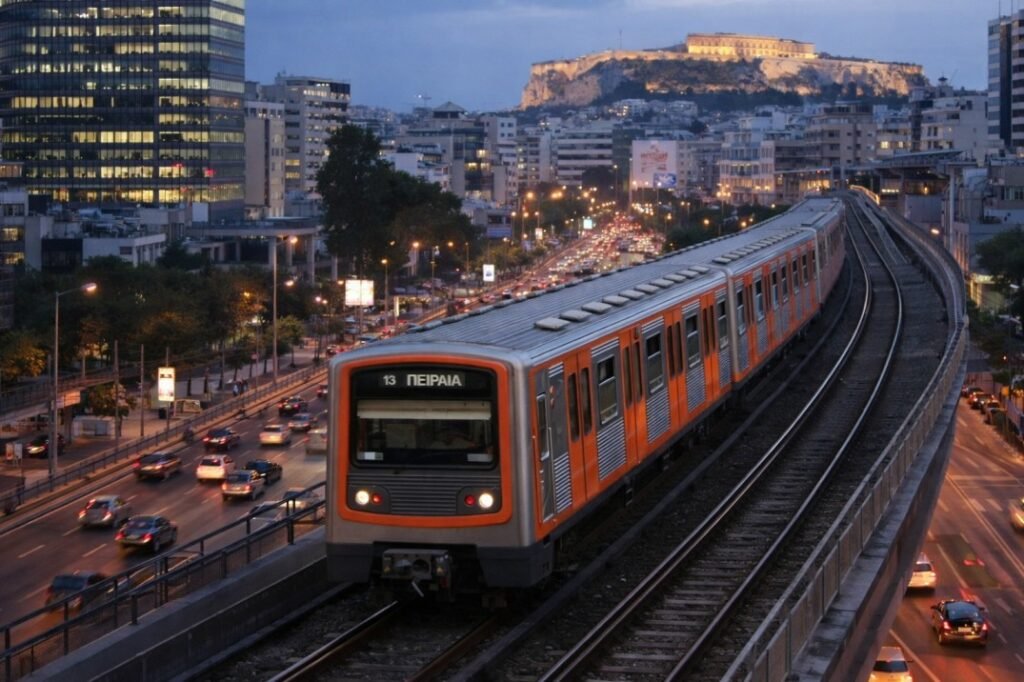
Athens is the only Greek city with a major metro system, and it’s one of the easiest ways to navigate the capital. Fast, clean, cheap, and easy to understand, the metro links the city center, major archaeological sites, the airport, and the port of Piraeus (your gateway to the islands).
For updates, routes, and station maps, visit the official operator: https://www.stasy.gr
Athens Metro Overview
Metro Lines
Athens has three main metro lines:
-
Line 1 (Green): Piraeus ↔ Kifisia
-
Line 2 (Red): Anthoupoli ↔ Elliniko
-
Line 3 (Blue): Airport ↔ Dimotiko Theatro
Line 3 is especially important because it connects Athens Airport to Syntagma (city center) and Monastiraki (historic area).
Operating Hours
-
Daily: approximately 5:30 AM – midnight
-
Friday & Saturday: some lines run until 2:00 AM
Frequency
-
Every 4–10 minutes depending on time of day.
How to Buy Metro Tickets
Tickets can be purchased from:
-
Ticket machines (English available)
-
Station ticket offices
Types of tickets:
-
€1.20 standard ticket – valid for 90 minutes and transfers
-
€9.00 24-hour ticket
-
€20–€30 multi-day passes
-
€9.00 airport bus ticket
-
€9.00–€10.00 metro airport ticket (depending on provider)
Contactless credit cards are also accepted on many routes.
Popular Metro Stops for Travelers
-
Monastiraki: Flea market, central walking area
-
Syntagma: Parliament, city center
-
Acropolis: Acropolis Museum & Parthenon
-
Piraeus: Ferries to Greek islands
-
Airport: International arrivals
Safety Tips for the Athens Metro
The metro is safe, but pickpockets operate in crowded areas—especially on routes to Piraeus and the airport.
Tips:
-
Keep backpacks in front of you.
-
Avoid standing near closing doors if carrying luggage.
-
Be aware of anyone crowding too closely.
How to Use Buses in Greece (KTEL System Explained)
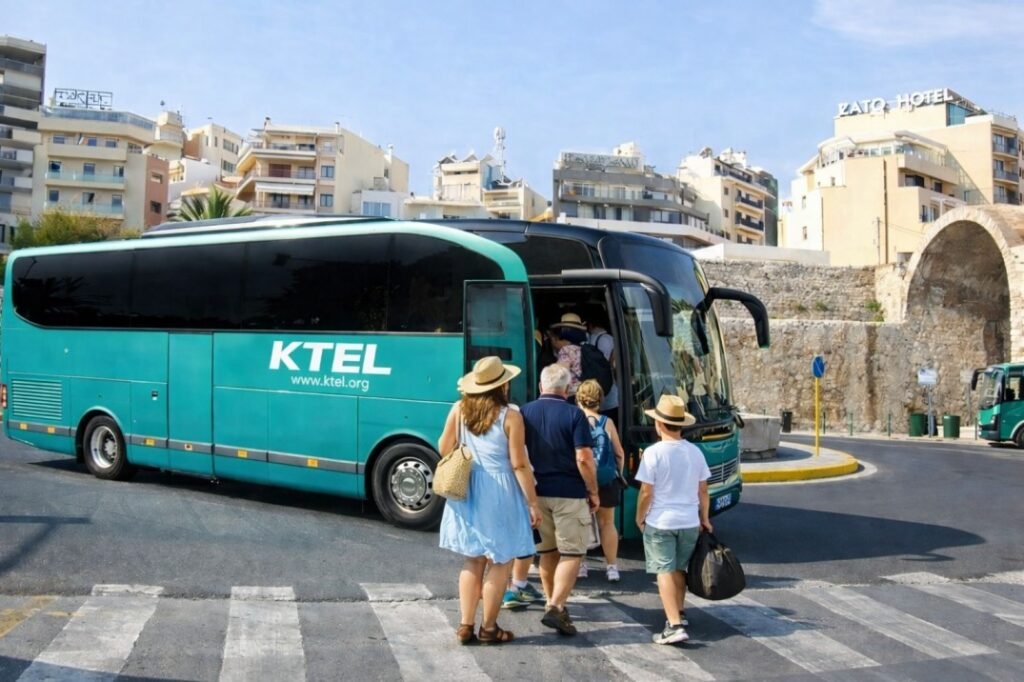
KTEL buses form the main public transport system for traveling between Greek cities, towns, and regions. They are reliable, clean, air-conditioned, and used by locals daily.
Each region of Greece has its own KTEL company, but they all work similarly.
The central resource for many routes is: https://www.ktelbus.com
How KTEL Buses Work
KTEL operates more than 60 regional companies, each running routes within their region and to major cities like Athens and Thessaloniki.
Popular KTEL Destinations
-
Delphi
-
Nafplio
-
Patras
-
Meteora (Kalambaka)
-
Thessaloniki
-
Chania & Heraklion (on Crete)
Why Travelers Use KTEL
-
Affordable: Often cheaper than trains.
-
Frequent: Many routes run multiple times per day.
-
Comfortable: Air-conditioned, modern coaches.
How to Buy Bus Tickets
You can purchase tickets:
-
Online
-
At bus stations
-
Through local kiosks
-
Directly from the bus driver (rare but possible)
Ticket prices vary depending on distance. A typical 2–3 hour ride costs €10–€20.
Major KTEL Stations in Athens
Athens has two large intercity bus terminals:
KTEL Kifissos (Central Bus Station A)
Serves routes to:
-
Peloponnese
-
Western Greece
-
Ionian Islands
KTEL Liosion (Central Bus Station B)
Serves routes to:
-
Thessaly
-
Central Greece
Luggage on KTEL Buses
-
Large bags go under the bus (free).
-
Small bags can be carried onboard.
The drivers handle luggage tags—keep them until you retrieve your bags.
Tips for Using KTEL Buses
-
Arrive 20–30 minutes early.
-
Bring snacks—side-of-road stops vary.
-
Use Google Maps or Rome2Rio for route planning.
-
Book ahead during holidays and weekends.
KTEL is ideal for travelers exploring mainland Greece without a car.
How to Use Ferries in Greece (The Island Hopping System Explained)
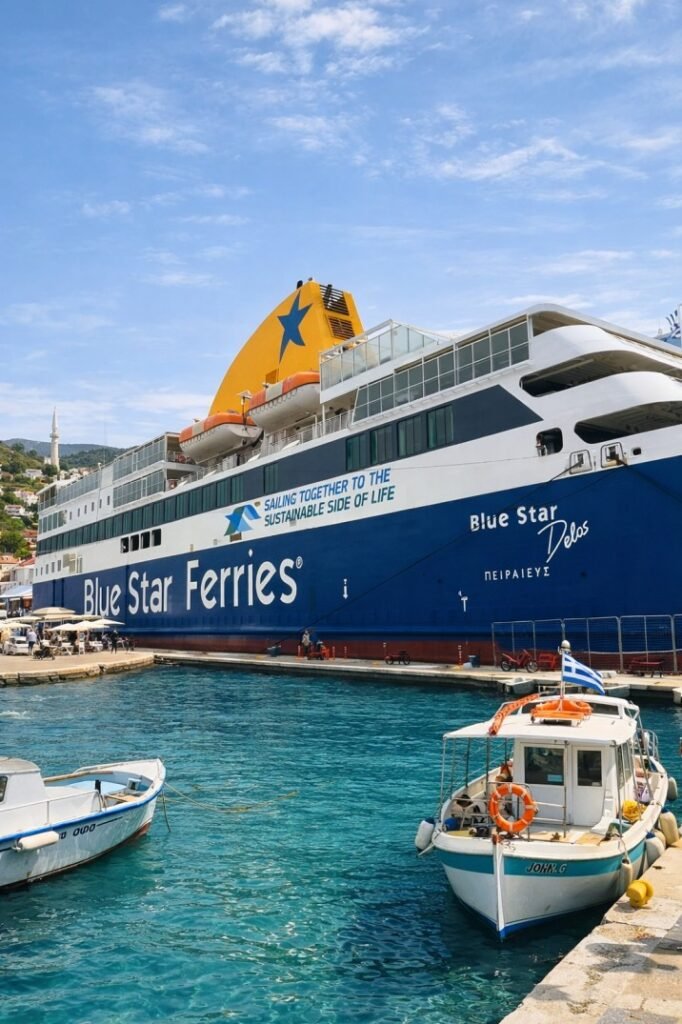
Ferries are the heart of Greece’s island transportation system. If you’re traveling to the Greek islands, you will likely take at least one ferry—many travelers take dozens.
For booking and schedules, the most user-friendly platforms are:
Types of Greek Ferries
Greece has several ferry types:
Large Conventional Ferries
-
Slower but stable
-
Cheaper
-
Offer indoor seating, decks, and cafes
High-Speed Ferries
-
More expensive
-
Faster
-
Smaller and bumpier (motion sickness risk)
Small Local Ferries
Short routes between adjacent islands or mainland ports.
Major Ferry Companies in Greece
-
Blue Star Ferries – popular, reliable, large ships
-
SeaJets – high-speed options
-
Hellenic Seaways – classic and modern vessels
-
Minoan Lines – mostly serves Crete
-
Anek Lines – operates overnight routes
How to Buy Ferry Tickets
You can:
-
Book online (recommended in summer)
-
Buy at the port ticket office
-
Purchase through your hotel or local agent
Tickets often sell out in July–August and during holidays.
Ferry Check-In and Boarding
Arrival time:
-
45–60 minutes early for large ferries
-
90 minutes early in peak summer
-
30 minutes early for small local ferries
Boarding Procedure:
-
Show ticket barcode (mobile accepted)
-
Walk or drive onto the ferry
-
Store luggage in the designated racks
Tip: Mark your suitcase—several bags look similar!
Ferry Classes
-
Economy: Cheapest, indoor/outdoor seating
-
Air Seats: Reserved airplane-style seats
-
Business/VIP: Larger seats, quieter rooms
-
Cabins: Available on long overnight routes (Crete, Rhodes)
Ferry Safety Tips
-
Always secure your bags.
-
Wear sunscreen when sitting outdoors.
-
Check weather forecasts—wind can cause delays.
Useful forecasts: https://www.emy.gr
How to Get Around the Greek Islands Without a Car
Many islands are designed for pedestrians or bus riders, especially:
-
Santorini
-
Naxos
-
Paros
-
Syros
-
Aegina
-
Hydra
-
Skiathos
Every island has its own bus network, usually run from the main port or town.
Schedules vary by season—summer routes run frequently, while winter routes are limited.
Other Forms of Public Transport in Greece
Trams in Athens
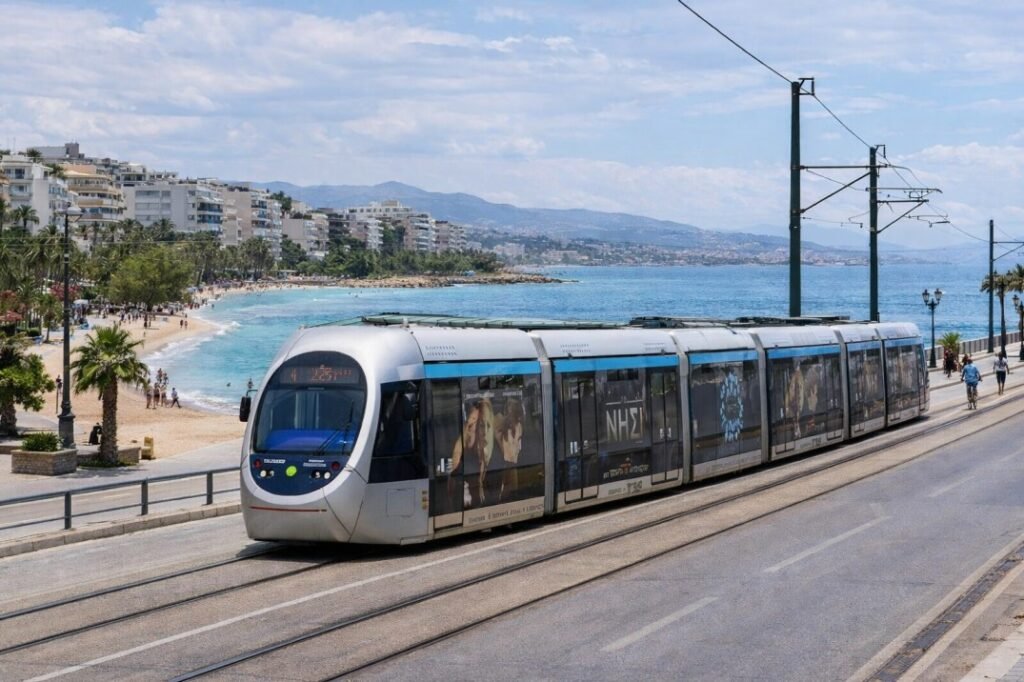
Connect coastal areas (Palaio Faliro ↔ Voula). Slow but scenic.
Suburban Railway (Proastiakos)
Connects Athens to:
-
Airport
-
Corinth
-
Halkida
Useful for day trips.
Taxis

Affordable for short rides. Use the Beat app in Athens.
Domestic Flights

Time-saving option for long distances like Athens → Crete or Rhodes.
Apps to Make Public Transport in Greece Easier
-
Ferryhopper – ferry tickets
-
Rome2Rio – route planning
-
Google Maps – metro + bus navigation
-
Beat – Athens taxi app
-
KTEL Sites – bus timetables
-
OASA Telematics – Athens bus times
How Much Public Transport Costs in Greece
Metro
-
From €1.20 for 90 minutes.
Buses (KTEL)
-
€5–€25 depending on distance.
Ferries
-
€10–€80 depending on route and season.
Trams
-
€1.20 standard ticket.
Public transport is significantly cheaper than renting a car.
Tips for Using Public Transport in Greece
-
Book ferries early in July–August.
-
Validate your metro ticket upon entering.
-
Always check for strikes—Greece has occasional transport strikes.
-
Download offline Google Maps for islands with spotty service.
-
Bring motion sickness pills for rough ferry crossings.
-
Avoid large luggage—buses and ferries get crowded.
Sample 7-Day Itinerary Using Only Public Transport
Day 1–2: Athens
Use metro/trams to visit Acropolis, Plaka, and coast.
Day 3: Delphi Day Trip
Take KTEL bus from Athens.
Day 4–7: Naxos or Paros
Take Blue Star Ferry
Use island buses to beaches and villages.
Return to Athens by ferry or flight.
Final Thoughts: Public Transport Makes Greece Easy for Travelers
Public transportation in Greece is reliable, scenic, and tourist-friendly, making it the perfect option for travelers looking to explore the country without renting a car. Whether you’re navigating the Athens metro, using KTEL buses to explore the mainland, or hopping between islands on ferries, you’ll find everything straightforward and well-organized.
Once you understand how the system works, you can travel Greece affordably and independently—and enjoy every moment of it.